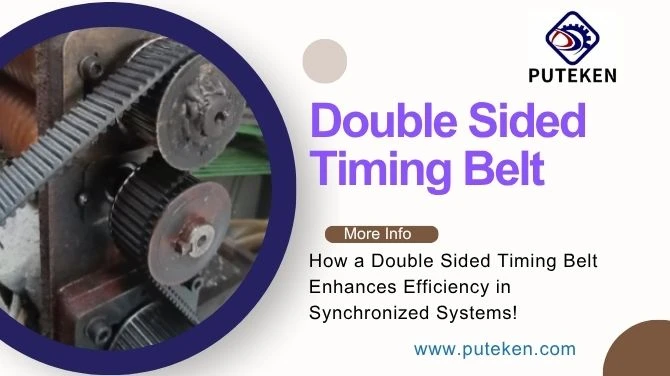

In today's fast-paced industrial and manufacturing sectors, synchronized motion is not just a preference—it’s a necessity. Precision movement across multiple driven components ensures operational stability, speed, and efficiency. While motors, gearboxes, and sensors continue to evolve, one humble yet essential component forms the backbone of superior synchronization: the Double Sided Timing Belt.
At Shanghai Puteken Transmission System Co., Ltd., we specialize in delivering high-performance power transmission solutions, and among our premium offerings, the Double Sided Timing Belt plays a critical role in systems that require bidirectional or multi-axis power transmission. These belts are not just mechanical parts—they are vital instruments of modern efficiency, designed to operate with silent precision and seamless flexibility in complex drive systems.
When engineered and applied correctly, a Double Sided Timing Belt can dramatically improve your system’s reliability, reduce maintenance overhead, and eliminate synchronization errors—especially in applications where loads must move in perfect tandem across multiple shafts or pulleys.
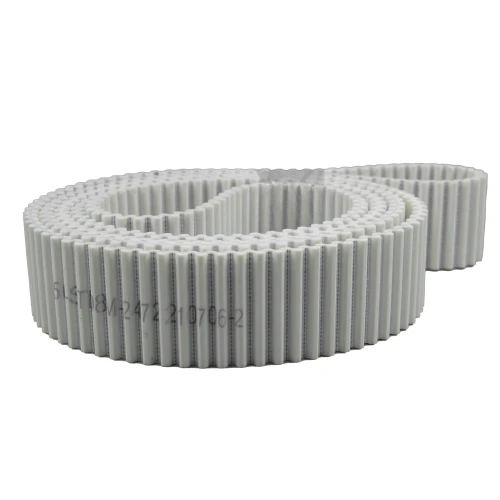
What Is a Double Sided Timing Belt?
A Double Sided Timing Belt, as the name suggests, is a toothed belt that features symmetrical teeth on both the inner and outer surfaces. These teeth allow the belt to engage with pulleys from both directions simultaneously, enabling the belt to transmit motion and torque on two planes at once.
This design is especially useful in systems where two driven shafts must rotate in parallel or opposite directions with perfect timing. Unlike traditional single-sided belts, the Double Sided Timing Belt accommodates complex layouts without requiring intricate gear systems or multiple belts.
Key Features:
- Precision-molded teeth for zero-slip engagement
- Reinforced cords (typically fiberglass, steel, or aramid) for high tensile strength
- Durable rubber or polyurethane coating for flexibility and wear resistance
- Customizable tooth profiles (such as HTD, AT, or T-series)
How does it work in Synchronized Systems?
In synchronized systems, timing and accuracy are paramount. These systems rely on mechanical components to move simultaneously (and predictably) without lag, slippage, or underperformance. The unique construction of a Double Sided Timing Belt allows it to engage multiple pulleys on both sides, transmitting torque and motion efficiently to multiple axes without losing synchronization.
This makes these belts ideal for:
- Multi-shaft lead screw systems
- Precision gantry drives (such as CNC machines or 3D printers)
- Packaging and labeling machines
- Conveyor systems with reverse motion
- Dual-acting cylinders or arms
Using a double-sided configuration minimizes the need for tensioner pulleys, reduces part count, and ensures compact system architecture. More importantly, it maintains perfect timing across multiple shafts—vital in preventing uneven loads and mechanical failure.
Key Advantages of Using a Double Sided Timing Belt:
There are numerous benefits to integrating a Double Sided Timing Belt into synchronized systems, such as:
Reliable Synchronization
Accurate tooth engagement ensures that all drive components remain in perfect sync, minimizing errors in timing and position.
Space-Saving Design
By engaging pulleys from both sides, these belts reduce the need for separate belts or additional gear mechanisms—ideal for compact machines.
Reduced Maintenance
No lubrication is needed. The belt's material resists wear, reducing downtime and increasing machine uptime.
Noise Reduction
Virtually silent operation compared with chain systems or geared couplings.
Energy Efficiency
High mechanical efficiency (>98%) due to positive engagement and minimal slippage, reducing energy loss during transmission.
Applications Across Industries
The versatility of the Double Sided Timing Belt makes it a favorite in a wide array of industries, including:
Automotive
Used in dual cam drives and engine accessory drives requiring synchronized motion.
Packaging and Processing
Ideal for indexing conveyors, labeling heads, and synchronized cutting mechanisms.
Textile Machinery
Ensures synchronized movement of spindles, rollers, and feed systems.
Robotics & Automation
Enables complex motion planning and dual-axis control with minimal backlash.
Printing Industry
Used in synchronized rollers to manage print alignment and ensure high-quality output.
At Shanghai Puteken, we tailor our Double Sided Timing Belts to meet the performance standards of these and other applications, offering high strength and chemical resistance as required.
Design Considerations for Optimal Efficiency
When choosing a Double Sided Timing Belt for your application, several engineering factors must be considered to ensure optimal performance:
- Load Requirements: Determine torque and tension across all driving and driven pulleys.
- Pulley Alignment: Misaligned pulleys can drastically shorten belt life.
- Belt Length and Width: Must be suited to handle system load while maintaining flexibility.
- Tooth Profile: Depends on precision requirements—curved tooth profiles such as HTD or AT are suited for high-load applications.
- Wrap Angle: Ensure sufficient engagement (usually at least 120° wrap) on each pulley to avoid skipping.
Material Choices and Their Impact
The material used in a Double Sided Timing Belt directly affects its durability, flexibility, and overall efficiency.
Common Belt Materials:
Neoprene Rubber: Excellent for general-purpose use, resistant to heat and oil.
Polyurethane (PU): High strength and excellent abrasion resistance; common in precision applications.
Reinforcing Cords:
Fiberglass: Standard tensile member used for elasticity and strength
Kevlar (Aramid): Useful for high-load or high-temperature conditions
Steel: For maximum rigidity and torque-carrying capacity
Choosing the right combination ensures long-term performance and minimizes the need for replacements or realignments.
Installation and Maintenance Tips
Proper belt installation plays a crucial role in how effectively your system runs:
Installation Tips:
- Avoid Over-Tensioning: Tension should be just enough to prevent belt skip; excessive force reduces operational life.
- Check Pulley Alignment: Misalignment causes uneven wear and performance degradation.
- Use Recommended Pulley Sizes: Avoid diameters below the belt’s minimum bend radius.
- Pre-stretch if Required: Some applications, particularly high-load systems, benefit from pre-conditioning belts.
Maintenance Checklist:
- Inspect for surface cracks or fraying
- Clean pulleys and belts regularly
- Monitor belt noise—squealing could signal tension or alignment issues
- Schedule proactive belt replacements to avoid system downtime
Common Mistakes to Avoid
While the Double Sided Timing Belt is highly versatile, its proper usage is critical. Avoid these common mistakes:
- Using incorrect belt tension, leading to slippage or overstrain
- Neglecting pulley wear, which may damage the belt teeth
- Mixing pulley profiles causes uneven engagement
- Incorrect temperature or chemical exposure, resulting in material breakdown
Why Choose Shanghai Puteken Transmission System Co., Ltd.?
As a trusted name in power transmission solutions, Shanghai Puteken Transmission System Co., Ltd. is committed to delivering quality-driven, innovation-focused products.
Why Our Clients Choose Us:
- State-of-the-art Manufacturing: Our facility ensures consistent, high-quality production.
- Custom Solutions: We offer tailored belts based on your machine layouts and industry requirements.
- Expert Consultancy: Our engineers work with your design teams to recommend optimal synchronization solutions.
- Fast Turnaround & Global Delivery: Efficient production timelines and global logistics capabilities.
- Ongoing Support: Whether it’s technical guidance, training, or predictable ordering schedules—we support you every step of the way.
The Double Sided Timing Belt is an unsung hero in modern industrial machinery—a critical piece of engineering that brings stability, control, and efficiency to synchronized systems across virtually every sector. Whether you're optimizing a packaging line, elevating your robotics system, or streamlining material handling, this belt can play a pivotal role in revolutionizing operational performance.
Frequently Asked Questions (FAQ)
Q1: What is the difference between single and double sided timing belts?
A: Single sided belts engage from one side only, suitable for standard drives. Double Sided Timing Belts engage from both sides, ideal for systems requiring synchronized multi-directional torque transmission.
Q2: How long does a Double Sided Timing Belt last?
A: With proper installation and maintenance, they can operate for tens of thousands of hours, depending on material, environmental conditions, and load requirements.
Q3: Can I use a Double Sided Timing Belt in high-speed applications?
A: Yes, provided the belt is correctly tensioned and the tooth profile supports high-speed engagement.
Q4: Are these belts resilient to oil or chemicals?
A: It depends on the material. Neoprene and polyurethane belts offer good resistance to oil, chemicals, and heat. Always select a material based on your environment.
Q5: Do you provide custom sizes or tooth profiles?
A: Absolutely. At Shanghai Puteken, we tailor belts to meet your specifications—including custom lengths, widths, and tooth geometry.





























Sign in to leave a comment.