In today's fast-paced industrial world, the demand for high-performance, low-noise, and low-maintenance machinery has never been more apparent. From precision manufacturing facilities to high-speed packaging lines, engineers and equipment designers are under constant pressure to build machines that run smoothly, last longer, and operate with minimal noise pollution. While many factors contribute to the performance of modern machinery, one often-overlooked component plays a surprisingly vital role: the Rubber Coated Timing Belt.
For decades, timing belts have been a cornerstone in power transmission systems, especially where synchronization and precision movement are critical. However, as machinery becomes more advanced and demands continue to evolve, traditional timing belts are no longer sufficient in many applications. That’s where Rubber Coated Timing Belts step in—providing superior torque transfer, reduced vibration, enhanced grip, and most importantly, a significant reduction in operational noise.
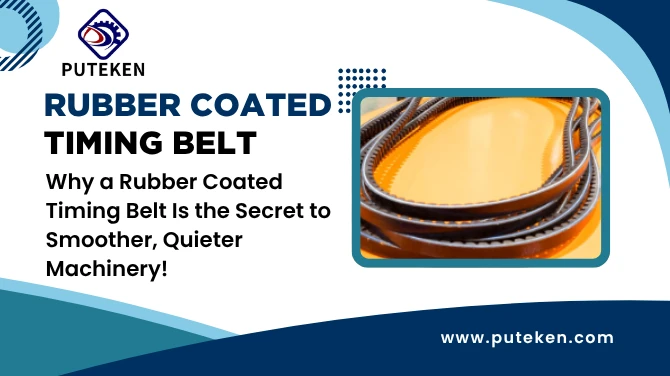
A Rubber Coated Timing Belt is a high-performance power transmission component specifically engineered to combine precision timing with enhanced durability, flexibility, and reduced noise. Unlike standard timing belts, this type features an additional rubber layer—typically made from materials like EPDM, NBR, or silicone—bonded to the belt’s surface. This rubber coating serves multiple purposes: it improves grip between the belt and pulleys, absorbs shock and vibrations during operation, and significantly reduces noise levels, making it ideal for high-speed or noise-sensitive applications. It also provides added resistance to wear, chemicals, and extreme temperatures, extending the life of the belt and minimizing maintenance downtime. Commonly used in industries such as automotive, packaging, textile, and industrial automation, a Rubber Coated Timing Belt ensures smooth, synchronized motion while enhancing overall machine performance. Leading manufacturers like Shanghai Puteken Transmission System Co., Ltd. offer customized rubber-coated solutions tailored to specific industrial requirements, helping businesses achieve greater efficiency and reliability in their operations.
At Shanghai Puteken Transmission System Co., Ltd., we specialize in innovative power transmission solutions designed to meet the highest industry standards. Among our premium offerings, the Rubber Coated Timing Belt stands out as a game-changer for industries aiming to improve mechanical performance without compromising on durability or efficiency.
What is a Rubber Coated Timing Belt?
A Rubber Coated Timing Belt is a specialized type of timing belt with a layer of synthetic or natural rubber bonded to its surface. This design improves belt flexibility, enhances power transmission properties, and reduces friction and noise during operation. The rubber coating acts as a cushion that absorbs mechanical shock and vibration, making it ideal for precise, high-speed, and low-noise applications.
Components:
- Base Belt Material: Usually made of polyurethane or neoprene with embedded tensile cords (e.g., fiberglass, Kevlar).
- Rubber Coating: External layer made from durable elastomers like EPDM or silicone rubber.
- Tooth Profile: Customized according to application needs (e.g., trapezoidal, curvilinear, or dual-sided teeth).
The Role of Rubber Coating in Performance
While traditional timing belts get the job done, their torque-carrying capacity and longevity can suffer in high-vibration or high-speed setups. The rubber coating changes the dynamics drastically:
- Shock Absorption: Damps vibrations and avoids transmission backlash.
- Noise Reduction: Rubber acts as an insulator, lowering contact noise between pulleys and the belt.
- Improved Grip: Reduces slipping, especially in conditions where lubricants or dust might pose challenges.
- Enhanced Flexibility: Allows better wrapping around pulleys and smaller torque loads.
- Engineering Insight: A rubber-coated surface can reduce operating noise levels by up to 20–30 dB compared to standard belts, significantly improving factory working conditions.
Advantages of Rubber Coated Timing Belts
Let’s take a closer look at why industries are making the switch to Rubber Coated Timing Belts:
- Noise Control
- A chief concern in conveyor belts and assembly line machines is noise. The elasticity of rubber dissipates vibrational energy, reducing dB levels during gearbox or pulley engagement.
- Higher Torque Transmission
- The addition of rubber improves surface friction and allows better torque carry, especially for loads that fluctuate or require acceleration/deceleration cycles.
- Extended Belt Life
- The protective rubber coating minimizes wear and tear caused by exposure to metal pulleys, chemical fumes, or debris.
- Compatibility with Sensitive Equipment
- Ideal for electronics or pharmaceutical production lines where minimal vibration and quiet operation are essential.
Material Considerations and Engineering Benefits
Choosing the right material is key. At Shanghai Puteken, our engineers work closely with clients to recommend blends tailored to their conditions.
Common Rubber Materials Used:
Nitrile Rubber (NBR): Oil-resistant
EPDM: Suitable for high-temperature applications
Silicone Rubber: Ideal for cleanroom environments
Each material brings reliable characteristics, which, when bonded with a high-performance timing substrate, produce superior results across performance vectors.
Choosing the Right Rubber Coated Timing Belt
When selecting a Rubber Coated Timing Belt, consider the following:
- Load Requirements
- Operating Speed
- Environmental Conditions (heat, moisture, particles)
- Pulley Design
- Torque Ratings
At Shanghai Puteken, we offer custom engineering consultation to help customers identify optimal belt profiles and rubber compounds for their applications.
Installation Tips for Optimal Performance
To get the most out of your Rubber Coated Timing Belt:
- Ensure correct tensioning during installation
- Avoid over-tightening, which may cause premature wear
- Regularly inspect for signs of cracking or delamination
- Align pulleys precisely to prevent lateral stress
Maintenance Guidelines to Maximize Lifespan
Routine maintenance can extend belt life substantially:
- Clean Belt & Pulley Surface Monthly
- Lubricate If Required (check compatibility)
- Inspect for Rubber Surface Damage or Peeling
- Replace Worn Belts Proactively
Preventive care reduces costly downtime and ensures smoother machine operation year-round.
Why Choose Shanghai Puteken Transmission System Co., Ltd.?
With over a decade of expertise in advanced transmission technologies, Shanghai Puteken Transmission System Co., Ltd. offers:
✅ Proven quality and tested durability
✅ Custom-engineered solutions
✅ Competitive pricing on OEM and custom orders
✅ Fast turnaround and global delivery
✅ Technical support beyond the sale
Our Rubber Coated Timing Belts are manufactured to exacting standards and tailored to exceed expectations in terms of quality, quietness, and performance. Partner with us to optimize your transmission systems today.
Whether you're aiming to extend the life of your machinery, reduce noise levels, or improve overall operational efficiency, upgrading to a Rubber Coated Timing Belt is one of the smartest moves you can make. These belts offer reliable performance, unmatched durability, and adaptability across various applications—making them a cornerstone of modern mechanical design.
Frequently Asked Questions (FAQs)
Q1: How long does a Rubber Coated Timing Belt typically last?
A: Depending on application, material, and maintenance, these belts can last anywhere from 20,000 to 50,000 operational hours.
Q2: Can I retrofit existing systems with a Rubber Coated Timing Belt?
A: Yes. In most cases, these belts are backward-compatible and can improve performance significantly without changing the entire drive setup.
Q3: Do rubber coatings degrade over time?
A: High-quality rubber compounds used by Shanghai Puteken are engineered for durability and can resist oil, heat, and abrasion.
Q4: Are Rubber Coated Timing Belts suitable for cleanroom environments?
A: Yes. We offer silicone-coated versions specifically designed for pharmaceutical and electronics environments.
Q5: Can I get a custom size or tooth profile made?
A: Absolutely! Customization is one of our specialties. Contact our technical team for personalized support.


























Sign in to leave a comment.