

Vision assessment has experienced a significant shift in recent years as technological innovations reshape the way eye conditions are detected, monitored, and treated. Traditional manual processes, while effective in their time, are now being replaced or supported by digital systems that offer heightened accuracy, speed, and consistency. As patient expectations evolve and eye care demands grow, clinics are relying more heavily on advanced screening tools that bring precision and intelligence to every stage of the diagnostic process. This transition marks the beginning of a new era where vision assessment is more comprehensive, data-driven, and patient-centered.
The Need for Advanced Screening Tools in Today’s Eye Care
The modern lifestyle has triggered an unprecedented rise in vision-related problems. Extended screen exposure, changing work habits, and increased environmental stressors contribute to issues such as digital eye strain, myopia, astigmatism, and early-onset eye diseases. As these conditions become more common, eye care professionals need diagnostic systems capable of detecting subtle abnormalities that may go unnoticed during routine exams.
Advanced screening tools provide:
- Greater diagnostic accuracy
- More reliable measurement consistency
- Earlier detection of complex eye conditions
- Improved patient experience and trust
- Better long-term monitoring through stored digital data
These tools are essential in ensuring that even minor vision issues are identified early, reducing the risk of progression and long-term complications.
Digital Transformation in Vision Assessment
The shift toward digital eye examination technology is one of the largest transformations the field has ever seen. What once required manual interpretation and patient-dependent responses is now guided by intelligent systems that offer automated calculations and enhanced imaging.
1. Automated Refraction Systems
Refraction testing is the foundation of vision assessment. Today’s automated refractors provide readings within seconds, reducing subjectivity and eliminating inconsistencies caused by fatigue or patient confusion. These systems deliver fast and trustworthy results that help practitioners make accurate decisions regarding prescriptions and corrective solutions.
2. High-Resolution Retinal Imaging
Modern imaging tools allow clinicians to observe the retina, optic nerve, and surrounding structures in remarkable detail. Technologies like fundus photography and Optical Coherence Tomography (OCT) provide real-time visualization and cross-sectional imaging, enabling the identification of early signs of diabetic retinopathy, macular degeneration, glaucoma, and other sight-threatening diseases.
3. Non-Contact Diagnostic Devices
Non-invasive tools have become increasingly popular, especially for patients who prefer painless and hassle-free assessments. Air-puff tonometry, optical pachymetry, and other non-contact systems offer accurate measurements without touching the eye, reducing discomfort and minimizing the risk of infection.
How Automation Improves Clinical Accuracy and Workflow Efficiency
Automation has emerged as a game changer in eye care, providing consistency that manual methods often cannot achieve. Modern devices can automatically calibrate, detect errors, and repeat measurements when necessary. This ensures that every reading meets the highest diagnostic standards.
Key advantages include:
- Reduced human error
- Standardized results across multiple operators
- Time-saving workflow for busy clinics
- Higher patient throughput
- Better documentation and data storage
Automated systems allow eye care professionals to focus more on consultation and patient engagement rather than manual tasks.
The Role of AI in Enhancing Vision Assessment
Artificial intelligence (AI) brings the next level of precision to eye care. AI-driven diagnostic platforms analyze thousands of data points within seconds, identifying patterns and irregularities that may be invisible to the human eye. The integration of AI has made early detection of retinal diseases more accurate, giving clinicians the ability to intervene before significant damage occurs.
AI supports eye care by:
- Providing automated disease detection
- Enhancing image interpretation
- Predicting future risk levels
- Offering clinical decision support
- Reducing diagnostic time
This results in faster, more confident assessments and a higher standard of care.
Advanced Tools Supporting Comprehensive Vision Checks
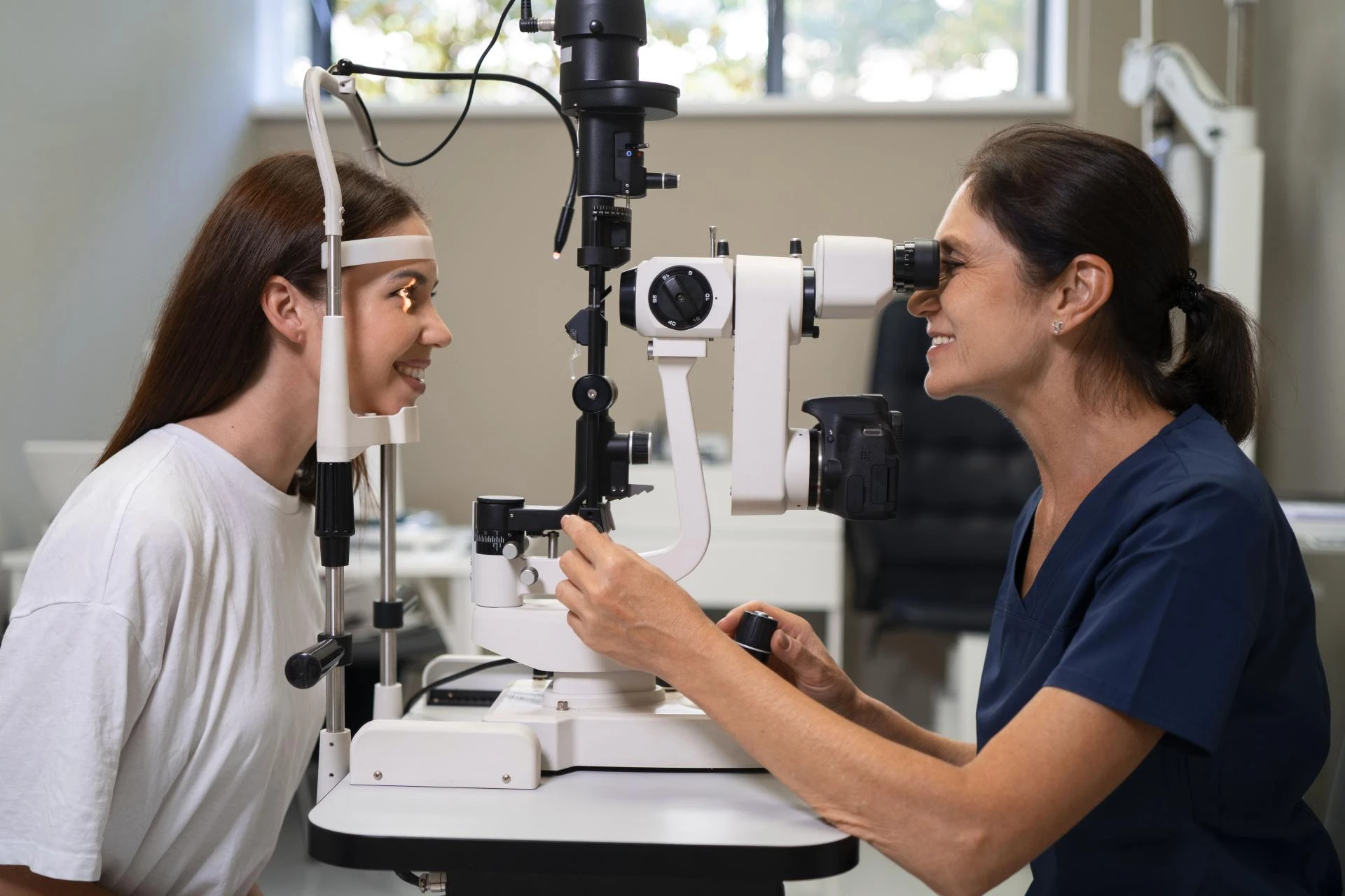
Today’s clinics rely on sophisticated diagnostic devices that bring precision and reliability to the entire examination process. Tools such as eye test instruments help practitioners evaluate vision in a more structured and technologically advanced way, ensuring that all essential parameters are measured accurately and consistently.
How Advanced Technology Enhances Patient Engagement
Today’s patients want to understand their health clearly and quickly. Digital diagnostic systems improve communication by displaying scans, graphs, and automatic reports in real time. Patients can see what the practitioner sees, which helps them understand their condition and participate actively in their own care.
Enhanced engagement leads to:
- Better treatment compliance
- Greater trust in diagnostic results
- Improved patient satisfaction
- Stronger patient-clinic relationships
The Future of Vision Assessment
The future of eye care is geared toward fully digital, AI-integrated systems that will simplify and strengthen clinical processes. As technology advances, we can expect:
- Complete automation of routine tests
- Remote diagnostic capabilities
- Predictive analytics for early disease prevention
- Enhanced imaging resolution
- More compact and portable diagnostic devices
These advancements will make eye care more accessible, accurate, and efficient for both clinics and patients.
Conclusion
Advanced screening tools are redefining the world of vision assessment by making the entire process smarter, faster, and more precise. Digital imaging systems, automated refraction technologies, and AI-driven platforms are transforming the way eye care professionals detect, diagnose, and manage eye conditions. As these innovations continue to evolve, the future of vision assessment will be shaped by technology that not only enhances accuracy but also improves patient experience and clinical outcomes.


























Sign in to leave a comment.