

In today’s digital world, cybersecurity is no longer a luxury it’s a necessity. With rising threats, from data breaches to ransomware attacks, protecting software systems has become one of the top priorities for any organization involved in software development. As cyberattacks grow more complex and targeted, traditional security methods often fall short. That’s where Artificial Intelligence (AI) steps in.
For every modern software development company, AI-powered cybersecurity isn’t just a trend it’s a crucial strategy to protect client data, maintain trust, and ensure seamless performance across platforms.
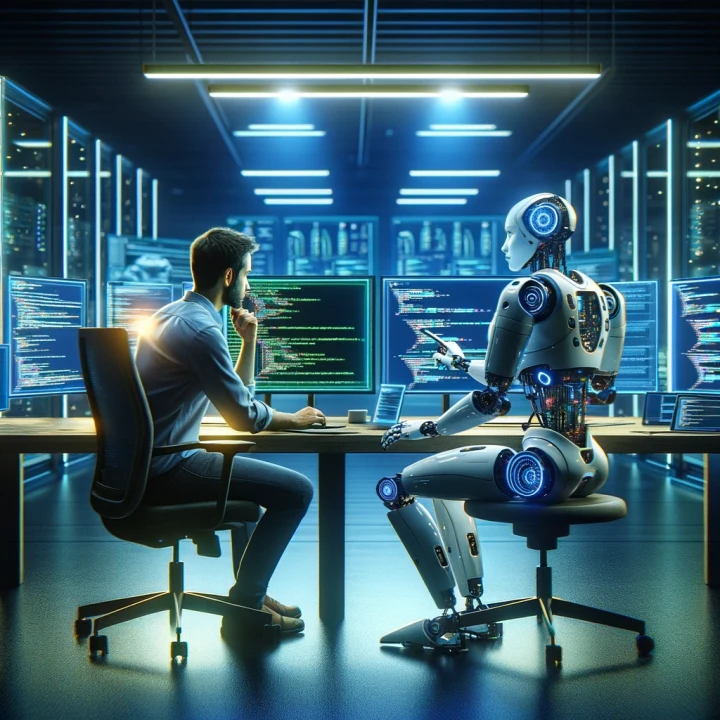
The Growing Threat Landscape in Software Development
Software systems today are exposed to a wide array of security threats:
- Zero-day vulnerabilities
- Phishing attacks
- Insider threats
- Malware injections
- DDoS attacks
With more data being shared, stored, and transmitted via cloud platforms and mobile apps, the risk of exploitation increases exponentially. A single unpatched vulnerability can lead to devastating consequences for a software development company loss of reputation, compliance violations, or millions in damages.
How AI Reinforces Cybersecurity
Artificial Intelligence has emerged as a powerful ally in the fight against evolving cyber threats. Here's how AI enhances cybersecurity in software development:
1. Real-Time Threat Detection
AI can analyze massive volumes of data in real time and recognize unusual behavior patterns that may indicate an attack. Whether it’s detecting login anomalies, suspicious traffic, or brute force attempts, AI systems can raise red flags instantly far quicker than human monitoring could.
2. Predictive Analysis
Machine learning models are trained on vast amounts of historical data to predict potential threats before they occur. This proactive approach helps software development companies mitigate risks and deploy countermeasures before a breach happens.
3. Automated Security Responses
When a security threat is detected, AI systems can instantly respond blocking IPs, isolating affected systems, or initiating security protocols without waiting for human intervention. This immediate response minimizes damage and reduces downtime.
4. Continuous System Monitoring
AI enables 24/7 monitoring of software systems across servers, databases, APIs, and even mobile app environments. It learns from every interaction, making the system smarter and more resilient with time.
AI in Action: Real-World Use Cases
AI-based cybersecurity is already being implemented in several industries. For example:
- Finance: AI helps detect fraudulent transactions in real time.
- Healthcare: AI secures sensitive patient records and prevents data leaks.
- E-commerce: AI spots unusual purchase patterns and blocks fake login attempts.
In the context of software development, AI tools can be integrated directly into DevSecOps pipelines to scan for vulnerabilities in real-time during the coding and deployment process.
Why It Matters for Software Development Companies
A software development company handles the creation, testing, and deployment of software solutions. Whether it’s a web app, enterprise platform, or mobile app, clients expect bulletproof security. Implementing AI-driven cybersecurity solutions means:
- Faster detection of threats
- Reduced risk of data loss
- Compliance with international security standards (like GDPR, HIPAA, etc.)
- Enhanced client trust and credibility
Moreover, AI-powered security tools reduce the workload on development teams by automating repetitive tasks like log analysis, code scanning, and permission audits.
Challenges to Consider
While AI offers immense benefits, it’s not without challenges:
- False Positives: AI systems may sometimes flag benign activity as suspicious.
- Data Quality: Poor data can reduce the accuracy of AI predictions.
- High Initial Costs: Integrating AI tools requires investment in both software and talent.
However, the long-term ROI, in terms of time saved and breaches prevented, often outweighs these concerns for growing software development companies.
Conclusion
AI is rapidly becoming the backbone of cybersecurity strategies in modern software development. By enabling proactive threat detection, automated defense mechanisms, and real-time monitoring, AI transforms how security is managed at every level of a software system.
For a forward-thinking software development company, investing in AI-driven cybersecurity isn’t just a technological decision it’s a competitive advantage. As threats continue to evolve, those who harness AI effectively will be better positioned to deliver secure, reliable, and trusted software to clients worldwide.























Sign in to leave a comment.