
Introduction
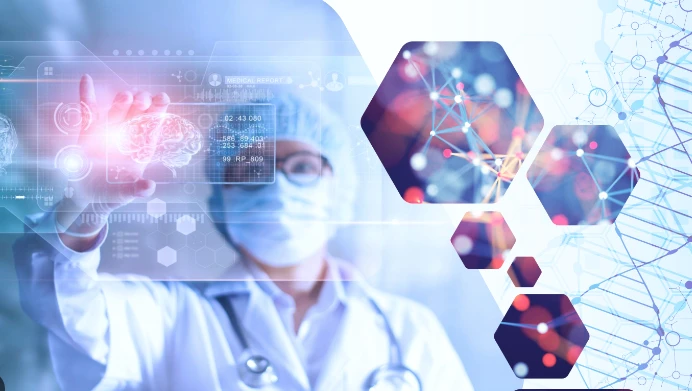
In recent years, the intersection of Artificial Intelligence (AI) and Machine Learning (ML) technologies has revolutionized various industries, and the pharmaceutical sector is no exception. The use of AI & ML in drug discovery has the potential to transform the way new medicines are developed, making the process faster, more efficient, and cost-effective. This blog post will delve into how AI & ML innovations are reshaping the drug discovery process, and the impact they are having on the pharmaceutical industry.
The Traditional Drug Discovery Process: An Overview
Embarking on a drug discovery journey traditionally entails a labyrinthine and financially draining process that spans several discrete phases. Initially, it commences with pinpointing a biological target associated with a disease, followed by the meticulous search for a lead compound that exhibits potential therapeutic effects.
Subsequent stages include exhaustive preclinical tests to assess safety and efficacy, along with a series of rigorous clinical trials designed to verify the drug's effectiveness in humans. Completing this extensive journey, which can extend over a decade and incur expenditures reaching into the billions, culminates in seeking regulatory approval.
The inherent challenges of high failure rates coupled with the protracted nature of this journey have galvanized the search for innovative methodologies to expedite drug development.
AI and ML: Demystifying the Technologies
Artificial Intelligence (AI) and Machine Learning (ML) stand at the forefront of technological innovation, offering unprecedented analytical capabilities across vast datasets. AI represents a spectrum of computational techniques designed to emulate tasks usually requiring human intellect.
Within this spectrum, ML carves its niche by emphasizing the development of algorithms capable of learning from data to make predictions or decisions, without being explicitly programmed for each task. This paradigm shift in computing enables the identification of complex patterns and the forecasting of outcomes with remarkable accuracy, positioning AI and ML as pivotal tools in the armamentarium for modern drug discovery endeavors.
Their application ranges from unearthing intricate biological processes to predicting the pharmacological properties of chemical compounds, showcasing their instrumental role in advancing medical science.
Accelerating Drug Target Identification with AI
AI's profound impact on drug discovery is especially evident in expediting target identification. By analyzing complex biological datasets, AI algorithms reveal potential drug targets with remarkable efficiency. This method enables researchers to swiftly navigate extensive genomic, proteomic, and chemical databases, pinpointing key targets involved in disease mechanisms.
The speed and precision of AI in this phase significantly shorten the drug development timeline, paving the way for faster therapeutic innovations. This crucial application of AI not only streamlines the initial stages of drug discovery but also establishes a solid foundation for subsequent drug development phases, ensuring a more targeted and effective approach to tackling diseases. Explore these advancements with an Artificial Intelligence Services Company.
Enhancing Drug Design and Optimization with ML
ML technologies play a crucial role in refining drug design and enhancing the effectiveness of therapeutic candidates. By leveraging advanced algorithms, ML scrutinizes molecular and genetic information to predict how different compounds will interact with biological targets. This predictive capability enables scientists to meticulously tailor drug candidates, enhancing their affinity, efficacy, and safety profiles before they enter clinical testing.
Furthermore, ML-driven optimization processes significantly trim down the development timeline and resources required by traditional methods. These advancements underscore the transformative potential of ML in not only identifying but also perfecting promising therapeutic agents, marking a leap forward in the quest for more precise and potent treatments.
Also Read: How AI & ML Are Transforming The Drug Discovery Process
Streamlining Clinical Trials Through Predictive Analytics
In the dynamic landscape of drug development, AI and ML have become key players in optimizing the efficiency and effectiveness of clinical trials. These technologies are adept at harnessing predictive analytics to refine the selection process for trial participants, ensuring a cohort that best represents the target demographic for a given treatment.
By analyzing historical data and patient records, AI algorithms can identify patterns and predictors of treatment response, significantly reducing the time and cost associated with patient recruitment and selection. Moreover, predictive models are instrumental in designing trial protocols that minimize risks and maximize the chances of success.
By forecasting potential outcomes based on various trial designs, researchers can adjust methodologies in real-time, enhancing the precision and reliability of clinical studies. This strategic application of AI and ML not only expedites the development pipeline but also paves the way for more personalized and effective therapeutic interventions.
The Future of Drug Discovery: Challenges and Opportunities
The integration of AI & ML into drug discovery heralds a promising horizon, yet navigates through a landscape peppered with both obstacles and prospects. Key among these challenges is the establishment of comprehensive data governance frameworks, critical in maintaining the integrity and confidentiality of data used.
The ethical employment of these technologies also stands as a paramount concern, necessitating transparent protocols that safeguard against misuse. Regulatory barriers further complicate the seamless adoption of AI & ML, demanding innovative solutions to streamline approval processes without compromising safety standards. Despite these hurdles, the opportunities are profound.
AI & ML's ability to revolutionize drug discovery processes holds the potential to dramatically reduce time-to-market for new treatments, unravel complex disease mechanisms, and usher in a new era of precision medicine. Addressing these challenges head-on will be crucial in fully unlocking the transformative impact AI & ML promise to the future of healthcare.
Conclusion
The advent of AI & ML in the realm of drug discovery marks a pivotal shift towards more streamlined, efficient, and innovative methodologies in the pharmaceutical industry. These technologies offer a beacon of hope for accelerating the creation of new treatments, optimizing drug efficacy and safety, and refining clinical trial processes.
Embracing AI & ML not only promises to expedite the journey from laboratory to patient but also opens up new frontiers for personalized medicine. To capitalize on this technological revolution, pharmaceutical entities are increasingly looking to hire machine learning experts and collaborate with specialized artificial intelligence services companies.
By harnessing advanced machine learning solutions, the path toward groundbreaking medical advancements becomes clearer, paving the way for a future where healthcare is both highly effective and markedly more accessible.




























Sign in to leave a comment.