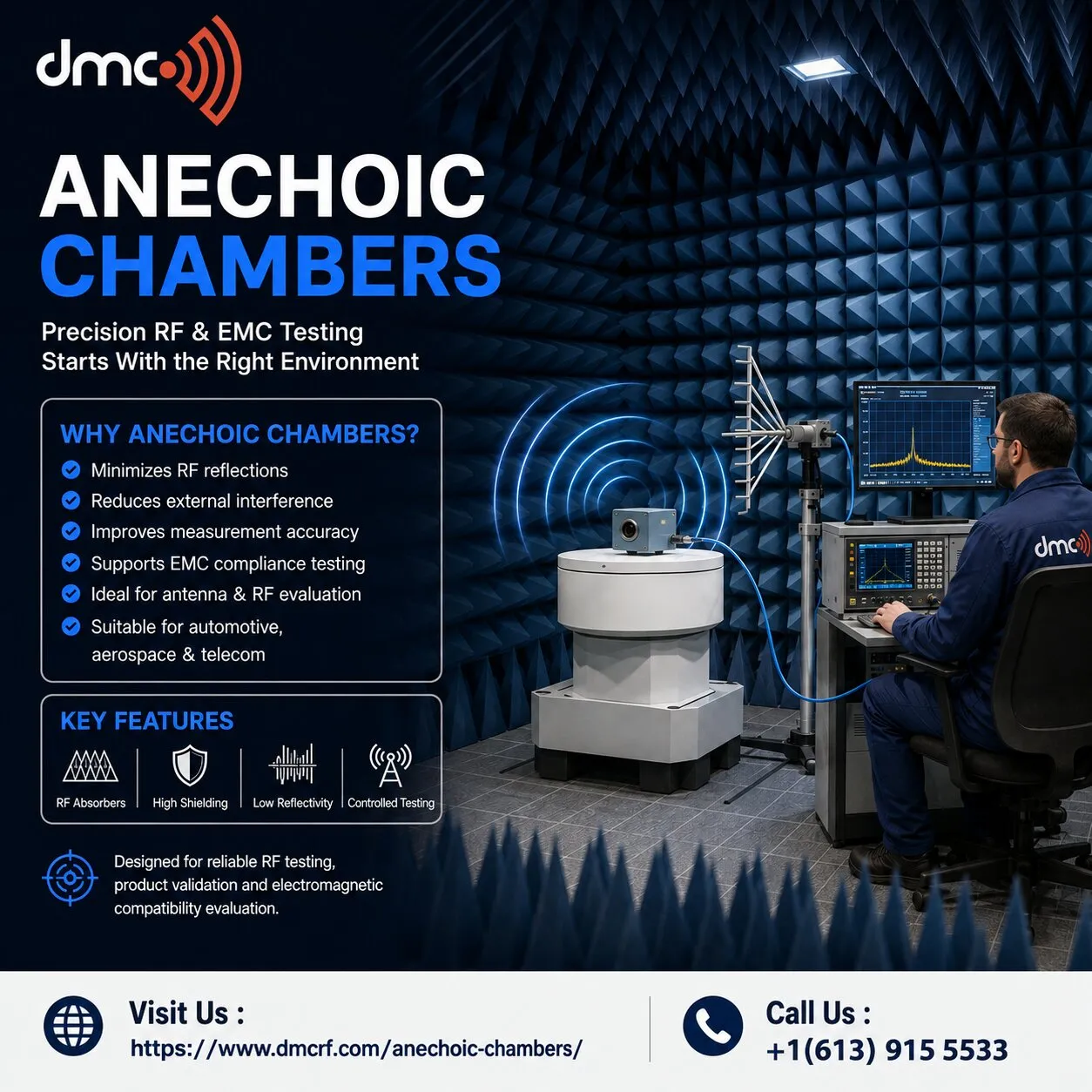

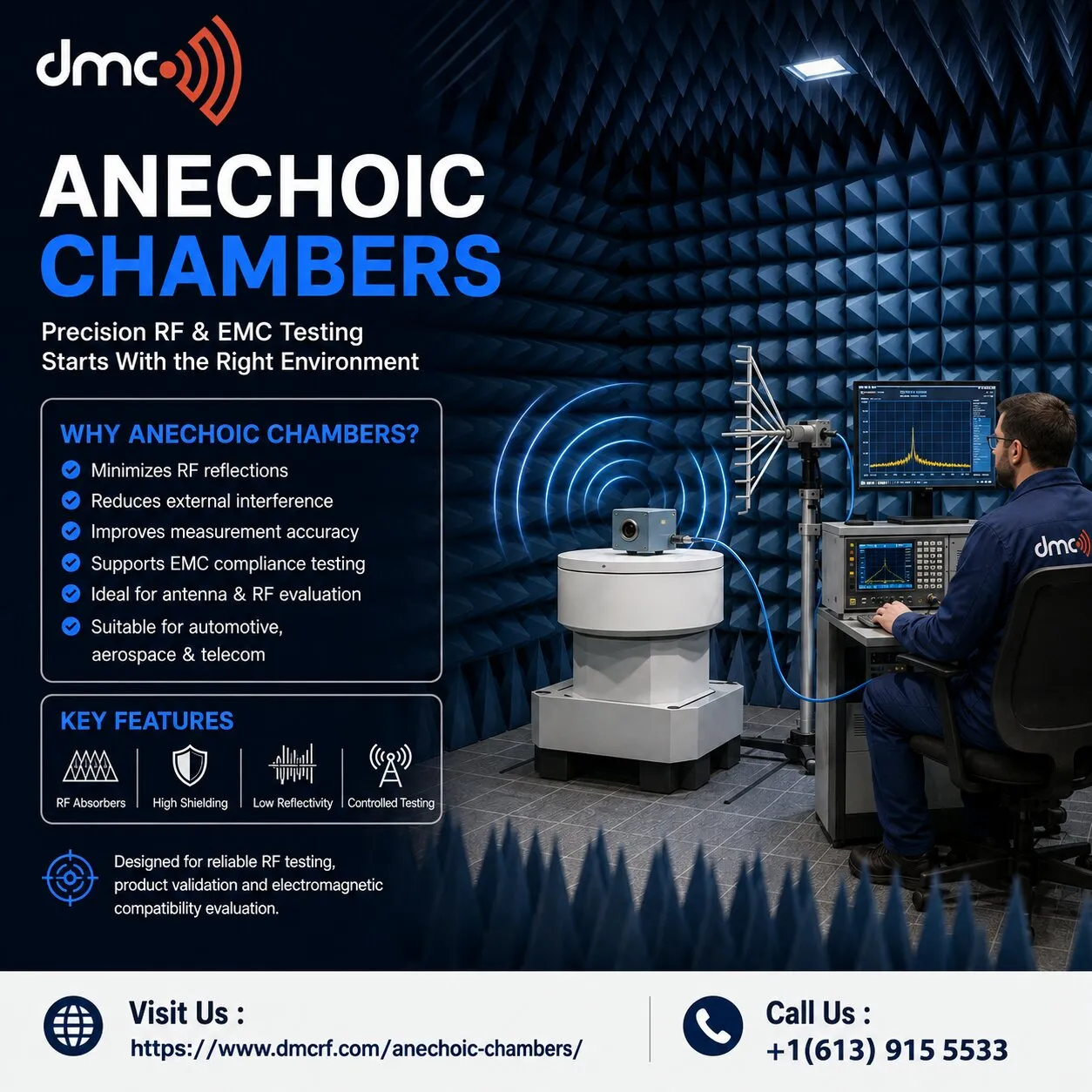
In modern electronics, reliable performance depends on accurate electromagnetic testing. From wireless communication devices and automotive radar to aerospace equipment and medical electronics, manufacturers need controlled environments to understand how their products behave under different RF conditions. Anechoic chambers provide this controlled environment by reducing unwanted reflections and outside interference. At DMC, specialized chamber and RF absorber solutions help industries achieve dependable testing conditions for product development, research, and compliance.
What Are Anechoic Chambers?
An anechoic chamber is a specially engineered enclosure designed to absorb electromagnetic energy and minimize reflections from internal surfaces. The chamber is also shielded from external electromagnetic signals, allowing engineers to perform measurements in a controlled environment.
A professionally designed chamber can support:
- Antenna performance measurements
- RF device testing
- EMC testing
- Wireless communication testing
- Radar evaluation
- Microwave measurements
- Satellite communication testing
- Product development and research
For an anechoic chambers manufacturer, the objective is to create a testing environment where unwanted signals have as little influence as possible on measurement results.
How RF Absorbers Improve Testing Accuracy
RF absorbers are a key component of an RF anechoic chamber. They are installed on selected internal surfaces to reduce electromagnetic reflections. Without suitable absorption, signals can bounce around the chamber and affect the accuracy of measurements.
The absorber type and thickness should be selected according to the required frequency range and application. This is why chamber design needs to be approached as a complete engineering solution rather than simply an enclosed room with absorber material.
Why EMC Testing Is Essential
Electronic products rarely operate alone. They share electromagnetic environments with wireless networks, vehicles, industrial equipment, communication systems, and other electronic devices. If a product produces excessive electromagnetic emissions or is too sensitive to interference, it may experience performance problems.
EMC anechoic chambers help engineers investigate these issues under controlled conditions.
Testing can help identify:
- Unwanted radiated emissions
- Electromagnetic interference
- Weak shielding areas
- Antenna-related problems
- Unexpected RF behavior
- Product design weaknesses
- Potential compliance issues
Finding these problems during development can save considerable time and expense compared with discovering them during final certification.
Semi-Anechoic Chambers for EMC Applications
Semi-anechoic chambers are widely used for electromagnetic compatibility testing. In a typical configuration, the walls and ceiling contain RF absorbers while the floor provides a controlled reflective reference surface.
These chambers are suitable for applications such as:
- Radiated emission testing
- EMC compliance testing
- Automotive component evaluation
- Consumer electronics testing
- Industrial equipment testing
- Telecommunications products
- Product certification
For companies comparing anechoic chambers for sale, a semi-anechoic design can be a practical choice when EMC compliance is the primary testing requirement.
Fully Anechoic Chambers for Advanced RF Measurements
A fully anechoic chamber provides a more controlled environment by incorporating absorbing material across the floor as well as the walls and ceiling. This helps create free-space-like conditions for specialized measurements.
Common applications include:
- Antenna radiation pattern testing
- Microwave component evaluation
- Radar development
- Satellite communication testing
- High-frequency RF research
- Wireless technology development
- Defense communication systems
The appropriate configuration depends on the equipment being tested, frequency range, measurement distance, and required accuracy. A knowledgeable anechoic chambers manufacturer can help determine which design best fits the intended application.
Important Features of a High-Performance Chamber
When selecting an RF anechoic chamber, organizations should look at the complete system rather than focusing on chamber dimensions alone.
Important features may include:
- Effective RF absorber systems
- High shielding effectiveness
- Low internal reflectivity
- Suitable frequency coverage
- Durable structural construction
- Reliable RF doors
- Proper cable entry systems
- Precision turntables
- Antenna positioning equipment
- Suitable ventilation arrangements
- Customized chamber dimensions
- Easy equipment access
These features contribute to consistent testing and make the chamber more practical for daily laboratory use.
Industries Using Anechoic Testing Facilities
The need for controlled RF testing extends across many industries.
Automotive
Modern vehicles contain radar sensors, GPS systems, wireless modules, Bluetooth systems, and advanced driver-assistance technologies. RF and EMC testing helps engineers evaluate the interaction between these systems.
Aerospace and Defense
Aircraft and defense systems depend on reliable communication, navigation, radar, and electronic equipment. Controlled testing environments help engineers evaluate critical RF performance.
Telecommunications
5G equipment, Wi-Fi products, IoT devices, antennas, and satellite communication systems require accurate RF measurements before deployment.
Medical Electronics
Medical devices must operate reliably without creating harmful electromagnetic interference with nearby equipment. Controlled EMC testing supports safer and more dependable product development.
Consumer Electronics
Smartphones, laptops, wearables, connected home devices, and other electronic products need reliable RF and EMC performance to meet market expectations and regulatory requirements.
Choosing the Right Anechoic Chamber
Companies looking at anechoic chambers for sale should first identify exactly what they need to test. A chamber suitable for EMC compliance may not be the best choice for advanced antenna measurements.
The Value of Working with an Experienced Manufacturer
A chamber is a long-term investment, so engineering quality matters. From shielding and absorber placement to access systems and internal equipment integration, every part of the design can influence testing performance.
As electronic and wireless technologies continue to evolve, accurate electromagnetic testing is becoming increasingly important. Well-designed anechoic chambers provide engineers with a controlled environment for reliable RF measurements, EMC evaluation, and product development. With the right design and absorber technology from DMC, organizations can build testing capabilities that support better performance, smoother compliance processes, and long-term engineering confidence.
#AnechoicChambers, #RFAnechoicChamber, #EMCTesting, #RFTesting, #MicrowaveAbsorbers
Contact Us:
Visit Us : https://www.dmcrf.com/anechoic-chambers/
Call Us : +1(613) 915 5

























Sign in to leave a comment.