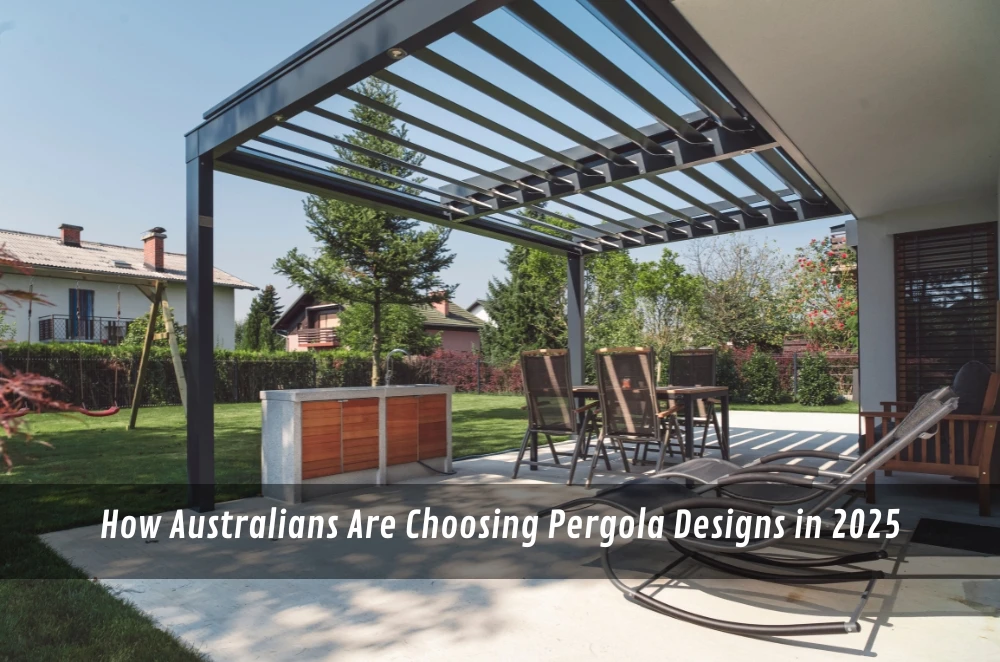

Across Australia, backyards are becoming true extensions of the home — places to cook, relax, and gather without worrying about the weather turning. The focus has shifted from temporary shade solutions to structures that feel intentional, lasting, and part of the architecture itself. More homeowners are leaning toward modern pergola designs because they blend clean lines with everyday comfort. These designs don’t just frame an outdoor area; they help it breathe. With adjustable roofs, subtle lighting, and materials that stand up to the elements, the modern pergola has evolved into something far more thoughtful — a space that feels open in summer, sheltered in rain, and quietly stylish year-round. It’s less about building something new and more about creating a natural continuation of how Australians already live outdoors.
What makes a pergola feel right in Australia
A pergola succeeds when it works with the climate instead of fighting it. Designs that tune light and breeze — not just add shade — tend to get used far more often. Three ideas underpin the smarter choices I’m seeing on the ground this year: orientation-aware roofing, selective screening and finishes that don’t demand constant attention. None of them screams for attention; they simply make the space calmer to be in.
- Orient the roof and slats to soften harsh west light while letting winter sun track under.
- Keep at least one side open to prevailing breezes, then use operable panels where gusts bite.
- Choose finishes that shrug off heat, salt spray and fingerprints so the space stays inviting.
- Plan wiring paths early for lighting, fans and controls — less visible clutter, more comfort.
On a compact inner-city terrace, I swapped a fixed batten roof for adjustable louvres set on a shallow tilt and added a single west screen. Same footprint, but the owners started using the space after school and late evenings because glare and wind were finally tamed.
Designing for sun angles and shade control
Australia’s light is brilliant — and brutal from the wrong angle. Good pergola layouts acknowledge that the sun sits higher at midday and bites low in the afternoon, especially on west and north-west aspects. Adjustable roofs help, but the real gains come from pairing roof control with simple vertical elements that catch those low rays without boxing you in.
- Use vertical fins or a single operable wall on the hottest edge to block low, horizontal glare.
- Keep ceiling elements matte to cut bounce; shiny surfaces can double the perceived brightness.
- Allow air to escape at the high side of the roof so heat doesn’t pool under the structure.
- Where possible, give the leeward side more openness — it keeps the pergola feeling “outdoorsy”.
Most designers take cues from Australia’s own building standards on shading. Those pergola shading regulations offer a solid foundation for getting angles and overhangs right without overcomplicating the layout. They’re not about rigid rules — more like a design compass that helps you shape a pergola that works with the sun instead of fighting it.
Layouts homeowners actually use
A pergola isn’t an object; it’s the frame for habits. The most loved layouts think about how bodies move, where plates land and where eyes rest. Long, narrow spaces behave differently to square decks; poolside seating wants air movement while a dining space wants even, non-glary light. The trick is planning micro-zones so nothing competes.
- In tight courtyards, a narrow projection with one operable wall gives privacy without crowding.
- Beside a pool, leave the leeward side open so smells and steam drift away from seating.
- On family decks, allow a clear 1.0–1.2 m walkway behind chairs to avoid constant shuffling.
- If you love pot plants, keep at least one sun-struck edge so foliage thrives without heat stress.
A coastal client loved golden hour but hated the burn. We set the louvres to a “default” angle that softens late light, then added a slim fin screen just on the western return. The dining bench stopped baking, and the whole area felt calmer without enclosing the view.
Inspiration pathways before you decide
Mood boards help translate taste into structure. Not everything that looks great in a render lands well in a real backyard, so collect examples that show proportion, overhangs and how light behaves. Pay special attention to how vertical elements sit with the roof — that’s where many designs feel either airy or boxed-in.
- Save images that show sunlight at different times of day — midday and late afternoon.
- Look for side screens that soften views without killing the breeze; note their spacing and angle.
- Notice post thickness versus span: skinny posts look elegant but need the right engineering.
- Track how the colour temperature of lighting changes the feel after dark.
If you’re still sketching ideas, browsing through examples of backyard pergola inspiration can spark fresh thinking about scale and texture. It’s often those small, unexpected details — a timber-toned frame, a narrow beam, a planted edge — that shift a pergola from functional to genuinely inviting.
Tech and trend moves that actually help
New features only matter if they remove friction. Motorised louvres, for instance, aren’t about gadgets; they’re about not sprinting outside when a shower rolls through. Likewise, slimline heaters, dimmable LEDs and simple app control can quietly extend the hour range you’ll use the space — without turning it into a bright, echoey box.
- Motorised control keeps the space usable through quick changes in weather.
- Dimmable, indirect lighting avoids glare on tabletops and glassware.
- A single operable side wall solves more comfort issues than fully enclosing all four sides.
- Pre-run conduits in posts; future upgrades become plug-and-play rather than disruptive.
The growing interest in outdoor shade trends 2025 reflects how Australians are balancing comfort with simplicity. It’s less about chasing every new gadget and more about refining what genuinely adds ease — designs that respond to light, air, and time of day without asking for constant adjustment.
Final thoughts
A pergola that feels right in Australia starts with light and air, then adds control in simple, unobtrusive ways. If you set the roof and screens to the realities of your aspect — and pick finishes that shrug off heat and salt — the space ends up gentle on the eyes and useful across the day. From there, smaller touches like lighting and a fan refine things further. Build to the way you live, let the weather in on your terms, and the structure will quietly pull its weight for years.
























Sign in to leave a comment.