

Tokenization has been doing a simple thing in banking for years. It keeps private account details from being exposed.When you tap your card to pay, the store does not get your real card number. It gets a different code instead, called a token. A token is only a stand-in. It does not carry the actual payment details. So if someone tries to use that token, it will not work the way a real card number would. Tokenization makes payment data harder to misuse. This approach has been used for card payments for years, without much attention.
Things are changing, though. New work in tokenization is now appearing inside banks. This newer approach is different from the older one. It is not mostly about hiding a card number.Instead, it uses digital tokens to stand in for real things. These can be cash, bonds, funds, or even ownership interests. Some banks are adopting this model at a pace many people do not expect.
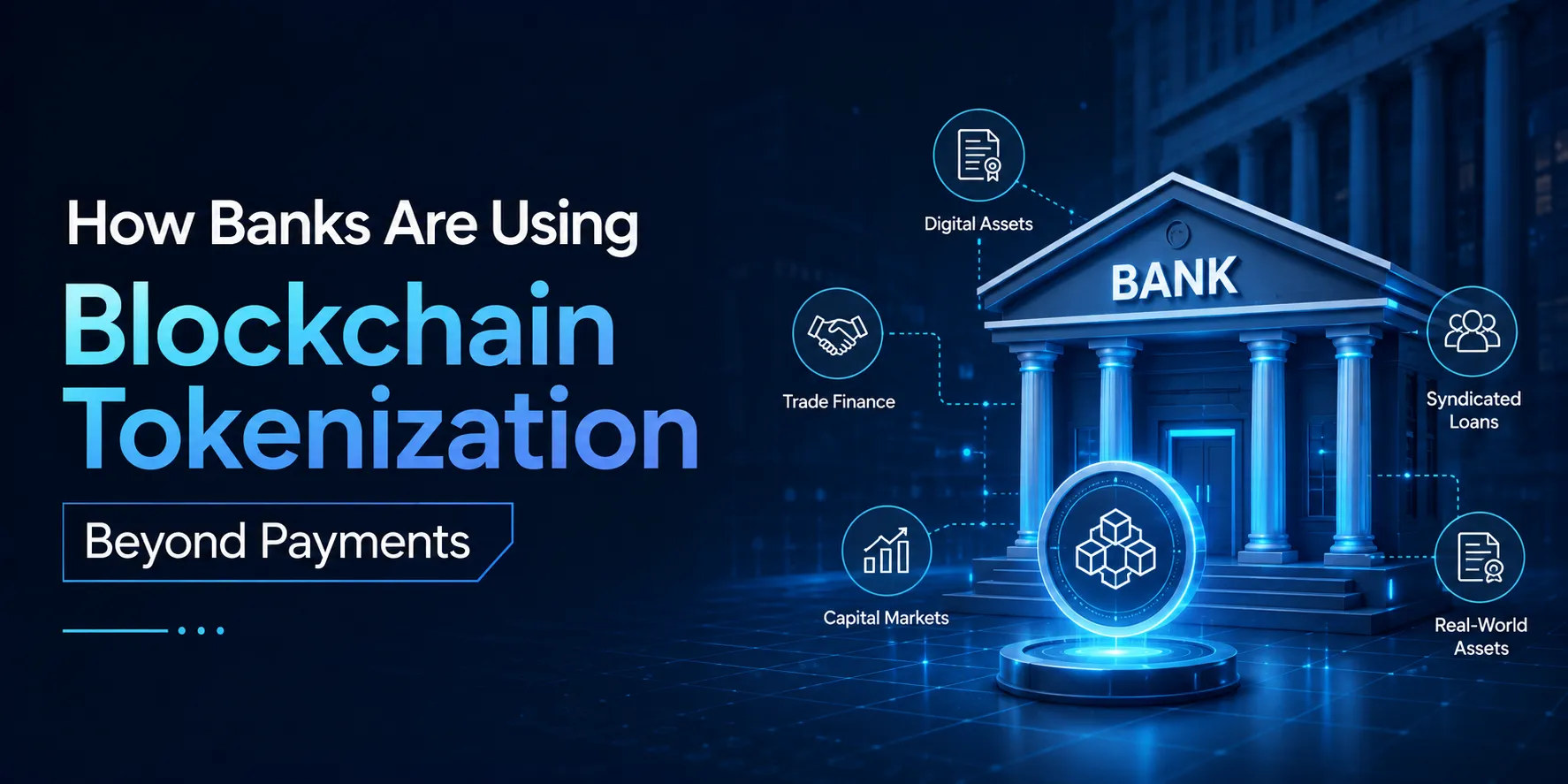
Payment Tokenization vs. Blockchain Tokenization: Not the Same Thing
In the payments world, tokenization swaps out a private value, like a card PAN. That swap uses a token that does not carry the real card data meaning.The point is safety for stored and processed data. It does not add rights, create ownership, or form an asset that can be traded. It mainly keeps sensitive details out of reach.
With blockchain tokenization, the idea is different. It makes a digital token that stands in for a real thing, like a bond portion, a slice of a fund, or a deposit unit. The token is written to a blockchain so it can be moved, checked, and finalized through the system.So payment tokenization guards a number. Blockchain tokenization represents an asset. In practice, banks use both, but they are used for different goals, sometimes together.
Where Banks Are Actually Using Blockchain Tokenization
1. Tokenized deposits
A few banks issue tokenized versions of customer deposits. These are digital claims on money that is already held in a regulated account. They are different from stablecoins made by outside firms. The tokens remain within the bank setup and are backed one for one by the real deposits. People like them because they can settle fast. Tokenized deposits can move and finish transactions in a short time, including at times when normal banking is closed. At the same time, they keep the same basic legal protections as standard deposits.
2. Tokenized bonds and fixed income
Banks also see clear value in bonds. With a tokenized bond, issuance, transfer, and settlement can happen on a blockchain. That avoids the usual chain of middle steps and the long settlement window that often takes several days. Some big banks have already tested or launched tokenized bonds. The goal is not just to be new. It is to shrink the settlement gap from days to minutes. It also cuts down the manual checks and matching that show up in older bond workflows.
3. Collateral management
Banks exchange collateral all the time, tied to loans, trades, and clearing steps. When that collateral is tokenized, it can be transferred between parties close to real time. It does not have to wait for end of day cutoffs. This is especially important when markets get shaky. In those moments, the timing of collateral movement can decide whether a margin call is met or missed.
4. Custody and fund administration
More asset managers are rolling out tokenized funds. Banks that already handle custody are now extending the same support to digital assets. If a bank is a custodian for tokenized funds, the work still looks familiar. It covers safekeeping, records, and settlement. The change is mainly where the assets live. They are on a blockchain, not only in a standard ledger.
5. Cross border settlement
Payments between banks across borders still often go through correspondent banks. Each link adds time and extra fees. With tokenized cash and tokenized securities, two institutions can settle directly. They can do it on a shared ledger, with fewer middle parties. Some banking groups are testing this now for things like interbank settlement, treasury work, and trade finance.
Why Banks Are Moving on This Now
This is not a fashionable thing for tokenization. It works because it tackles issues banks have had for years.Old settlement steps still can drag on for one to three days. With this setup, the same handoff can finish in minutes.
Some assets used to sit behind big minimum units. That meant you could not easily trade in smaller chunks. Now they can be split into smaller parts that people can actually buy and sell.Banks also spend a lot of time trying to match records. Systems do not always line up, and the handoffs through middle parties can cause mistakes. When everyone uses the same shared source, that matching work gets easier and fewer errors show up.
Then there is the schedule. Markets that shut at 5pm do not have much room for late orders. In theory, trading can keep running all day and night.For a bank, this is not just theory. When settlement is quick and recon errors drop, it can mean lower costs to run the operation. It can also mean less money stuck in the waiting period while trades catch up.
The Challenges Banks Still Have to Work Through
This change will not happen quickly, and there is a reason for that. Banks are taking the time to work through real limits before they expand.Rules are not the same everywhere. In some countries the guidance is still unclear, so banks proceed with care.
Most older core banking platforms were made for older setups. They were not designed to connect to blockchain networks. So the work is real engineering, not a quick plug in.Linking RWA tokenization services and blockchains is still catching up. A bond token created on one chain does not automatically function on a different one.
There is also the matter of custody. The private keys and the related systems still have to meet the same security expectations as normal banking. It cannot be a weaker standard.These issues can be handled. Banks are dealing with them step by step, often with pilots and tight, limited trials first, then later larger rollouts.
What This Means Going Forward
Tokenization in banking has been around for a long time. The goal was simple: keep the right data safe and stop the wrong numbers from leaking.
Now blockchain tokenization is aiming at a wider shift. It is not only about hiding payment details. It is about changing how certain assets move. Deposits can show up as digital tokens. Bonds, collateral, and fund units can do the same. These tokens can settle sooner and transfer with less friction than older paper methods or setups tied to one database.
This does not mean the old banking systems are going away. Not yet. It is more like a new layer banks add on top of what already runs well. They roll it out in small, specific cases. As more firms move from trials to real use, the line between “blockchain tokenization” and day to day bank work should keep getting thinner.
Want to explore how real-world asset tokenization works in more depth?
Read our RWA Tokenization Guide for a full breakdown of how assets are tokenized, issued, and traded on-chain.





























Sign in to leave a comment.