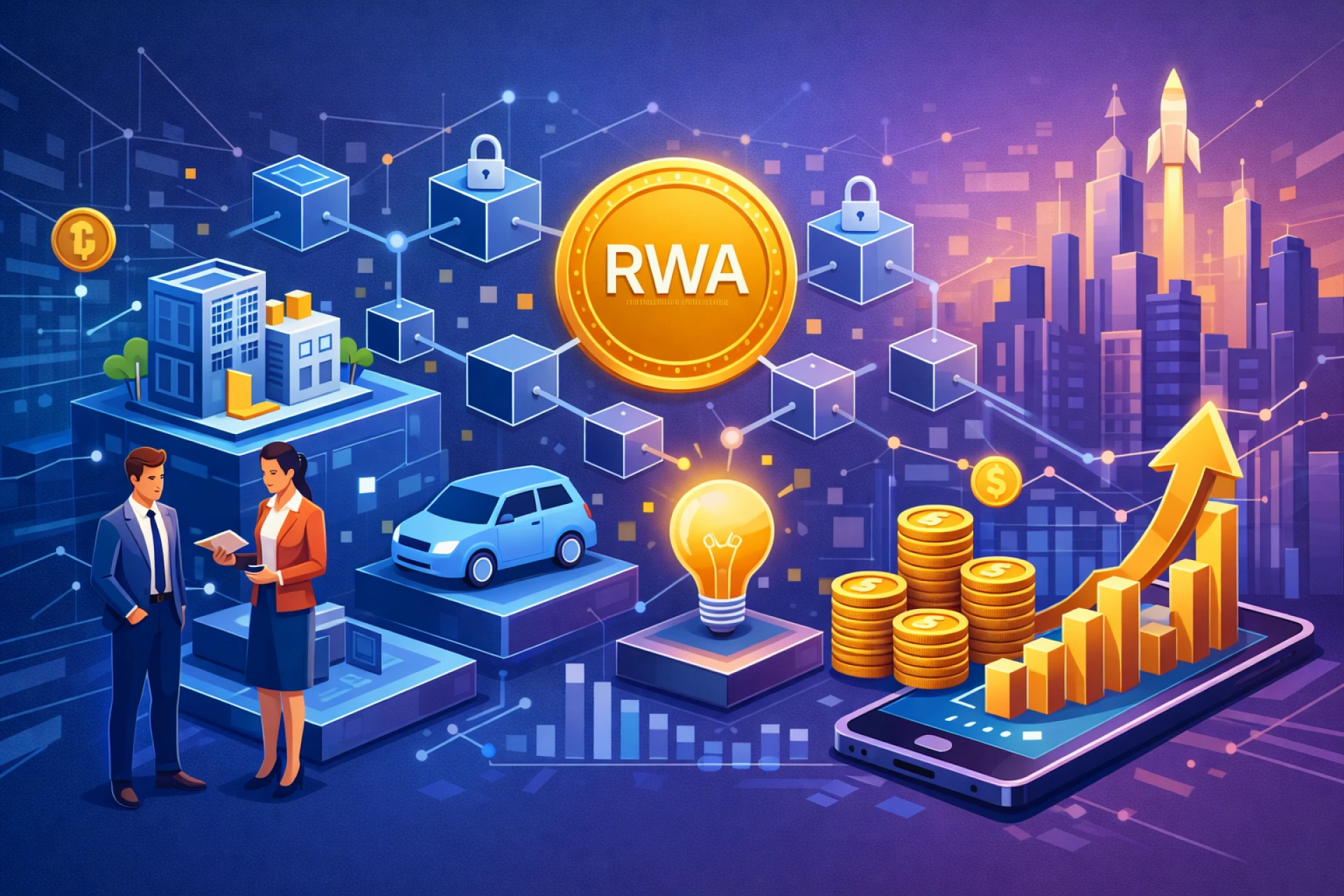

The global financial ecosystem is undergoing a structural transformation as physical assets move onto blockchain infrastructure. From real estate and commodities to private equity and infrastructure funds, Real World Asset Tokenization is unlocking liquidity, transparency, and borderless investment opportunities that were previously limited to institutional players. For startups, this shift represents more than a technology trend. It presents a rare window to build scalable, high-margin, and globally competitive businesses.
RWA Tokenization allows physical and financial assets to be represented as digital tokens on a blockchain. These tokens can reflect ownership, revenue rights, or debt instruments, making assets programmable, fractionalized, and tradable. As institutional capital increasingly enters the space and regulatory clarity improves across multiple jurisdictions, startups that position themselves strategically can build sustainable revenue engines around RWA Tokenization Services and infrastructure.
This blog explores how startups can build a profitable business model around Real World Asset Tokenization, including strategic positioning, monetization models, technology stack decisions, regulatory alignment, and long-term scaling methods.
Understanding the Business Opportunity in RWA Tokenization
Before launching a venture, founders must understand the economic logic behind RWA Tokenization. Traditionally, assets such as real estate, fine art, and private credit were illiquid and required significant capital. Real World Asset Tokenization changes this by enabling fractional ownership and global investor access.
The opportunity for startups lies in solving three core inefficiencies:
Liquidity fragmentation
High entry barriers for retail investors
Manual and opaque asset management processes
By building infrastructure, platforms, or services that address these issues, startups can generate recurring revenue streams. This is where a well-structured RWA Tokenization Company can differentiate itself by combining technology, compliance, and investor access into a cohesive solution.
Choosing the Right Market Niche
Not all assets are equal in terms of tokenization potential. Profitability depends heavily on selecting a niche with strong demand, regulatory feasibility, and clear monetization.
Real Estate Tokenization
Commercial and residential properties remain the most mature segment of Real World Asset Tokenization. Startups can focus on tokenizing rental properties, luxury developments, or commercial spaces. By offering Real World Asset Tokenization Services to property developers, they can earn fees on structuring, token issuance, and secondary market facilitation.
Private Credit and Debt Instruments
Private credit markets are growing rapidly. Tokenizing debt instruments allows startups to enable global participation in structured finance deals. A RWA token development strategy focused on yield-bearing tokens can attract both retail and institutional investors.
Commodities and Trade Finance
Commodities such as gold, oil, and agricultural products can be tokenized to increase liquidity and transparency. Trade finance tokenization can reduce settlement time and fraud risk.
The key method here is specialization. Instead of trying to serve every asset class, startups should build domain expertise and regulatory familiarity in one segment, then expand horizontally.
Designing a Revenue Model That Scales
Building a profitable RWA Tokenization business requires a multi-layered revenue model.
Tokenization Setup Fees
Startups can charge asset owners for structuring and issuing tokens. This includes legal structuring, smart contract deployment, compliance integration, and platform onboarding. A RWA Tokenization Company often charges a percentage of the total asset value being tokenized.
Platform Licensing
If the startup develops proprietary infrastructure, it can operate as a rwa tokenization platform development company and license its software to financial institutions or asset managers. This creates recurring SaaS revenue.
Transaction Fees
Secondary trading of tokenized assets generates transaction fees. Even a small percentage on high-volume trading can produce significant income.
Asset Management Fees
If the startup manages tokenized portfolios, it can charge annual management fees similar to traditional funds.
Compliance and Advisory Services
Offering Real World Asset Tokenization Offerings that include regulatory consulting, investor onboarding, and legal structuring adds high-margin revenue streams.
A hybrid model combining issuance fees, SaaS licensing, and transaction commissions ensures long-term profitability and reduces dependency on a single revenue source.
Building the Right Technology Infrastructure
Technology is the backbone of rwa tokenization platform development. Startups must decide whether to build from scratch or partner with a Real world asset tokenization platform company.
Blockchain Selection
Public blockchains offer transparency and liquidity but may face scalability and compliance challenges. Permissioned blockchains provide better regulatory control but may limit investor participation.
Smart Contract Architecture
Security and compliance are critical. Smart contracts must handle token issuance, investor whitelisting, dividend distribution, and voting rights. Collaborating with an experienced RWA tokenization development company can minimize technical vulnerabilities.
Compliance Integration
Know Your Customer and Anti Money Laundering frameworks must be embedded into the platform. Without compliance automation, scaling becomes impossible.
Custody Solutions
Secure custody of digital tokens and underlying assets builds investor trust. Institutional-grade custody partnerships can increase credibility.
The goal is to create infrastructure that supports Real world asset tokenization platform development at scale, with minimal operational friction.
Navigating Regulatory Complexity
Regulation determines long-term viability. Tokenized assets often fall under securities laws, requiring licensing and compliance frameworks.
Startups should adopt the following method:
Engage legal experts early
Structure tokens according to local securities regulations
Implement transparent reporting mechanisms
Align with recognized financial authorities
Instead of avoiding regulation, successful startups use compliance as a competitive advantage. Clear legal frameworks attract institutional investors and reduce operational risk.
Building Strategic Partnerships
No startup can succeed in isolation within the RWA Tokenization ecosystem. Partnerships drive credibility, distribution, and scalability.
Asset Owners
Property developers, fund managers, and commodity traders provide deal flow. Building strong relationships ensures a steady pipeline of assets.
Financial Institutions
Banks and asset managers can act as distribution partners. Aligning with established institutions accelerates adoption.
Technology Providers
Collaborating with a rwa tokenization platform development company enables faster product deployment and reduces development costs.
Marketing and Community Platforms
Platforms like NASSCOM and Vocal Media can help startups expand thought leadership and attract investor interest through content visibility.
Strategic alliances reduce time to market and enhance trust among stakeholders.
Creating Investor Demand
Even the most advanced RWA Tokenization platform fails without investors. Startups must build both institutional and retail investor bases.
Education and Transparency
Investors need clarity on asset performance, risk, and returns. Publishing detailed reports and case studies builds confidence.
Yield Optimization
Tokenized assets must offer competitive returns. Structuring yield-bearing tokens tied to rental income or debt interest enhances attractiveness.
Secondary Liquidity
Enabling trading markets increases investor participation. Liquidity is one of the strongest selling points of Real World Asset Tokenization.
By combining strong asset selection with transparent communication, startups can build sustainable investor demand.
Operational Excellence and Risk Management
Operational efficiency determines profitability. Tokenization startups must manage:
Smart contract security risks
Asset valuation risks
Market volatility
Regulatory updates
Continuous auditing, third-party security reviews, and diversified asset portfolios reduce systemic risk.
Scaling Beyond Initial Markets
Once a startup validates its model in one region or asset class, expansion becomes the next growth driver.
Geographic Expansion
Different jurisdictions offer varying levels of regulatory clarity. Entering markets with progressive digital asset regulations can accelerate growth.
Asset Class Diversification
After mastering real estate, startups can expand into private equity or infrastructure.
White Label Solutions
Offering white label infrastructure through a RWA Tokenization Company model allows banks and financial institutions to launch tokenized products under their own brand, generating recurring licensing revenue.
Scaling strategically ensures compounding revenue growth without overstretching resources.
Leveraging Marketing and Thought Leadership
Content marketing plays a critical role in building authority. Publishing research on Real World Asset Tokenization trends, regulatory developments, and case studies builds credibility.
Participating in industry forums, contributing guest articles, and engaging with fintech communities increases visibility. A strong brand positions the startup as a trusted RWA tokenization development company rather than just another technology provider.
Financial Planning and Capital Strategy
Building a profitable RWA Tokenization business requires disciplined financial planning.
Seed Capital Allocation
Funds should be allocated across technology development, legal compliance, marketing, and operational infrastructure.
Venture Capital Alignment
Investors interested in blockchain and fintech innovation often seek scalable infrastructure plays. Demonstrating recurring revenue potential from Real World Asset Tokenization Services strengthens fundraising narratives.
Revenue Reinvestment
Profits should be reinvested into security upgrades, regulatory expansion, and product enhancement to maintain competitive advantage.
Future Outlook of RWA Tokenization
The tokenization of real-world assets is expected to grow exponentially over the next decade. Institutional adoption is accelerating as global financial firms explore blockchain-based settlement systems.
Startups that invest early in robust rwa tokenization platform development, regulatory compliance, and scalable revenue models will likely dominate emerging markets.
As digital and traditional finance converge, Real World Asset Tokenization Offerings will become integral to capital markets infrastructure. Early movers who establish trust, technology leadership, and strong partnerships will enjoy compounding advantages.
Conclusion
Building a profitable startup around RWA Tokenization requires more than technical expertise. It demands strategic niche selection, diversified revenue models, regulatory alignment, strong partnerships, and relentless operational discipline.
By focusing on scalable infrastructure, offering comprehensive Real World Asset Tokenization Services, and positioning as a trusted Real world asset tokenization platform company, startups can capture significant value in a rapidly expanding market.
The opportunity is not limited to issuing tokens. It lies in creating an ecosystem that connects asset owners, investors, and regulators through secure and compliant digital infrastructure. With thoughtful execution and long-term vision, entrepreneurs can transform RWA Tokenization into a sustainable and high-growth business venture.
The shift toward tokenized economies has already begun. For startups willing to innovate responsibly and strategically, the pathway to profitability in Real World Asset Tokenization is both achievable and transformative.




























Sign in to leave a comment.