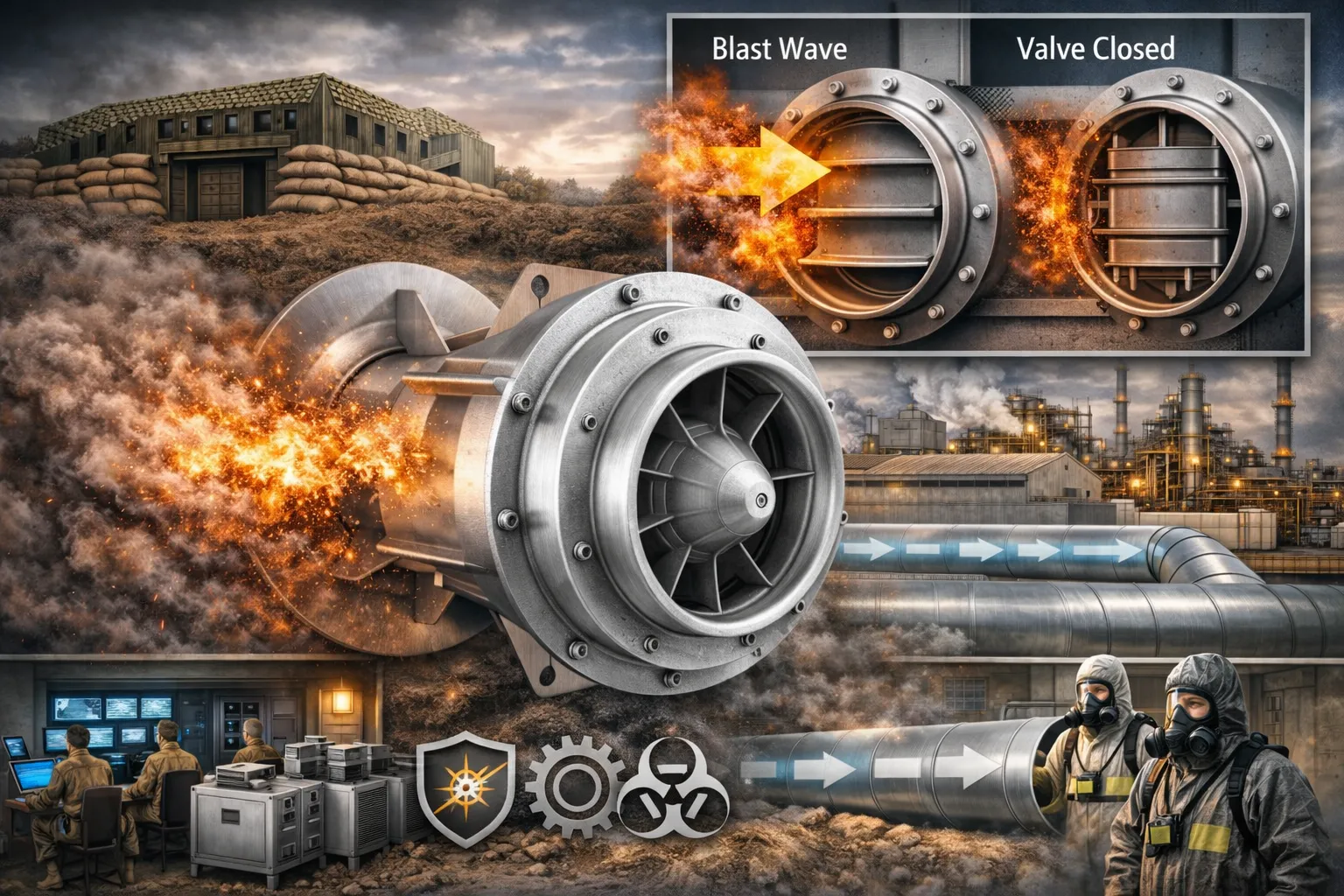

In a bunker ventilation chamber, hazardous manufacturing facility, or defense control shelter, ventilation protection systems must respond instantly during a pressure event. A valve that appears functional during normal airflow may fail under real blast conditions. That is why routine verification of blast valves is essential for pressure safety, airflow reliability, and infrastructure protection.
So, how can you tell if your blast valve is actually working properly?
What are Blast Valves?
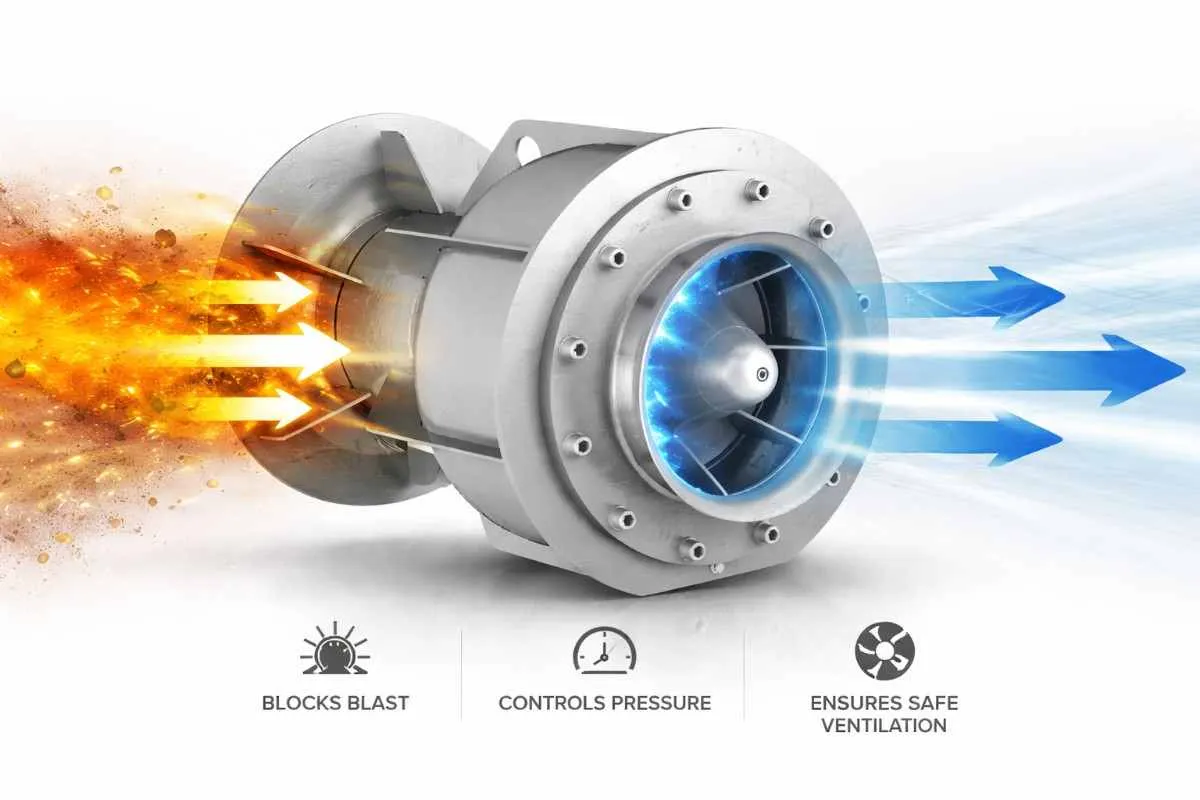
Blast valves are engineered protective devices designed to shield enclosed spaces from explosions, pressure surges, and contaminated airflow intrusion.
During normal operation, they permit controlled ventilation. When exposed to sudden overpressure, they automatically close to isolate the protected environment.
These systems are widely used in underground shelters, industrial facilities, defense infrastructure, and Blast valve HVAC systems where airflow control and emergency protection must operate together.
Unlike a standard Blast Gate, blast valves are built specifically for high-pressure protection scenarios.
How Blast Valves Work Under Explosion Pressure
Blast valves use pressure-sensitive mechanical action to react during emergency conditions.
Under routine airflow conditions, the valve remains open for ventilation. When a shockwave or overpressure event occurs, the internal mechanism activates and rapidly seals the airflow path.
This process supports:
- Pressure regulation
- Shockwave handling
- Automatic closure
- Airflow control
- Protective isolation
Some systems reopen automatically after pressure conditions stabilize.
Pressure-control engineering also appears in niche applications involving blast valve hot air balloon airflow systems, where balanced pressure response affects operational performance.
How to Know if Your Blast Valve Is Working Properly
A functioning blast valve should show reliable mechanical movement, effective sealing, and stable airflow behavior.
Several indicators help confirm proper performance.
Inspect Mechanical Operation
The valve mechanism should move smoothly without sticking, misalignment, or excessive resistance.
Visible deformation, unusual noise, or delayed movement may indicate wear or internal damage.
Check Sealing Condition
Inspect seals, gaskets, and contact surfaces.
Poor sealing efficiency can allow pressure leakage during emergency closure, reducing protection effectiveness.
Examine Corrosion and Structural Wear
Rust, coating damage, or material degradation can weaken structural integrity.
This is especially important for a Blast valve for bunker installation operating in humid or underground environments.
Review Airflow Performance
Unexpected airflow restriction, pressure imbalance, or ventilation inefficiency may signal performance issues within a Blast valve HVAC system.
Perform Scheduled Testing
Routine inspection schedules, mechanical testing, and pressure-response verification help confirm ongoing operational readiness.
Key Features of Reliable Blast Valves
Well-maintained blast valves typically demonstrate several core performance characteristics.
Pressure Resistance: Ability to tolerate severe overpressure conditions.
Structural Strength: Reinforced construction for mechanical stability.
Corrosion Resistance: Protective finishes that support long-term reliability.
Durability: Consistent operation under demanding environmental conditions.
Sealing Efficiency: Tight closure capability during emergency activation.
Airflow Management: Balanced airflow performance during normal ventilation.
Safety Performance: Reliable protective behavior validated through testing and engineering design.
Where Blast Valves are Used
Performance monitoring requirements often depend on application type.
Bunkers and Shelters
A properly maintained Blast valve for bunker systems supports underground shelters, reinforced safe rooms, and emergency facilities.
Industrial Facilities
Chemical plants, refineries, and manufacturing operations use blast valves for pressure-control protection.
Defense Infrastructure
Military facilities rely on dependable blast-rated airflow isolation systems.
HVAC Systems
Modern Blast valve HVAC systems combine ventilation efficiency with emergency airflow protection.
Power Plants and Hazardous Environments
Power facilities and hazardous sites frequently integrate blast valves with Blast damper systems for stronger airflow isolation and operational safety.
Organizations studying reinforced airflow protection can also explore educational resources on industrial blast protection solutions to better understand integrated blast-resistance design.
Factors Affecting Blast Valve Price in India
Several engineering variables influence Blast valve price in India.
Important cost factors include:
- Material quality
- Pressure rating
- Valve design complexity
- Custom engineering requirements
- Certification standards
- Installation environment
- Manufacturing precision
- Size and airflow capacity
Higher-performance systems built for hazardous facilities or defense applications often require stricter engineering and testing processes.
How to Choose Blast Valve Manufacturers in India
Manufacturer quality directly influences valve performance and maintenance reliability.
Buyers should evaluate:
- Industry experience
- Engineering standards
- Product testing capability
- Compliance certifications
- Customization flexibility
- Technical support
- Long-term reliability
Strong manufacturers provide technical documentation, maintenance guidance, and verified testing data.
Common Mistakes to Avoid
Performance problems often begin with incorrect equipment selection or poor maintenance practices.
Common mistakes include:
- Choosing based only on price
- Ignoring pressure ratings
- Poor HVAC compatibility
- Overlooking maintenance requirements
- Using incorrect specifications for high-risk facilities
- Confusing standard Blast Gate equipment with certified blast protection devices
- Failing to integrate supporting Blast damper systems correctly
Review your facility’s safety setup to identify hidden performance weaknesses.
Consider upgrading your pressure protection systems if inspections reveal aging components or unreliable operation.
Explore more industrial safety insights to strengthen long-term infrastructure resilience.
Conclusion
Knowing whether a blast valve is working properly requires more than a visual inspection. Mechanical movement, sealing performance, airflow behavior, structural condition, and routine testing all influence operational readiness.
Understanding maintenance practices, application requirements, and Blast valve price considerations helps organizations make informed protection decisions.
In high-risk environments, a properly functioning blast valve is not simply a ventilation component — it is a critical safeguard for pressure management, explosion safety, and infrastructure protection.




























Sign in to leave a comment.