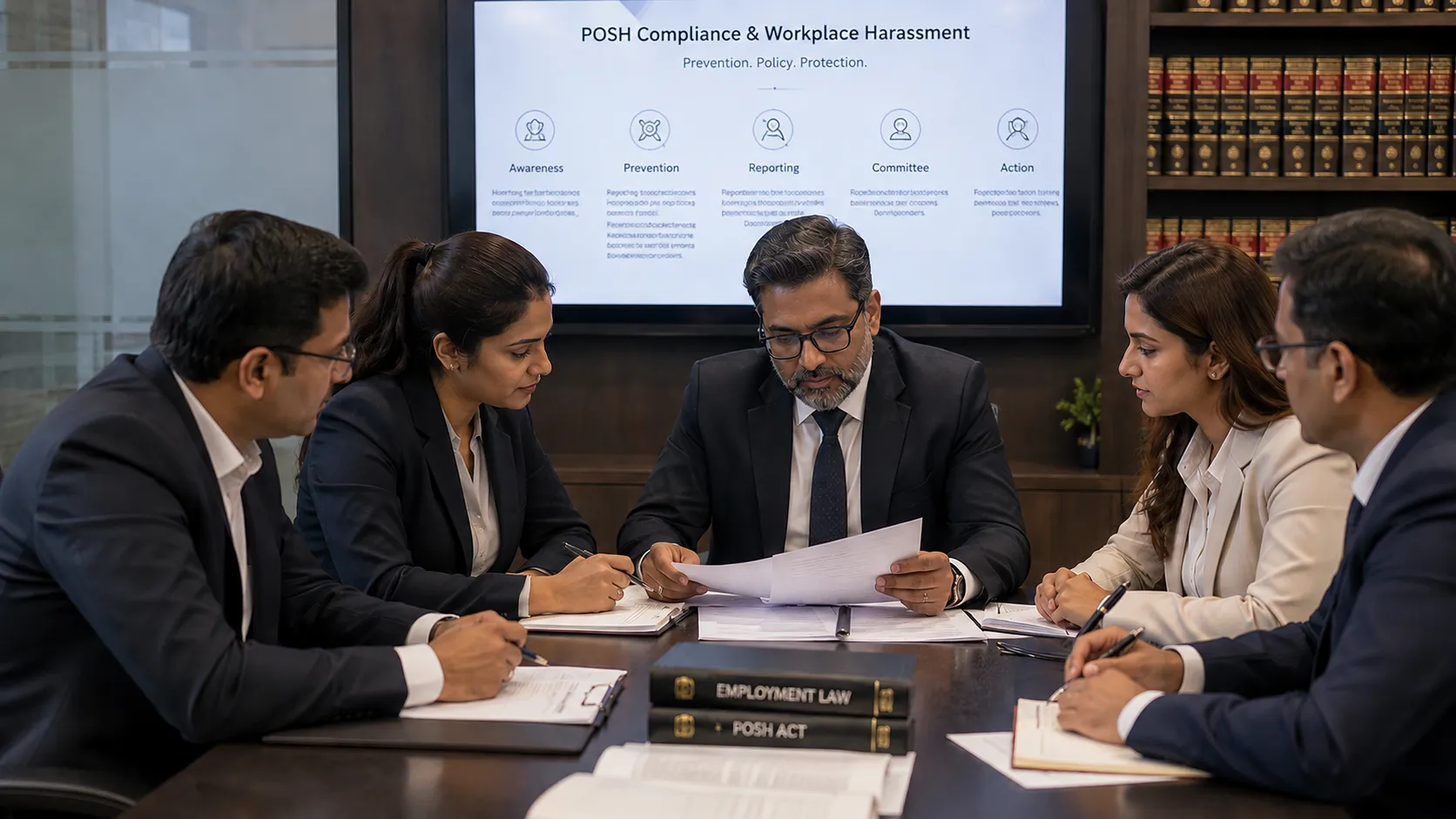

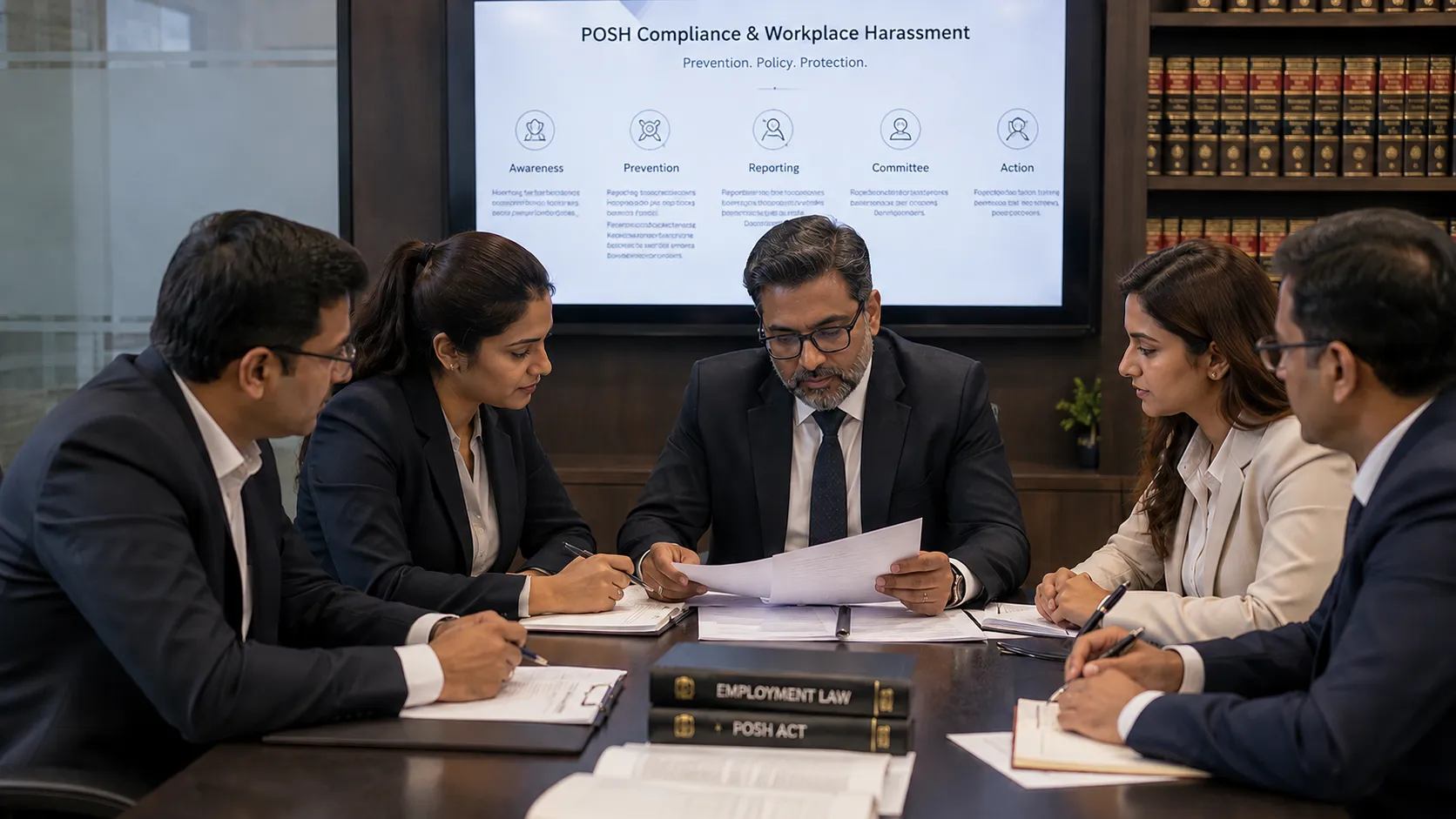
Workplace harassment complaints require immediate legal attention, procedural accuracy, and strict compliance with employment regulations. A delayed response, an improperly constituted Internal Committee, or a failure to follow statutory timelines can expose both employers and employees to serious legal consequences. Many organisations initiate internal action only after the situation escalates, by which stage procedural lapses often complicate the matter further.
In India, workplace harassment claims are governed primarily by the Sexual Harassment of Women at Workplace (Prevention, Prohibition and Redressal) Act, 2013 (POSH Act). The law imposes mandatory obligations on employers regarding complaint handling, committee constitution, inquiry timelines, confidentiality, and disciplinary action. Depending on the nature of the allegations, workplace harassment matters may also involve provisions under labour laws, service rules, employment contracts, constitutional protections, and the Indian Penal Code.
An experienced employment & labour law firm in India plays a crucial role in ensuring that harassment claims are handled lawfully, fairly, and in compliance with statutory procedure.
This article explains how employment lawyers manage workplace harassment matters, advise employers on POSH compliance, represent complainants and respondents during inquiries, and address complex legal disputes arising from workplace misconduct allegations.
Legal Framework Governing Workplace Harassment Claims in India
The POSH Act, 2013 forms the primary legal framework governing workplace sexual harassment complaints in India. The law applies to private companies, government organisations, educational institutions, NGOs, startups, and unorganised sector establishments.
Under the POSH Act, every employer with ten or more employees must constitute an Internal Complaints Committee (ICC). The committee must include:
- A senior woman employee as Presiding Officer
- At least two employee members
- One external member with legal or social work experience
The law also prescribes mandatory procedural requirements, including:
- Complaint filing within the prescribed limitation period
- Completion of inquiry within 90 days
- Submission of the inquiry report within 10 days
- Implementation of recommendations by the employer within 60 days
Apart from the POSH Act, workplace harassment matters may also involve:
- Indian Penal Code provisions
- Industrial Disputes Act
- Service and employment rules
- Labour court proceedings
- Constitutional protections in public employment matters
An employment & labour law firm in India evaluates the facts of each case carefully to determine the appropriate legal remedy, jurisdiction, and procedural approach.
How Employment & Labour Law Firms in India Assist Employers
Employment law firms frequently advise organisations on preventive compliance and procedural management before disputes escalate into formal litigation.
POSH Policy Drafting and Compliance Review
Law firms assist companies in drafting legally compliant POSH policies covering:
- Complaint procedures
- Inquiry protocols
- Confidentiality obligations
- Disciplinary measures
- Employee awareness requirements
They also review existing policies to identify gaps that may expose the organisation to legal risk.
Internal Complaints Committee (ICC) Formation
Many organisations fail to constitute the ICC according to statutory requirements. Employment lawyers verify whether:
- Committee composition complies with the POSH Act
- External members meet legal eligibility standards
- Conflict-of-interest concerns exist within the committee
Improper ICC constitution can invalidate inquiry findings and expose the employer to compliance violations.
Advisory Support During Complaints
Once a complaint is received, employment lawyers guide employers on:
- Immediate procedural obligations
- Interim relief measures
- Documentation requirements
- Employee communication protocols
- Confidentiality compliance
- Inquiry timelines
Early legal guidance helps organisations avoid procedural irregularities during the inquiry process.
How Employment Lawyers Represent Complainants
Complainants often require legal support to ensure that workplace harassment allegations are presented properly and investigated fairly.
Complaint Drafting and Documentation
The written complaint forms the foundation of the inquiry process. Employment lawyers help complainants prepare detailed complaints supported by:
- Incident chronology
- Witness details
- Documentary evidence
- Electronic communication records
- Workplace correspondence
Clear documentation improves procedural clarity during ICC proceedings.
Representation During ICC Proceedings
An employment & labour law firm in India may represent complainants during inquiry proceedings to ensure:
- Fair hearing opportunities
- Proper examination of evidence
- Compliance with statutory timelines
- Protection against procedural bias
Lawyers also advise complainants on parallel legal remedies where criminal offences or employment retaliation are involved.
Post-Inquiry Legal Remedies
If the complainant disputes the inquiry findings or disciplinary recommendations, legal counsel may advise on:
- Labour court proceedings
- Civil remedies
- Writ petitions
- Criminal complaints
- Compensation claim
How Employment Lawyers Represent Respondents
Respondents also have important procedural rights during workplace harassment inquiries. Employment lawyers ensure that the inquiry process remains legally compliant and evidence-based.
Defence Preparation
Law firms assist respondents in preparing:
- Written responses
- Supporting documents
- Witness lists
- Employment records
- Communication evidence
A properly prepared defence helps the ICC evaluate the allegations fairly.
Monitoring Procedural Compliance
Employment lawyers verify whether:
- The respondent received complete complaint details
- Adequate response time was provided
- Evidence examination procedures were followed
- Natural justice principles were maintained
Any procedural violation can affect the validity of the inquiry outcome.
Challenging Adverse Findings
If the ICC issues adverse findings unsupported by evidence or affected by procedural irregularities, legal counsel may initiate:
- Labour court challenges
- Writ proceedings before High Courts
- Appeals under applicable service rules
- Civil litigation
Role of Constitutional Lawyers in Workplace Harassment Cases
Certain workplace harassment disputes involve constitutional and public law issues that extend beyond employment law compliance.
Constitutional lawyers in India become relevant in matters involving:
- Government employees
- Public sector organisations
- Fundamental rights violations
- Discriminatory employer action
- Unlawful retaliation after complaints
- Administrative law challenges
In such cases, proceedings may involve writ petitions before High Courts or the Supreme Court under Articles 14, 19, and 21 of the Constitution of India.
Employment law specialists and constitutional lawyers often work together in complex harassment matters involving both statutory and constitutional issues.
Important Legal Steps After a Workplace Harassment Complaint
For Employers
After receiving a complaint, employers should:
- Verify ICC compliance immediately
- Initiate inquiry proceedings within statutory timelines
- Maintain confidentiality throughout the process
- Preserve records and evidence carefully
- Avoid retaliatory action against either party
- Seek legal guidance before issuing disciplinary action
For Employees
Both complainants and respondents should:
- Preserve emails, messages, and workplace records
- Maintain written records of communication
- Avoid discussing proceedings publicly
- Cooperate with inquiry procedures
- Seek legal advice before submitting formal statements
Proper legal guidance during the early stages often determines how effectively the matter progresses.
Final Thoughts
Workplace harassment claims involve serious legal, procedural, and organisational consequences for all parties involved. Employers must comply with statutory obligations under the POSH Act, while complainants and respondents must ensure that their rights are protected throughout the inquiry process.
An experienced employment & labour law firm in India helps organisations manage workplace harassment matters in accordance with legal procedure, evidence standards, and compliance requirements.
In matters involving public employment, constitutional protections, or fundamental rights violations, constitutional lawyers in India provide additional legal support through writ jurisdiction and constitutional remedies. Proper legal handling from the beginning reduces procedural risk, protects workplace integrity, and ensures that workplace harassment complaints are addressed lawfully and fairly.




























Sign in to leave a comment.