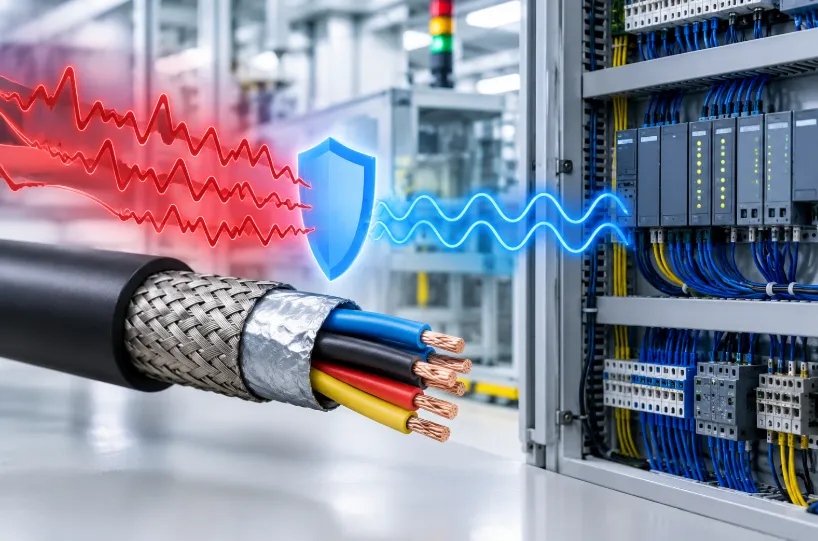

A panel builder in Chakan was three weeks into commissioning a new automation line for an auto component plant when the trouble started. Every time the line's variable frequency drives ramped up, an encoder feeding position data to the PLC would throw random glitches. Nothing was wrong with the encoder. Nothing was wrong with the PLC. The signal wire running next to the VFD power cables was picking up noise from the drive every time it switched, and that noise was enough to confuse a control system that depends on clean, accurate signals to function.
This kind of problem shows up more often than most people expect, and it is rarely caused by a faulty component. It is caused by wiring that was never built to handle the electrical environment around it. As Indian manufacturing plants pack more drives, servo motors, sensors and automation electronics into the same panels and trays, the risk of one device's electrical noise disturbing another device's signal keeps growing. Getting a handle on how shielded control cables actually work, and where they matter most, is worth understanding before a plant runs into the same problem that panel builder in Chakan did.
Why Control Signals Get Disturbed on a Busy Plant Floor
Electrical interference in an industrial setting usually comes from a fairly small list of sources. Variable frequency drives switch current rapidly and radiate noise as they do it. Contactors and relays generate small voltage spikes when they open and close. Welding equipment, motors and even fluorescent lighting can add their own share of electrical noise into the mix. None of this is unusual. It is simply what happens when high power equipment and low voltage control wiring share the same space.
The trouble is that control signals, the ones telling a PLC where a conveyor is positioned or what a sensor is reading, run at very low voltage. They do not need much interference to get corrupted. A control wire running parallel to a VFD cable for even a few metres can pick up enough induced noise to cause exactly the kind of intermittent fault that took that panel builder days to trace.
This is not a niche concern either. Industrial equipment across the world is designed and tested against IEC 61000-6-2 and IEC 61000-6-4, the generic international standards covering immunity and emissions for industrial environments. These standards exist because electrical noise between devices sharing a panel or plant floor is a well understood engineering problem, not an occasional inconvenience. Once you know that, the wiring choices in a panel start to matter a lot more than they might first appear.
What Actually Happens Inside a Shielded Cable
A shielded control wire works by wrapping the conductors in a layer of foil, braid, or a combination of both. That layer acts like a barrier. When electrical noise tries to induce a current onto the signal conductors inside, the shield intercepts it first and carries that unwanted energy away to ground instead of letting it reach the actual signal path.
Here is where a lot of panels go wrong, though. A shield is only as effective as its grounding. According to IEC 61000 guidance on shield termination, the connection from shield to ground needs to be low impedance, and long "pigtail" style connections, where the shield is twisted into a thin wire before it reaches the ground point, actually increase impedance and weaken the shield's effectiveness. For high frequency data lines, a full 360 degree termination at both ends is generally recommended, while single-end grounding tends to suit low frequency analog signals better.
So when that panel builder in Chakan finally traced the fault, the issue was not that the cable lacked a shield. It was that the shield had been terminated with a long pigtail lead instead of a proper clamped connection. Once the termination was corrected, the noise dropped out almost entirely. It is a good example of why simply buying shielded cables is not enough. How they are grounded matters just as much as the shielding itself.
Where This Actually Shows Up in Real Applications
The clearest cases for shielding are the ones involving sensitive, low voltage signals running anywhere near power equipment. Encoder and feedback wiring on servo driven machinery is one obvious example, since these signals need to stay precise for the equipment to position correctly. VFD control loops are another, particularly the wiring between a drive and the PLC that commands it. Instrumentation cables running near welding stations or large motors face the same exposure.
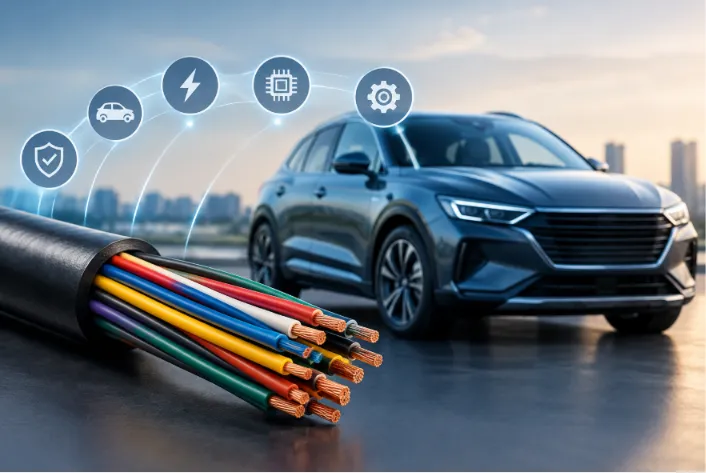
Automotive component manufacturing is a good illustration of why this matters so much right now. Assembly lines increasingly rely on servo positioning, vision systems and multiple VFDs working in close proximity, all packed into panels that keep getting smaller as plants try to save floor space. That density is exactly the environment where EMI shielded cables stop being a nice-to-have and start being a basic requirement for the line to run reliably. Ask yourself how many unexplained faults on a plant floor might actually trace back to wiring rather than the equipment itself.
Choosing Cable That Actually Holds Up in the Panel
Specifying cable for a panel like this involves more than checking a box for "shielded" on a datasheet. The type of shield matters. Braided shields tend to handle mechanical flexing better, foil shields offer more complete coverage against high frequency noise, and combination shields are often used where both properties are needed. Conductor quality and insulation rating matter too, since a cable that degrades under heat or vibration will lose its shielding performance over time regardless of how it was built.
It also helps to think about the panel's grounding scheme before the cable is ordered, not after it is installed. A cable that is technically well shielded but incompatible with how the panel is grounded will still cause problems, the same way that Chakan panel did before the termination was fixed. Buyers who treat cable selection as part of their EMC planning, rather than something to sort out during commissioning, tend to avoid a lot of troubleshooting later.
Getting Manufacturing Consistency Right, Not Just the Spec Sheet
This is also where manufacturing quality starts to matter more than most buyers initially realise. A datasheet can promise a certain shield coverage percentage, but if the actual coverage varies from batch to batch, or the termination points are inconsistent, that promise does not hold up on a live panel. Consistent shield coverage, stable conductor quality and tested insulation are what actually determine whether industrial control cables perform the way they are supposed to once installed.
At Balaji Cables & Wires, this is the kind of detail we pay attention to when manufacturing control cable for panel builders and OEMs working on automation and automotive applications. A cable that looks right on paper needs to behave the same way on the factory floor, batch after batch, and that only happens with consistent manufacturing discipline behind it.
Getting Signal Integrity Right Before It Becomes a Production Problem
Electrical noise is not going away from Indian manufacturing plants. If anything, as automation density increases and more drives, sensors and control systems get packed into smaller panels, the margin for wiring mistakes keeps shrinking. What separates a plant that runs smoothly from one that spends weeks chasing intermittent faults often comes down to decisions made long before commissioning, decisions about cable type, shield construction and grounding method.
The panel builder in Chakan learned this the hard way, but the fix was straightforward once the root cause was found. The bigger question worth asking is whether your own panels and control wiring are built to handle the electrical environment they are actually operating in, or whether they are one crowded retrofit away from the same kind of troubleshooting headache. If you are speccing cable for an upcoming panel or automation project and want to talk through what shielding and construction actually fits your application, we are happy to walk through it with you.

























Sign in to leave a comment.