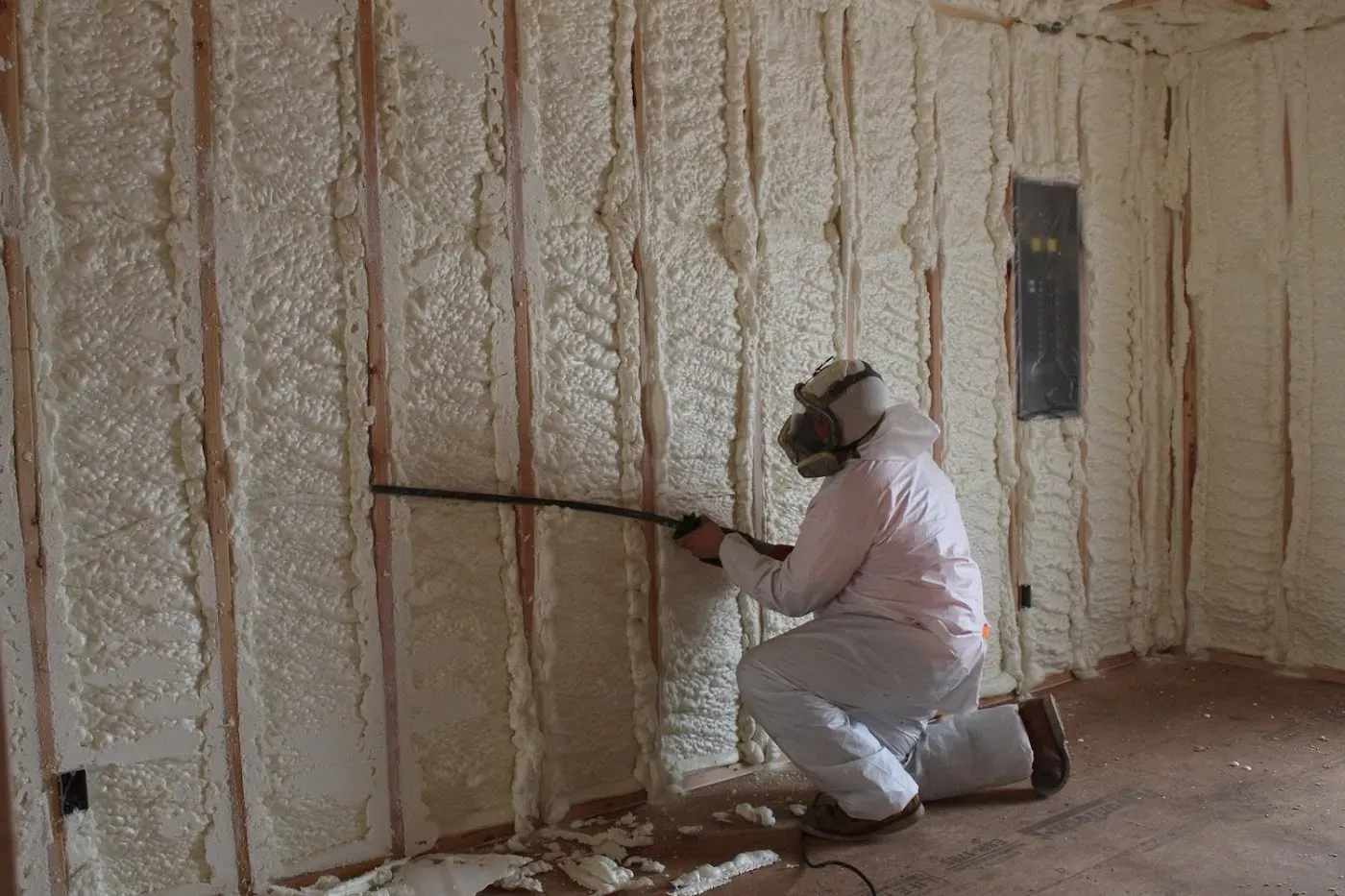

When condensation forms on bare metal roof panels and wood framing inside a pole barn, mold growth is almost guaranteed. We stop mold growth in post-frame structures by applying closed-cell spray foam directly to the interior metal ceiling panels and wooden support posts. Our Insulation Method seals air leaks, creates a continuous thermal break, and blocks humid air from touching cold metal surfaces where sweat forms.
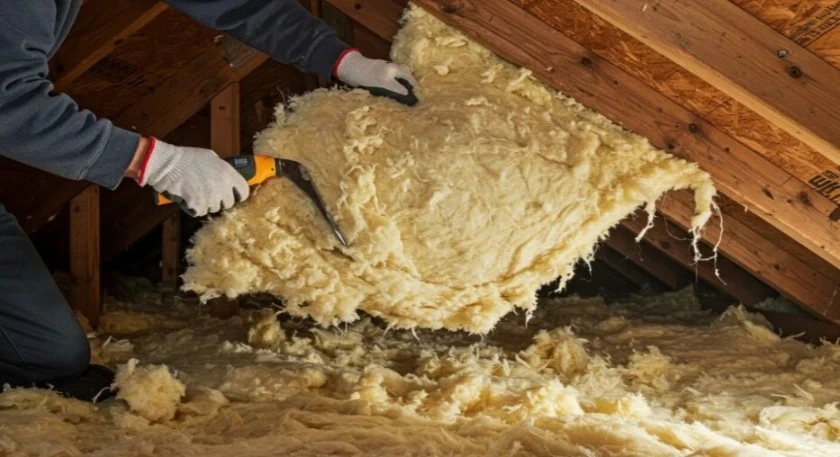
Over years of providing specialized Pole Barn Insulation Services, our team at Spray Foam Tech has seen how traditional fiberglass batts or vinyl-faced rolls often fail in metal buildings. Standard materials leave small air gaps behind them where damp air collects, hidden from sight, allowing mold to spread across wood purlins and girts. By spraying high-density polyurethane directly onto the building surfaces, we eliminate the air space where condensation forms, cutting off the moisture source mold spores require to grow.
Why Moisture and Sweat Build Up in Uninsulated Buildings
Metal buildings react quickly to outside temperature changes, making insulation services an essential solution for controlling moisture and improving indoor conditions. When warm, moisture-laden air inside a shop or storage barn comes into contact with cold steel roof panels, it cools rapidly and releases water in the form of condensation droplets, commonly known as metal sweat. If indoor relative humidity rises above 60%, mold spores can begin growing on exposed pine trusses and plywood within 24 to 48 hours.
Professional insulation services help create an effective air seal that limits condensation and protects the building from long-term moisture damage. Without proper insulation, warm air produced by livestock, parked machinery, washing equipment, or unvented heaters rises and condenses on the metal roof, causing water to drip onto floors, tools, and structural timbers. Over time, this recurring dampness can rot wood support posts, weaken roof fasteners, and reduce indoor air quality, making quality insulation a valuable investment for preserving the building's structure and functionality.

How Our Spray Foam Insulation Method Stops Moisture
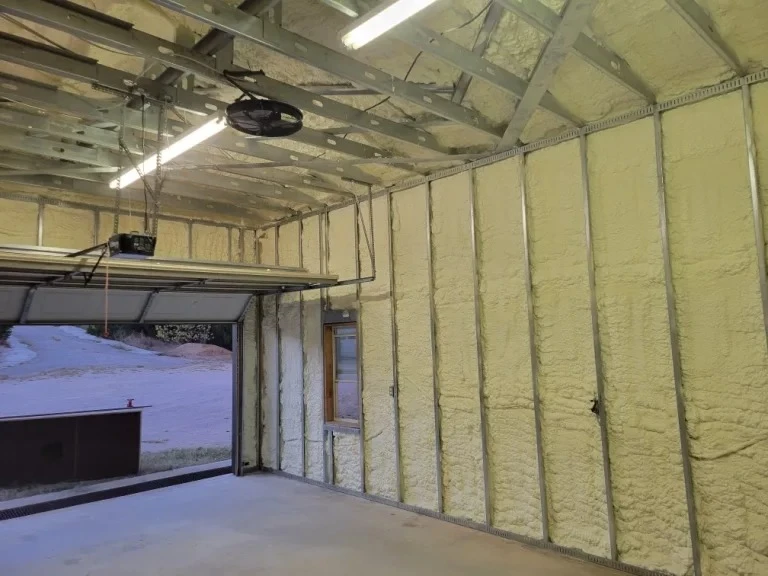
To stop mold permanently, you must eliminate surface condensation and damp air buildup. Our Insulation Method utilizes closed-cell polyurethane foam sprayed directly against the interior face of metal sheets and structural framing. As the liquid foam expands within seconds, it fills every seam, flute, corner, and gap between metal panels and wood purlins.
Because closed-cell foam forms a solid barrier that rejects both liquid water and vapor, warm air inside the building cannot reach the cold metal skin. Without a cold surface meeting humid air, condensation cannot form.
| Insulation Feature | Traditional Fiberglass / Roll Insulation | Our Closed-Cell Spray Foam Method |
|---|---|---|
| Vapor Barrier Creation | Requires separate plastic sheet; leaves air gaps | Forms an airtight, built-in moisture barrier |
| Condensation Risk | High; moisture collects behind backing | Zero; seals directly against metal skin |
| Mold Resistance | Poor; organic backings trap moisture | Inorganic material; does not feed mold |
| Lifespan & Sagging | Sags over time under moisture weight | Adheres permanently; never sags or pulls away |
| Structural Support | Adds no extra strength | Adds rigid strength to wall and roof panels |
Bonus Tip: Before installing any insulation, inspect metal roof sheets for existing leaks or loose roof screws. Spraying foam over an active water leak from outside makes locating and repairing the roof panel far more difficult later.
Long-Term Structural Benefits of Professional Pole Barn Insulation Services
Beyond controlling condensation, our Pole Barn Spray Foam Insulation protects the wood framing itself. Standard post-frame buildings use untreated spruce or pine for trusses and wall girts. When exposed to constant condensation cycles, these wooden timbers absorb moisture, expand, contract, and eventually develop surface mold or decay.
By completely covering the transition points where wood framing meets metal sheeting, we seal out atmospheric dampness. In addition to preserving structural timbers by keeping them dry, our closed-cell polyurethane foam hardens into a dense layer that adds real strength against wind forces. Industry testing indicates that applying two inches of closed-cell spray foam can increase rack resistance in wall assemblies by up to 250%, giving your barn extra stability during severe weather.
Bonus Tip: If your pole barn currently shows light surface mold on trusses or posts, scrub the wood with a bleach solution or fungicide spray and allow it to dry completely before foam application. Spray foam needs clean, dry wood to bond properly.

Things to Consider Before Making a Decision
Selecting the right approach for your post-frame structure requires balancing long-term performance with your specific building usage. Here are key points we review with building owners before starting any project:
- Current and Future Building Use: Storage barns holding dry equipment have different moisture control needs than heated workshops, agricultural spaces with livestock, or living spaces like barndominiums.
- Choice of Foam Density: Closed-cell foam offers built-in vapor barrier protection and high R-value per inch, making it ideal for bare metal panels. Open-cell foam works well in climate-controlled spaces with roof decking, but requires careful moisture planning in metal buildings.
- Condition of Framing and Metal: Existing rust on metal panels or soft spots in wood girts should be addressed before applying insulation. Foam adheres tightly to clean metal and solid wood.
- Ventilation Needs: While our foam seals off air leaks on ceiling panels, overhead storage areas or enclosed spaces still need balanced ventilation to move out indoor humidity produced by equipment, animals, or heaters.
Keeping Your Building Dry and Mold-Free
Stopping mold growth in post-frame structures comes down to managing surface moisture and condensation. By applying spray foam directly to interior metal and wood framing, we eliminate the damp air pockets that fuel mold growth. Choosing professional insulation services protects structural timbers, keeps stored assets clean, and extends the overall life of your building.
Protect Your Pole Barn with Spray Foam Tech
If you are ready to stop metal sweat and protect your building from mold, our team at Spray Foam Tech is here to assist. We provide dedicated Pole Barn Insulation Services, including residential spray foam, commercial spray foam, open-cell spray foam, closed-cell spray foam, and custom interior insulation tailored to your building setup.
Contact our team today to discuss your project: Email Address: [email protected] Phone: (737) 777-9590
Frequently Asked Questions About Moisture Control in Pole Barns
Does spray foam trap moisture against metal roof panels?
No. Because closed-cell foam bonds directly to the metal sheet without leaving air pockets, moisture cannot settle between the foam and the steel surface. Condensation only forms when warm, humid air touches a surface below its dew point temperature. By blocking air contact completely, no water drops form against the roof panels.
Can we spray foam insulation directly over existing mold?
We do not recommend spraying over active mold growth. While foam starves mold of air from one side, existing spores on damp wood should be treated and dried first. Cleaning the wood surface ensures proper adhesion and stops mold from continuing to break down wood fibers beneath the foam layer.
How thick should the foam layer be to stop metal condensation?
In most climates, an application of 1.5 to 2 inches of closed-cell spray foam is sufficient to eliminate condensation on metal panels. This thickness provides an effective thermal break and keeps the interior surface temperature of the foam above the dew point during cold months.
Will insulating our pole barn eliminate the need for ridge vents?
Insulation stops sweat on building surfaces, but it does not remove humidity generated inside by vehicles, animals, or workers. Ridge vents or exhaust fans help pull humid interior air out of the building, keeping interior air clean and balanced year-round.






























Sign in to leave a comment.