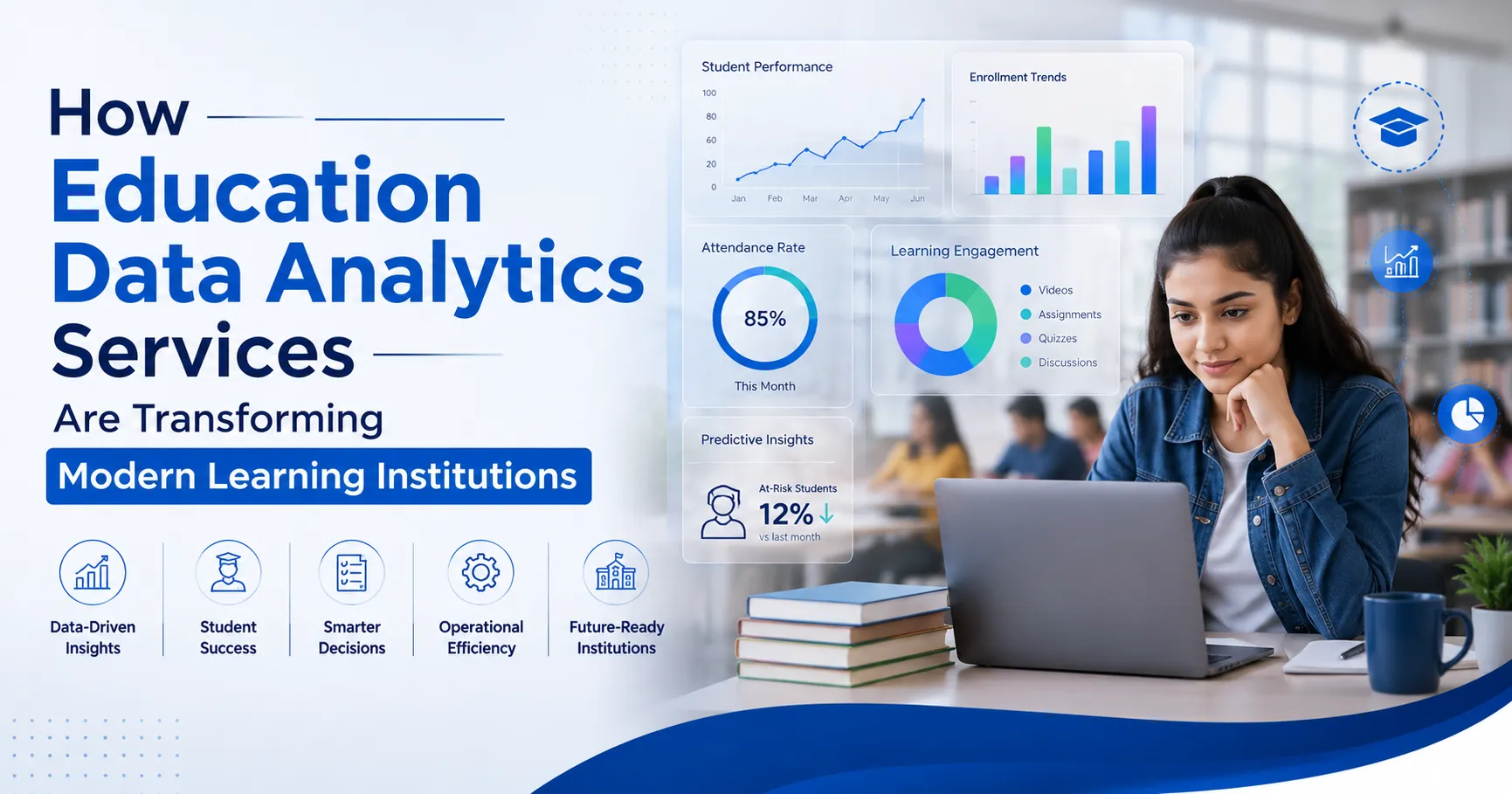

The education sector is undergoing a significant digital transformation. Schools, colleges, universities, and online learning platforms generate vast amounts of data every day—from student attendance records and academic performance reports to learning management system interactions and administrative operations. However, collecting data alone is not enough. Educational institutions need effective ways to analyze and utilize this information to improve learning outcomes, streamline operations, and make informed decisions.
This is where Education Data Analytics Services play a crucial role. By leveraging advanced analytics, artificial intelligence, machine learning, and business intelligence tools, educational organizations can gain actionable insights that help improve student success, optimize resources, and enhance overall institutional performance.
What Are Education Data Analytics Services?
Education Data Analytics Services involve the collection, processing, analysis, and visualization of educational data to support better decision-making across academic and administrative functions.
These services help institutions analyze data from multiple sources, including:
- Student Information Systems (SIS)
- Learning Management Systems (LMS)
- Online learning platforms
- Assessment and examination systems
- Attendance management systems
- Financial and administrative databases
- Student engagement platforms
The primary objective is to convert raw educational data into meaningful insights that can improve teaching effectiveness, student performance, and institutional efficiency.
Why Data Analytics Is Important in Education
Educational institutions face several challenges, including:
- High student dropout rates
- Inconsistent academic performance
- Resource allocation inefficiencies
- Personalized learning demands
- Administrative complexity
- Increasing competition among institutions
Data analytics helps address these challenges by enabling evidence-based decision-making rather than relying solely on assumptions or historical practices.
With accurate data insights, educators and administrators can identify trends, predict outcomes, and take proactive measures to improve educational experiences.
Key Components of Education Data Analytics Services
1. Data Collection and Integration
Educational data often exists across multiple platforms and databases. Analytics services consolidate information into a centralized system, ensuring a unified view of institutional performance.
Examples include:
- Academic records
- Attendance data
- Behavioral information
- Course completion rates
- Faculty performance metrics
2. Data Cleaning and Preparation
Raw educational data may contain inconsistencies, duplicates, or missing information. Analytics services ensure data accuracy through cleaning, validation, and transformation processes.
Benefits include:
- Improved reporting accuracy
- Reliable decision-making
- Better predictive models
3. Data Visualization
Dashboards and visual reports make complex educational data easier to understand.
Popular visualizations include:
- Student performance trends
- Enrollment statistics
- Attendance patterns
- Course completion metrics
- Graduation rates
These visual tools help educators quickly identify opportunities and challenges.
4. Predictive Analytics
Predictive analytics uses historical data and machine learning algorithms to forecast future outcomes.
Applications include:
- Identifying at-risk students
- Predicting enrollment trends
- Forecasting graduation rates
- Anticipating resource requirements
This allows institutions to take proactive action before issues become significant problems.
5. Real-Time Analytics
Modern analytics platforms provide real-time insights into educational activities.
Examples:
- Live attendance monitoring
- Student engagement tracking
- Online course participation analysis
- Instant assessment feedback
Real-time visibility enables faster interventions and support.
Benefits of Education Data Analytics Services
Improved Student Performance
Analytics helps educators identify students who may be struggling academically. Early intervention strategies can then be implemented to improve learning outcomes.
Benefits include:
- Personalized support
- Better academic achievement
- Reduced failure rates
- Increased student engagement
Enhanced Personalized Learning
Every student learns differently. Analytics can help institutions understand individual learning patterns and customize educational experiences accordingly.
Examples include:
- Personalized learning paths
- Adaptive assessments
- Customized course recommendations
- Individualized tutoring programs
This leads to more effective learning experiences.
Reduced Student Dropout Rates
Student retention is a major concern for educational institutions.
Data analytics can identify warning signs such as:
- Poor attendance
- Low engagement levels
- Declining grades
- Incomplete coursework
Institutions can then provide targeted support to improve retention and student success.
Better Resource Allocation
Educational institutions often operate under budget constraints.
Analytics enables administrators to optimize:
- Faculty scheduling
- Classroom utilization
- Technology investments
- Budget planning
- Infrastructure development
As a result, institutions can maximize efficiency while reducing unnecessary expenditures.
Improved Curriculum Development
Curriculum effectiveness can be measured using data analytics.
Institutions can analyze:
- Student performance across subjects
- Assessment results
- Course completion rates
- Learning outcomes
This information helps educators continuously improve course content and teaching methodologies.
Data-Driven Decision Making
Rather than relying on intuition, administrators can use analytics to make informed decisions regarding:
- Admissions strategies
- Academic programs
- Budget planning
- Staff recruitment
- Institutional growth
This results in more strategic and effective management.
Applications of Education Data Analytics Services
Student Success Analytics
Institutions can monitor student progress and identify factors influencing academic performance.
Key metrics include:
- GPA trends
- Attendance records
- Assignment completion rates
- Learning engagement levels
Learning Analytics
Learning analytics focuses on understanding how students interact with educational content.
Insights include:
- Course participation rates
- Learning preferences
- Content effectiveness
- Assessment performance
This helps educators enhance teaching methods.
Enrollment Analytics
Enrollment analytics helps institutions understand admission patterns and optimize recruitment strategies.
Benefits include:
- Improved forecasting
- Better marketing campaigns
- Increased student enrollment
- Enhanced demographic analysis
Faculty Performance Analytics
Analytics can evaluate teaching effectiveness through:
- Student feedback
- Course outcomes
- Engagement metrics
- Assessment performance
This supports professional development and continuous improvement.
Financial Analytics
Educational institutions can use analytics to improve financial planning and sustainability.
Applications include:
- Budget forecasting
- Revenue analysis
- Scholarship management
- Cost optimization
Technologies Used in Education Data Analytics Services
Several advanced technologies power modern education analytics solutions:
Artificial Intelligence (AI)
AI helps automate data analysis and generate predictive insights.
Applications include:
- Student risk prediction
- Intelligent tutoring systems
- Automated grading
Machine Learning (ML)
Machine learning models identify patterns and improve forecasting accuracy.
Common use cases:
- Student retention prediction
- Enrollment forecasting
- Personalized learning recommendations
Cloud Computing
Cloud platforms provide scalability and accessibility for educational analytics systems.
Benefits include:
- Secure storage
- Real-time access
- Reduced infrastructure costs
- Easy integration
Business Intelligence (BI) Tools
Popular BI platforms enable interactive dashboards and reporting.
Examples include:
- Power BI
- Tableau
- Google Looker
- Qlik Sense
Challenges in Implementing Education Data Analytics
Despite its benefits, institutions may face several challenges:
Data Privacy and Security
Educational data often contains sensitive student information.
Institutions must comply with data protection regulations and implement strong security measures.
Data Quality Issues
Inaccurate or incomplete data can reduce the effectiveness of analytics initiatives.
Maintaining data quality is essential for reliable insights.
Technology Integration
Many institutions use multiple legacy systems, making data integration complex.
Proper planning and modern integration tools can help overcome these challenges.
Staff Training Requirements
Faculty and administrators may require training to effectively use analytics platforms and interpret insights.
Building a data-driven culture is crucial for success.
Future Trends in Education Data Analytics Services
The future of educational analytics is becoming increasingly intelligent and personalized.
Emerging trends include:
AI-Powered Learning Recommendations
Advanced AI systems will provide personalized learning pathways based on student behavior and performance.
Predictive Student Support Systems
Institutions will increasingly use predictive analytics to prevent academic failures and improve retention.
Real-Time Learning Insights
Real-time monitoring will enable immediate feedback and intervention.
Advanced Data Visualization
Interactive dashboards will become more sophisticated and user-friendly.
Integration with Smart Classrooms
IoT-enabled classrooms will generate valuable data that can further enhance educational experiences.
Choosing the Right Education Data Analytics Service Provider
When selecting a service provider, institutions should consider:
- Industry expertise
- Data security standards
- Analytics capabilities
- Cloud integration options
- Scalability
- Custom dashboard development
- AI and machine learning expertise
- Ongoing support and maintenance
A reliable provider should align analytics solutions with the institution's educational objectives.
Conclusion
Education Data Analytics Services are revolutionizing how educational institutions operate and support student success. By transforming raw data into actionable insights, these services enable personalized learning, improved academic outcomes, efficient resource management, and data-driven decision-making.
As educational environments become increasingly digital, analytics will continue to play a critical role in shaping the future of learning. Institutions that embrace data analytics today will be better equipped to enhance student experiences, improve operational efficiency, and maintain a competitive advantage in the evolving education landscape.
Investing in Education Data Analytics Services is no longer just an option—it is becoming a strategic necessity for institutions seeking long-term growth, innovation, and academic excellence.



























Sign in to leave a comment.