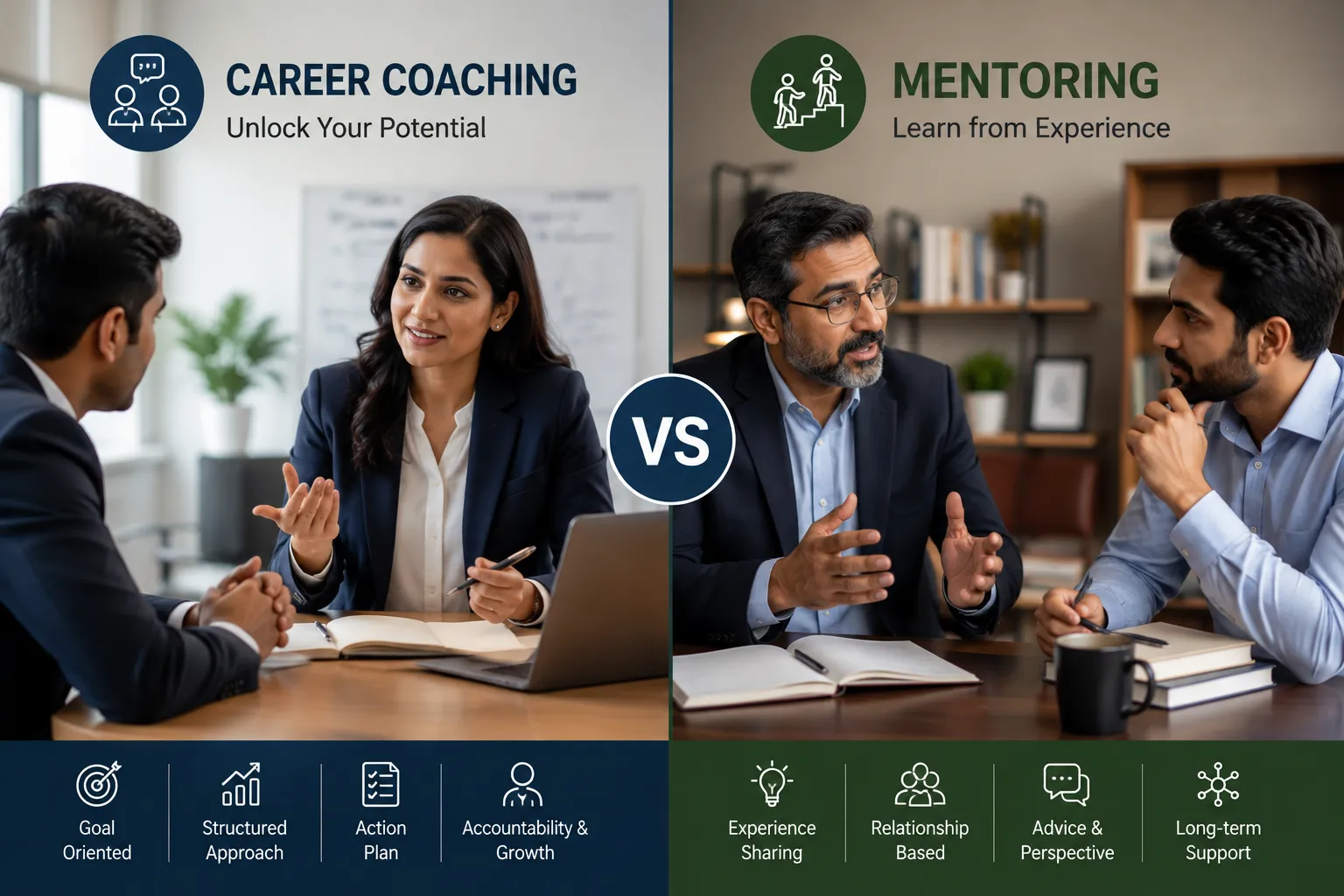

Professionals often need guidance at different stages of their careers, but not every type of guidance serves the same purpose. Someone preparing for a promotion may need structured support, while another professional entering a new industry may benefit more from advice based on real-world experience. Career coaching and mentoring are two popular approaches, yet they differ in their goals, relationships, and methods.
Understanding these differences can help professionals choose the right form of support for their current situation. Modern technology can also contribute to this process. Tools such as AI-based career platforms can help individuals assess their skills and research potential opportunities, while a career coach AI can provide structured insights before or alongside conversations with a human coach or mentor.
What Is Career Coaching?
Career coaching focuses primarily on helping an individual achieve specific professional goals. A career coach works with a client to understand their current situation, identify challenges, clarify objectives, and develop an action plan.
The coach does not necessarily need to work in the same industry as the client. Instead, their value often comes from their coaching expertise and ability to ask useful questions, identify patterns, provide feedback, and maintain accountability.
Career coaching may be useful for:
- Career transitions
- Leadership development
- Job searches
- Interview preparation
- Professional confidence
- Career planning
- Skills development
The relationship is usually structured around the client's specific needs.
What Is Mentoring?
Mentoring is generally based on experience sharing. A mentor is often someone with substantial knowledge of a particular industry, profession, organization, or career path.
Instead of focusing exclusively on a defined coaching objective, a mentor may provide advice about workplace culture, industry expectations, networking, career progression, and professional challenges.
For example, a senior marketing professional might mentor someone who is beginning a marketing career. The mentor can share lessons from personal experience and explain how certain decisions affected their own professional development.
Key Differences Between Coaching and Mentoring
Although both approaches support professional development, their focus is different.
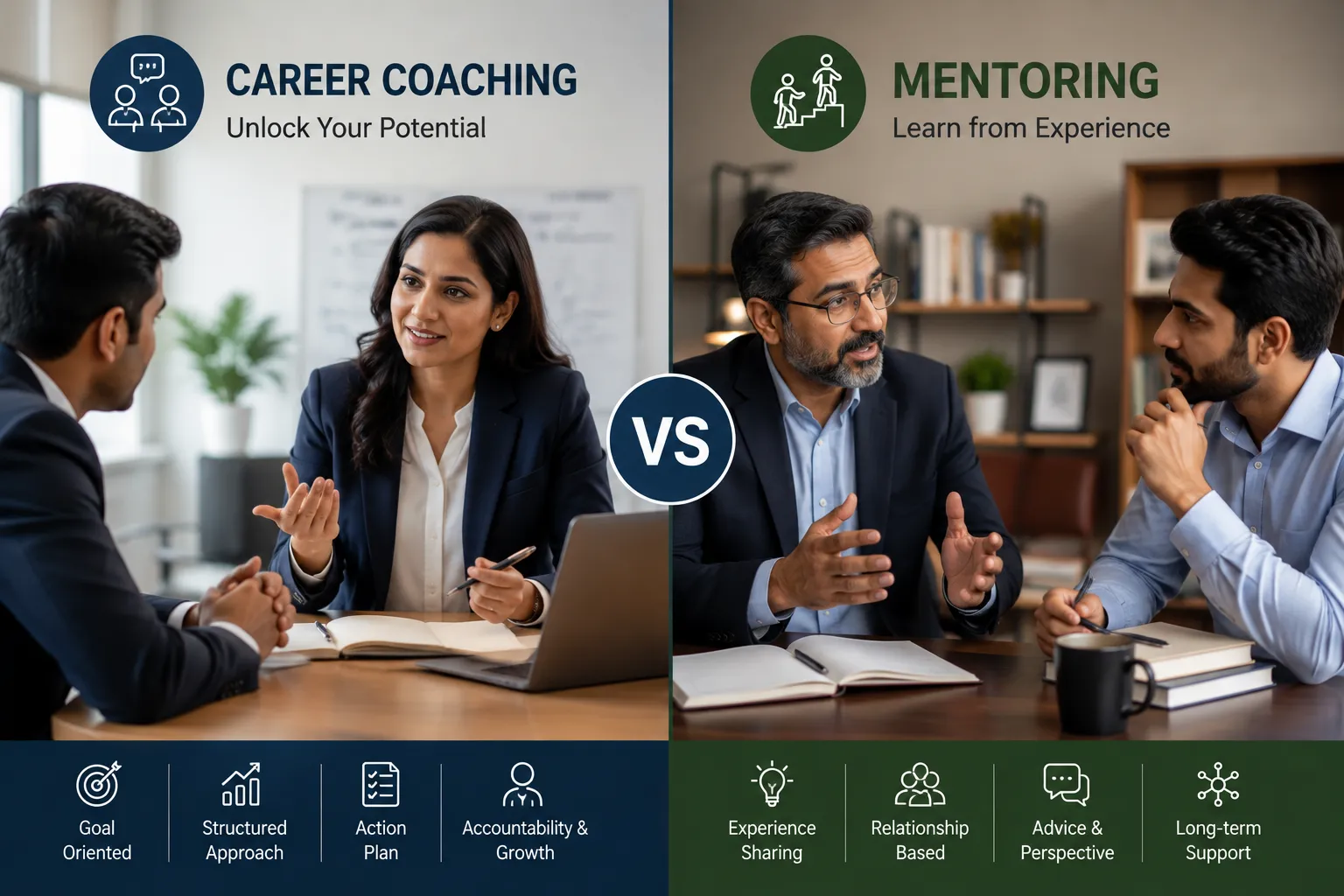
| Career Coaching | Mentoring |
|---|---|
| Focuses on specific goals | Focuses on experience and guidance |
| Often follows a structured process | Usually more informal |
| Coach asks questions and facilitates reflection | Mentor often shares direct advice |
| Can work across industries | Often connected to a specific field |
| May be short- or medium-term | Can develop into a long-term relationship |
| Emphasizes accountability | Emphasizes knowledge and perspective |
These differences do not mean professionals must choose only one. In many situations, coaching and mentoring can complement each other.
When Should Professionals Choose Career Coaching?
Career coaching may be the better option when a professional has a particular challenge that needs a structured solution.
Consider a professional who has spent several years in the same position and wants to move into management. They may understand their industry well but need help identifying leadership gaps, setting development goals, and preparing for a promotion.
A career coach can help create a structured development plan and provide accountability throughout the process.
Coaching may also be appropriate when a professional is uncertain about their direction. Instead of relying on someone else's career experience, the individual can work through their own strengths, priorities, and goals.
When Is Mentoring the Better Choice?
Mentoring can be particularly valuable when industry-specific knowledge is important.
A professional entering a new field may benefit from someone who understands the industry's expectations and common career paths. A mentor can explain how the industry works, suggest useful networking opportunities, and share practical lessons that may not be found in textbooks or online resources.
Mentoring can also be helpful for professionals who want to understand organizational culture or build relationships within a particular industry.
Can Professionals Benefit From Both?
Yes. Coaching and mentoring can address different aspects of career development.
A professional might work with a career coach to establish goals and improve decision-making while also having a mentor who provides industry-specific advice.
For example, someone preparing for a leadership position could use coaching to identify communication and management improvements while relying on a mentor for practical insight into managing teams within their industry.
This combination can provide both structured development and real-world perspective.
How Technology Fits Into Career Development
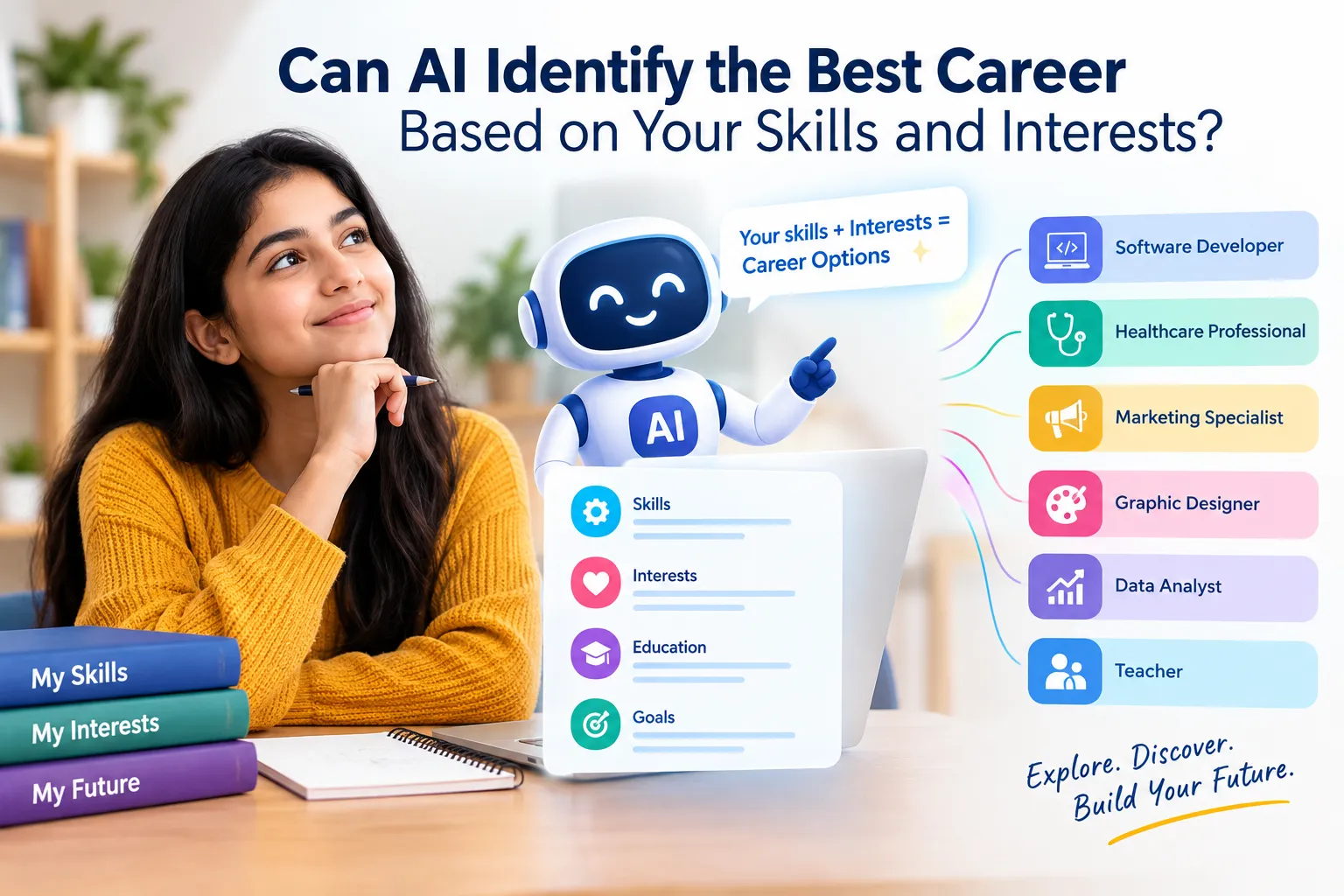
Technology has made career planning more accessible. Professionals can now use digital platforms to evaluate skills, research career paths, compare job requirements, and identify potential development areas.
AI-based systems can process career information and provide recommendations based on skills, experience, and professional interests. These tools can be useful for preparing questions before a coaching session or identifying topics to discuss with a mentor.
However, technology should be viewed as a supporting resource. A digital system may identify that a professional needs stronger leadership skills, for example, but a coach or mentor can help put that information into the context of the person's goals and workplace environment.
How to Decide Between Coaching and Mentoring
The best choice depends on the type of support you need.
Choose career coaching if you want:
- A structured approach to a specific career challenge
- Help defining professional goals
- Accountability for taking action
- Support during a career transition
- Guidance in evaluating different career options
Choose mentoring if you want:
- Industry-specific knowledge
- Advice from someone with relevant experience
- Professional networking guidance
- Insight into workplace culture
- Long-term career perspective
If both needs are important, combining the two can be a practical solution.
Questions to Ask Before Choosing
Before committing to either approach, professionals should consider what they actually want to achieve.
Ask yourself:
- What is my biggest career challenge right now?
- Do I need structured guidance or industry-specific experience?
- Am I trying to solve a specific problem or build a long-term professional relationship?
- Would an experienced person in my field provide valuable perspective?
- Do I need accountability to follow through on my goals?
Answering these questions can make the choice much easier.
Conclusion
Career coaching and mentoring both have an important role in professional development, but they serve different purposes. Coaching is generally more structured and goal-focused, making it useful for career decisions, transitions, skill development, and professional growth. Mentoring is often more experience-driven and can provide valuable industry knowledge, networking support, and long-term perspective.
Professionals do not necessarily have to choose between the two. Using both can provide a balanced approach to career development. Digital resources can also strengthen the process by helping individuals research opportunities, assess skills, and prepare for important conversations. AI career guidance can support this early-stage research, while coaches and mentors provide the human context needed to turn information into meaningful career decisions.
FAQs
Is career coaching better than mentoring?
Neither is universally better. Career coaching is generally more suitable for structured goals and specific challenges, while mentoring is valuable for industry knowledge and experience-based advice.
Can a mentor also be a career coach?
A person can have skills in both areas, but coaching and mentoring are different approaches. A mentor typically shares experience, while a coach focuses more on helping the individual develop their own solutions and action plans.
Should young professionals choose mentoring or coaching?
It depends on their needs. Young professionals may benefit from mentoring when they need industry knowledge and networking, while coaching can help when they need structured career planning and goal setting.
Can experienced professionals benefit from mentoring?
Yes. Even highly experienced professionals can gain value from mentors, particularly when entering a new industry, taking on a new leadership role, or navigating organizational changes.
Can career coaching and mentoring happen at the same time?
Yes. Many professionals can benefit from both. Coaching can provide structure and accountability, while mentoring can offer practical industry insight and experience.
How can AI support career development?
AI tools can help professionals evaluate skills, research career options, identify potential skill gaps, and prepare for career discussions. They are most effective when used as a supplement to human guidance rather than as the only source of career advice.




























Sign in to leave a comment.