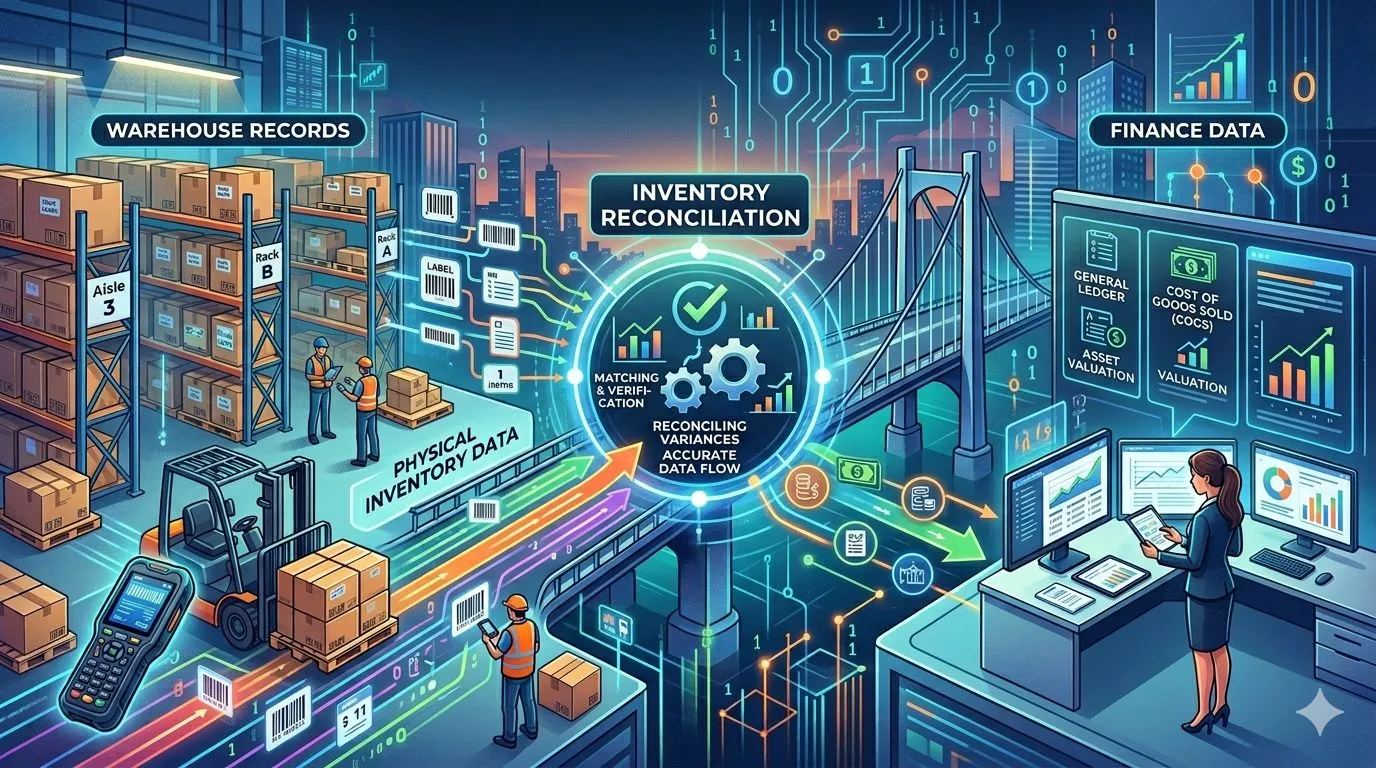

Inventory discrepancies create serious reporting problems when warehouse records and finance systems stop aligning during operational activity. A warehouse may show available stock while ERP balances reflect different quantities, valuation records may not match movement logs, and delayed postings can distort cost reporting during financial close. These gaps increase operational confusion across procurement, warehouse management, finance, and audit teams.
As organizations scale across locations, entities, and distribution networks, inventory reconciliation becomes a continuous operational requirement rather than a periodic review exercise. Finance teams must validate inventory movements, warehouse transactions, purchase records, valuation adjustments, and ledger balances simultaneously to maintain reporting accuracy. This article explains how inventory reconciliation connects warehouse operations with finance data, the most common reconciliation discrepancies, operational risks created by weak controls, and how automation improves inventory visibility and reporting consistency.
Why Inventory Reconciliation Becomes Difficult in Modern Enterprise Operations
Inventory activity moves continuously across operational systems, making reconciliation increasingly difficult during reporting cycles.
Growth in inventory movement across warehouses and business units
Enterprise organizations process inventory receipts, transfers, returns, write-offs, and fulfillment activity across multiple warehouses and business units every day.
Why disconnected warehouse and finance systems create reporting gaps
Warehouse management systems and finance systems often operate independently, creating timing gaps and inconsistent transaction visibility.
Impact of unresolved inventory discrepancies on financial close
Inventory discrepancies delay financial close cycles by affecting cost calculations, inventory valuation, and profitability reporting.
These operational gaps make inventory reconciliation a critical financial control process.
What Inventory Reconciliation Actually Covers
Inventory reconciliation validates whether operational inventory activity aligns with financial inventory records.
Definition of inventory reconciliation in finance and warehouse operations
Inventory reconciliation compares warehouse inventory activity against accounting balances and financial records.
Difference between physical inventory counts and inventory reconciliation
Physical inventory counts confirm stock quantities, while reconciliation validates whether operational movements match financial postings.
Why inventory balances must align across operational and financial systems
Inventory balances affect cost of goods sold, working capital reporting, procurement planning, and balance sheet accuracy.
A deeper explanation of Inventory Reconciliation highlights how inventory validation supports both operational visibility and financial reporting integrity.
How Inventory Reconciliation Connects Warehouse Operations with Finance Data
Warehouse operations and finance systems remain closely connected through inventory movement activity.
Relationship between warehouse activity and inventory accounting
Every inventory receipt, transfer, shipment, return, or adjustment creates accounting implications within financial systems.
Why inventory movement affects cost reporting and balance sheet accuracy
Inventory activity directly impacts inventory valuation, cost of goods sold reporting, and profitability calculations.
Impact of inaccurate inventory records on financial statements
Incorrect inventory records distort inventory assets, operational costs, and reporting accuracy across financial statements.
Because inventory activity affects multiple systems simultaneously, finance teams must compare several operational records carefully.
Core Inventory Records Finance Teams Must Compare
Accurate reconciliation depends on validating inventory movement records across warehouse and finance systems.
Warehouse inventory counts against ERP inventory balances
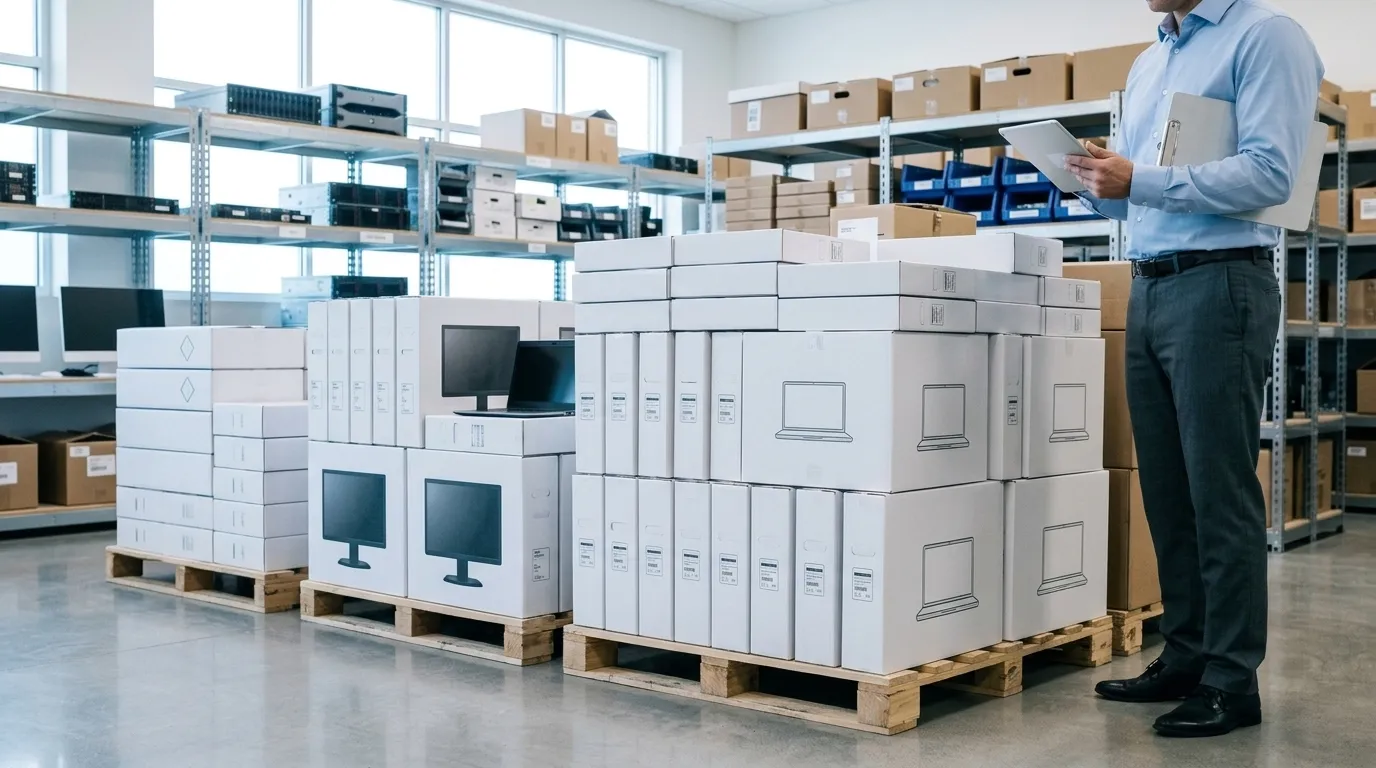
Warehouse counts should reconcile against inventory balances maintained within ERP systems.
Goods receipt records versus purchase entries
Goods received from vendors should match procurement records and purchase transactions.
Inventory movement logs against ledger postings
Inventory movement activity should reconcile against accounting entries and ledger balances.
Sales fulfillment records versus inventory reductions
Sales shipments should reduce inventory balances accurately across operational and financial systems.
Inventory adjustment entries against approval records
Inventory adjustments and write-offs should align with approval documentation and operational records.
After record validation begins, organizations often identify recurring inventory discrepancies.
Common Inventory Transactions That Require Reconciliation
Inventory reconciliation spans multiple operational transaction types across enterprise environments.
Inventory receipts and purchase transactions
Purchased inventory must reconcile across warehouse receipts, vendor invoices, and financial postings.
Inventory transfers across warehouses and locations
Inter-warehouse inventory transfers require accurate quantity and valuation tracking.
Returns, damaged goods, and write-offs
Returns and damaged inventory adjustments often create valuation inconsistencies if not reconciled properly.
Production consumption and finished goods movement
Manufacturing operations require reconciliation between raw material consumption and finished goods output.
Intercompany inventory transfers across entities
Cross-entity inventory movement creates additional reconciliation complexity across subsidiaries.
As transaction volumes increase, inventory discrepancies become harder to identify manually.
Most Common Inventory Reconciliation Discrepancies
Most reconciliation issues originate from delayed postings, operational errors, or inconsistent inventory tracking practices.
Missing inventory movement records
Inventory activity may occur operationally without corresponding financial postings.
Duplicate inventory entries and posting errors
Duplicate postings create inaccurate inventory quantities and valuation balances.
Timing differences between warehouse updates and finance postings
Operational systems and finance systems often update inventory transactions at different times.
Incorrect unit-of-measure conversions
Measurement inconsistencies distort inventory quantity calculations across systems.
Inventory valuation inconsistencies across systems
Different costing methods may create valuation mismatches across warehouses and finance systems.
Unsupported manual inventory adjustments
Manual inventory corrections without approval documentation weaken audit traceability.
These discrepancies increase operational pressure significantly during reporting cycles.
Why Inventory Reconciliation Delays Escalate Quickly
Inventory discrepancies compound rapidly when operational systems lack centralized visibility.
Delayed warehouse updates and transaction postings
Warehouse activity delays create inaccurate inventory visibility across finance systems.
Manual reconciliation effort across warehouse systems and ERPs
Manual reconciliation across disconnected systems consumes substantial operational time.
Lack of centralized visibility into unresolved inventory discrepancies
Finance teams struggle to identify unresolved discrepancies without centralized reconciliation monitoring.
Inconsistent inventory tracking practices across locations
Different warehouse processes often create inconsistent inventory recording practices.
Because inventory discrepancies directly affect reporting accuracy, finance teams prioritize several validation checks first.
The First Checks Finance Teams Should Prioritize During Inventory Reconciliation
Early validation helps organizations identify high-risk inventory discrepancies before reporting deadlines approach.
Verification of opening inventory balances
Opening balances should reconcile against prior-period inventory records.
Validation of unmatched inventory transactions
Unmatched inventory movements require immediate review and correction.
Review of inventory adjustments and write-offs
Inventory adjustments should align with operational approvals and supporting records.
Cross-checking inventory movement references and approvals
Movement references must match warehouse documentation and authorization records.
Validation of inventory valuation methods and costing records
Inventory costing calculations should align consistently across systems.
To reduce operational dependency on spreadsheets and manual matching, organizations increasingly automate reconciliation workflows.
How Automation Improves Inventory Reconciliation
Automation improves inventory visibility, reconciliation consistency, and reporting accuracy across enterprise operations.
Automated matching across warehouse and finance systems
Automated workflows validate inventory transactions across operational and accounting systems continuously.
Real-time visibility into unresolved inventory balances
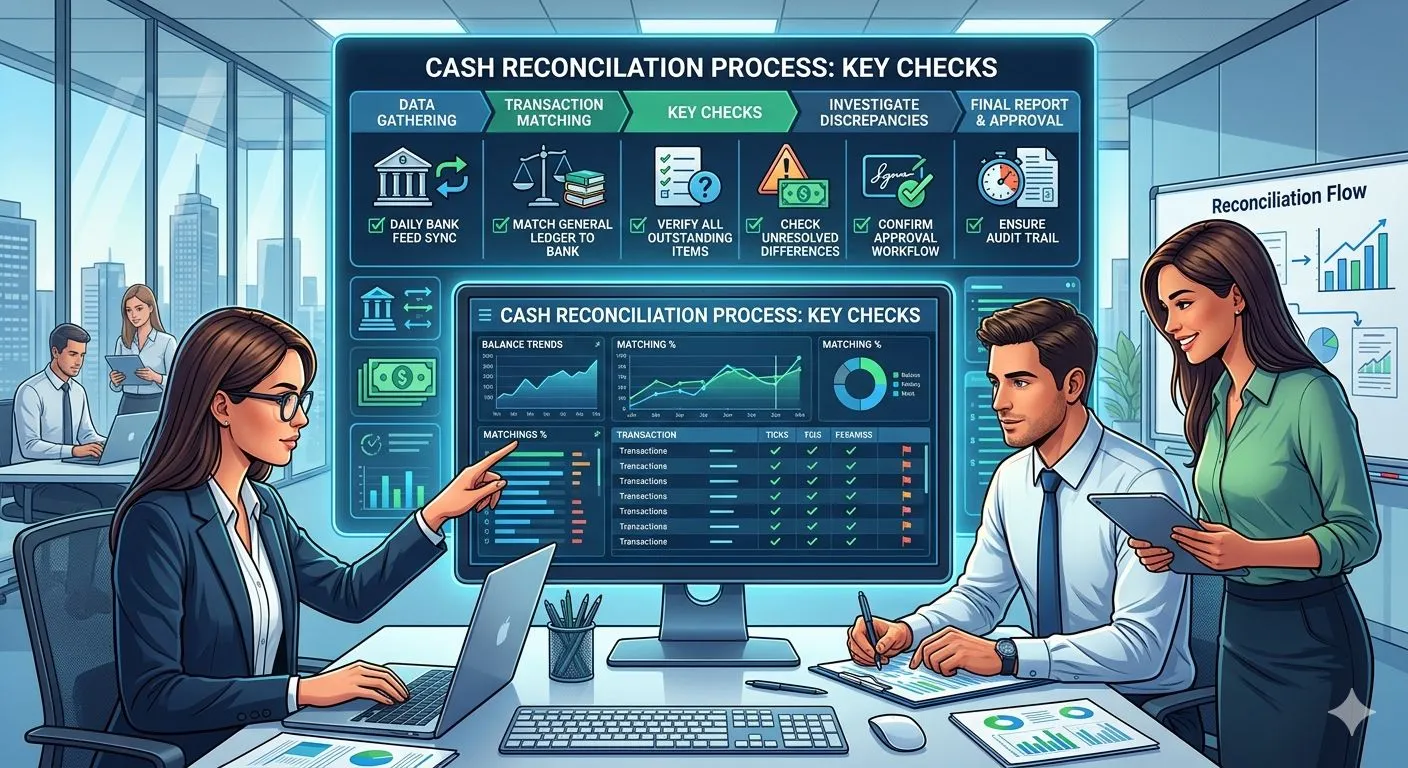
Centralized dashboards improve visibility into unresolved inventory discrepancies.
Continuous validation of inventory transactions
Continuous monitoring identifies inventory mismatches earlier during operational activity.
Reduction in repetitive manual reconciliation effort
Automation reduces repetitive reconciliation work while improving operational consistency.
Organizations seeking stronger warehouse-to-finance visibility increasingly adopt reconciliation automation platforms that support centralized inventory validation, automated transaction matching, and continuous reconciliation workflows across warehouse and finance operations.



























Sign in to leave a comment.