

Workplaces that produce dust, fumes, vapours, gases or other airborne contaminants need effective control measures to protect employees. Simply opening windows or relying on general ventilation may not be enough, particularly where contaminants are generated directly at a work process.
Local Exhaust Ventilation (LEV) is one of the key engineering controls used to capture airborne contaminants at or near their source. A properly designed and installed system can help prevent harmful substances from spreading throughout the workplace.
For businesses considering LEV installation UK, understanding how these systems work and why correct installation matters is an important part of managing workplace exposure risks.
What Is Local Exhaust Ventilation?
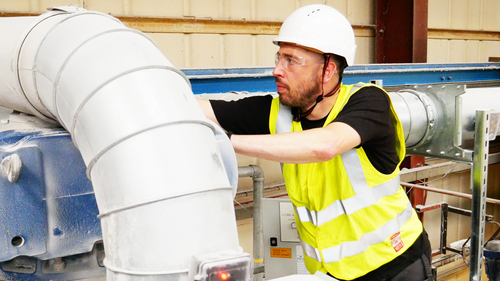
Local Exhaust Ventilation is a system designed to capture contaminants close to where they are produced. Instead of allowing dust, fumes or vapours to enter the general workplace atmosphere, the system draws them away through a hood or extraction point.
A typical LEV system can include:
- Extraction hoods
- Ductwork
- Fans
- Filters
- Air cleaners
- Discharge points
- Control equipment
The exact design depends on the type of contaminant, the process creating it and the amount of air that needs to be captured.
For example, a woodworking operation may produce airborne wood dust, while welding can generate welding fumes. Both processes require different approaches to extraction.
Why Is LEV Installation Important?
Airborne contaminants can affect workplace air quality and may create health risks if employees are repeatedly exposed to them.
A well-designed LEV system aims to control contaminants before they spread into the breathing zone of workers. This can make it easier for businesses to manage exposure risks and maintain a cleaner working environment.
However, simply installing an extraction system does not automatically mean it will provide effective control. The system needs to be suitable for the process, correctly positioned and properly maintained.
This is why professional LEV installation UK should begin with an understanding of the workplace process and the contaminants involved.
How Does LEV Control Workplace Contaminants?
The main principle behind LEV is source capture.
When a contaminant is generated, the extraction hood is positioned so that it can capture the contaminant before it travels into the surrounding workplace.
The contaminated air is then drawn through ductwork towards the filtration or treatment equipment. Depending on the system, the contaminants may be removed by filters before the cleaned air is discharged.
This approach can be more effective than relying entirely on general ventilation because the contaminant is controlled close to its source.
The Importance of Correct System Design
Good LEV performance starts with good design.
During the planning stage, factors such as the process, contaminant type, emission rate, hood position and required airflow should be considered.
A hood positioned too far from the source may struggle to capture contaminants effectively. Similarly, poorly designed ductwork can affect airflow and increase resistance within the system.
The extraction fan also needs to provide sufficient performance for the complete system.
Professional LEV installation UK therefore involves more than fitting ducts and connecting a fan. The system should be designed around the specific workplace requirements.
LEV Can Support COSHH Risk Control
Businesses using hazardous substances must consider how employees could be exposed and what measures are required to control those risks.
Where airborne contaminants are produced, LEV can be an important engineering control.
It can help reduce the amount of dust, fumes or vapours entering the general workplace environment, particularly when employees are working close to the source of contamination.
However, LEV should be considered as part of a wider control strategy. Businesses may also need suitable work procedures, personal protective equipment where appropriate, training and regular maintenance.
Different Workplaces Have Different LEV Requirements
There is no universal LEV system that works for every business.
Different industries produce different types and quantities of airborne contaminants.
For example:
Manufacturing: Processes such as grinding, cutting and machining can produce dust and particles.
Welding: Welding and thermal cutting can generate fumes that require effective source extraction.
Woodworking: Cutting and sanding can release wood dust into the workplace.
Chemical processing: Certain processes may generate vapours, gases or mists.
Spray applications: Spraying can produce airborne droplets, vapours and other contaminants.
Each application requires a system designed around the particular process. Choosing the correct hood, airflow, filtration and ductwork is therefore essential.
What Happens When LEV Is Poorly Installed?
An incorrectly installed system may not provide the expected level of contaminant control.
Common problems can include insufficient airflow, poorly positioned extraction hoods, leaking ductwork, unsuitable filters or an extraction fan that cannot provide the required performance.
These issues can reduce the effectiveness of the system and may allow contaminants to remain in the workplace.
Poor installation can also make future maintenance more difficult and potentially increase operating costs.
For this reason, businesses should consider both the initial installation and the long-term operation of the system.
Testing and Maintenance After Installation
LEV installation is only the beginning. The system should continue to be checked and maintained throughout its working life.
Regular inspection and testing can help identify problems such as reduced airflow, damaged components, blocked filters or deterioration of ductwork.
Where required, LEV systems should undergo appropriate examination and testing in line with relevant workplace requirements.
Maintenance is equally important. Filters may need cleaning or replacement, fans may require attention and extraction points should remain unobstructed.
Keeping records of inspections, testing and maintenance can also help businesses monitor system performance over time.
Benefits of Professional LEV Installation
Investing in properly designed and installed extraction can provide several workplace benefits.
These may include:
- Better control of airborne contaminants
- Improved workplace air quality
- Reduced employee exposure
- More effective source capture
- Reliable extraction performance
- Easier ongoing maintenance
- Support for workplace health and safety management
The exact benefits depend on the type of system and the workplace conditions, but effective source extraction can be an important part of controlling airborne hazards.
Final Thoughts
COSHH LEV testing plays an important role in helping businesses control dust, fumes, vapours and other workplace contaminants. By capturing pollutants close to their source, an effective LEV system can reduce the amount of contamination entering the wider workplace environment.
However, successful extraction depends on more than simply installing equipment. Proper design, correct installation, suitable airflow, effective filtration and ongoing maintenance all contribute to system performance.
Businesses should therefore view LEV as a long-term workplace control measure rather than a one-time installation. When properly designed, installed, tested and maintained, an LEV system can provide a practical way to manage airborne contaminants and support a healthier working environment.


























Sign in to leave a comment.