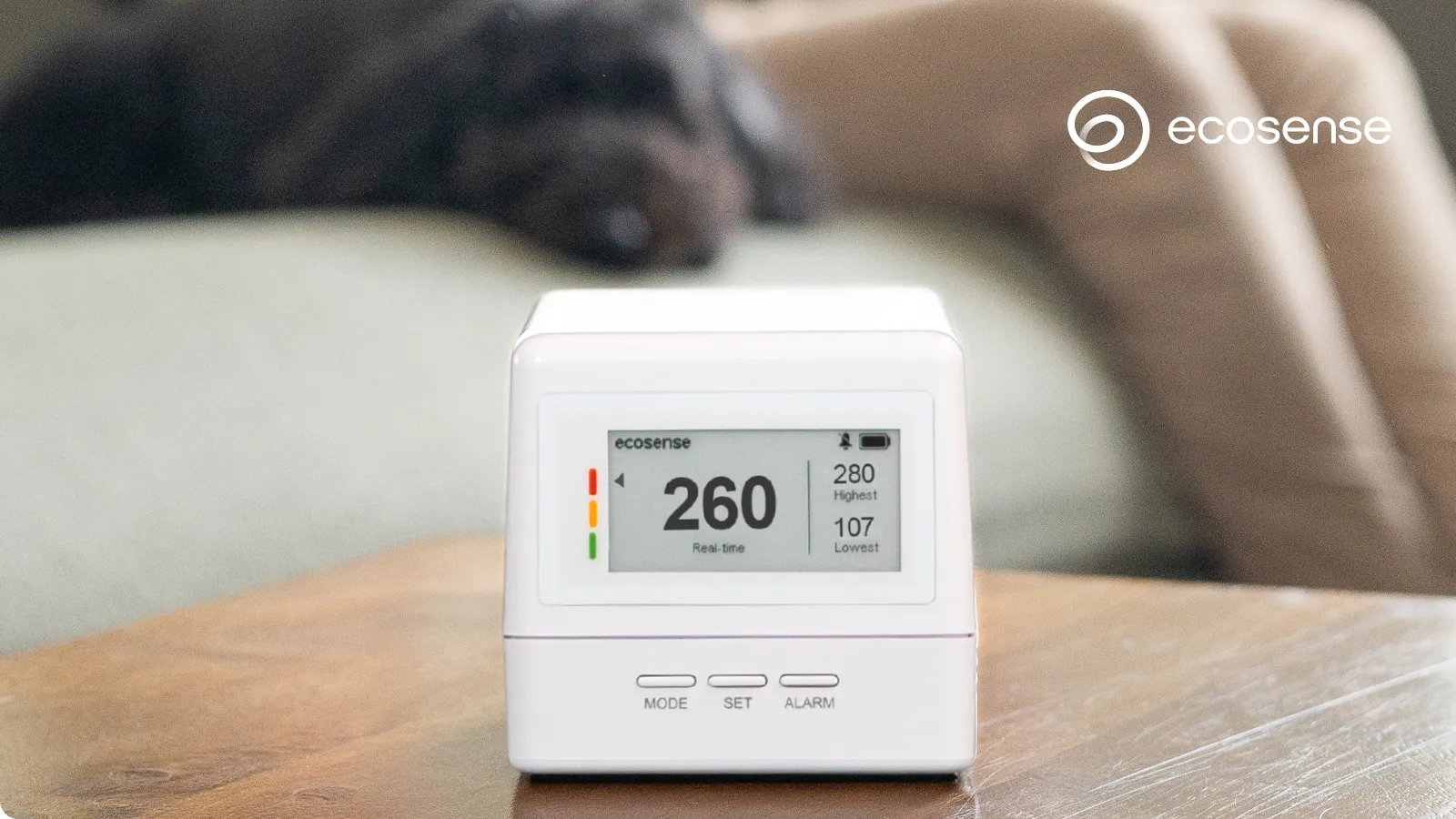

One of the most common homeowner questions is: “How long do you need to test for radon to get accurate results?”
With a high-quality digital radon monitor, like EcoQube, you can see your first reading in minutes and get reliable short-term insight within 10 hours. Long-term exposure trends become clearer over weeks and months.
Here is how to interpret your monitoring timeline.
48 Hours: Initial Awareness
A 48-hour period provides early visibility into your radon levels. Because radon fluctuates, 2 days is not enough for final decisions. If levels are high immediately, continue tracking. The weather may have influenced the readings.
For example, starting your test during heavy rain can temporarily elevate radon levels.
72 Hours: Short-Term Trend Analysis
If you own EcoQube, run a 72-hour Radon Test under normal living conditions. This allows you to identify short-term trends, compare your levels to state averages, understand whether weather influenced readings, and receive guided next-step recommendations. A 72-hour test provides meaningful insight beyond a simple two-day snapshot.
7-Day Average: Early Pattern Detection
After one week, your digital radon monitor begins revealing patterns. If your 7-day average falls between 2 and 4 pCi/L, watch closely. If it is above the EPA Radon Action Level of 4.0 pCi/L, take it seriously and continue tracking. This is also the stage where small DIY ventilation adjustments can be tested.
Quick tip: Keep the monitor in the same location. If you have identified a radon hotspot, consistency matters.
30-Day Average: Reliable Exposure Indicator
A 30-day average gives a much clearer picture of your true exposure. At this stage, you can see daily fluctuation patterns, understand seasonal shifts, and identify how home usage impacts radon levels. If your 30-day average remains above 4.0 pCi/L, the EPA Action Level, it is unlikely to be a temporary spike. Many homeowners begin mitigation planning at this point.
90-Day Average: Confident Decision Point
If your 90-day radon average is consistently above 4.0 pCi/L, mitigation is a must. Three months of continuous radon monitoring provides strong confirmation of long-term exposure. If levels were fluctuating near the action threshold before, 90 days typically clarifies the situation.
When asking how long you should test for radon before mitigation, 90 days provides confident decision-making data.
Important Seasonal Note
If you started monitoring during the summer and saw low levels, continue tracking into colder months. Many homeowners see low summer readings and consistently higher winter readings. Radon often increases as outdoor temperatures drop due to pressure differences. Continuous monitoring across seasons prevents false reassurance and can be life-saving.




























Sign in to leave a comment.