
Manufacturing has always run on heat, and for over a century, that heat has come almost entirely from burning fossil fuels or drawing power from resistive electric systems that waste a large share of the energy they consume. As industries race to meet net-zero targets, this dependence on conventional thermal processes has become one of the toughest problems to solve. Microwave heating technology is emerging as a genuine answer to this challenge, offering a way to process materials faster, cleaner, and with dramatically less wasted energy than traditional convection or conduction-based systems.
Why Conventional Heating Falls Short
Traditional industrial heating methods, such as gas-fired furnaces, hot air ovens, and steam-based systems, work by transferring heat from the outside of a material inward. This surface-to-core approach loses a significant amount of energy to the surrounding air and equipment walls before it ever reaches the product being processed. Long heating cycles, uneven temperature distribution, and high fuel consumption are the natural result. For manufacturers under pressure to cut Scope 1 and Scope 2 emissions, these inefficiencies translate directly into higher carbon output per unit produced.
How Microwave Heating Changes the Equation
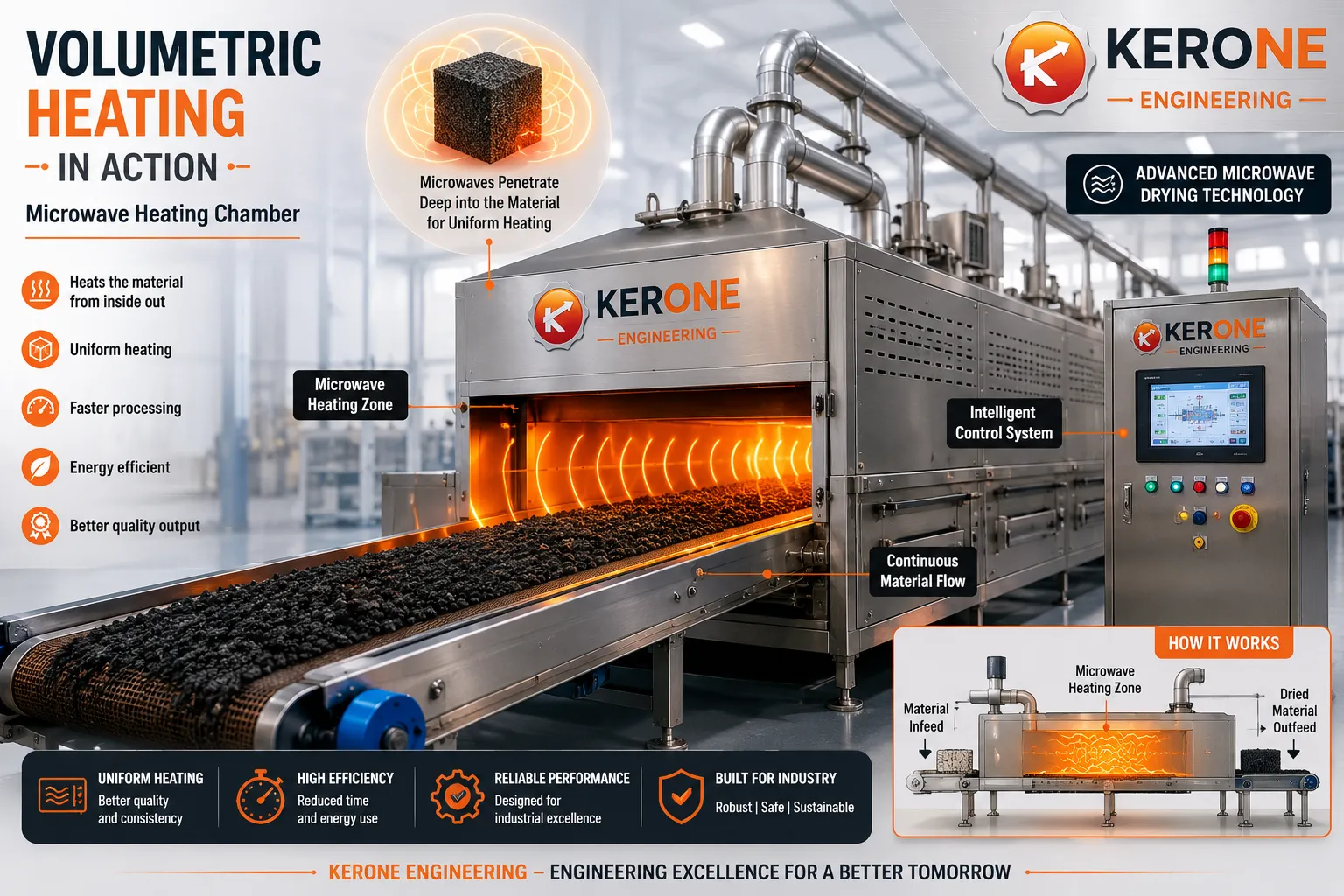
Microwave and radio frequency heating work on a fundamentally different principle. Instead of heating the surrounding air or the vessel walls, microwave energy penetrates the material directly and generates heat volumetrically, from within the product itself. This means less energy is lost to the environment, cycle times shrink considerably, and temperature control becomes far more precise. Because electricity, rather than combustion, drives the process, manufacturers also gain the flexibility to power their operations with renewable sources like solar or wind, closing the loop toward a genuinely carbon-neutral process.
Measurable Impact Across Industries
The carbon-reduction potential of microwave technology isn't theoretical. Sectors like food processing, ceramics, rubber vulcanization, pharmaceuticals, and chemical manufacturing have already reported energy savings of 30 to 50 percent when switching from conventional thermal systems to microwave-assisted processing. Faster drying and curing cycles mean production lines can run more units through the same footprint, reducing the overall energy intensity of manufacturing. In moisture-heavy applications such as food drying or biomass processing, microwave systems remove water more efficiently by targeting it directly, avoiding the energy waste that comes with heating an entire chamber just to dry a small volume of material.
Beyond energy savings, microwave processing also reduces the need for excess raw material and rework caused by inconsistent heating, which indirectly lowers the embodied carbon footprint of the final product. This combination of direct energy efficiency and reduced material waste is why industry bodies increasingly view microwave heating as a cornerstone technology for sustainable manufacturing roadmaps.
Supporting the Shift Through Knowledge and Standards
Wider adoption of microwave and high-frequency heating depends heavily on shared research, technical standards, and cross-industry collaboration. This is where organizations focused specifically on advancing microwave heating technology play a critical role. The Association of Industrial Microwave Heating and High-Frequency Applications brings together manufacturers, researchers, and engineers to document best practices, validate new applications, and help industries understand where microwave systems can realistically replace conventional heating. For companies exploring whether this technology fits their own carbon-reduction goals, resources published by AIMHHA offer a practical starting point grounded in real industrial experience rather than theoretical projections.

The Road Ahead
As carbon accounting becomes a standard part of manufacturing compliance and customer expectations, the pressure to decarbonize thermal processes will only intensify. Microwave technology won't replace every heating application overnight, but its ability to cut energy use, shorten cycle times, and integrate with renewable power sources makes it one of the most practical tools available today for manufacturers serious about reducing their carbon footprint. Organizations like AIMHHA will continue to be central to this transition, helping industries move from isolated pilot projects to widespread, standardized adoption of microwave and high-frequency heating across manufacturing sectors.
Companies that start evaluating microwave-based alternatives now, rather than waiting for regulation to force the change, stand to gain both a cost advantage and a meaningful head start on their sustainability commitments.



























Sign in to leave a comment.