
Building a polymarket style platform in 2026 has become one of the most discussed topics in the Web3 and prediction market space. As blockchain adoption grows and decentralized finance expands, prediction markets are evolving into highly interactive, data-driven ecosystems where users trade outcomes of real-world events.
This guide breaks down what goes into building such a platform, what influences development scope, and what founders should realistically prepare for when planning a launch.
What Is a Polymarket Style Platform?
A polymarket style platform is a blockchain-based prediction market system where users can trade shares based on the outcome of future events. These events can include politics, crypto trends, sports, entertainment, or global news.
Instead of traditional betting systems, these platforms rely on smart contracts to ensure transparency, automation, and trustless execution.
Key characteristics include:
- Decentralized trading system
- Event-based markets
- Crypto wallet integration
- Real-time market resolution
- Liquidity pools or order book models
Core Components Required to Build the Platform
Creating a production-ready prediction market platform involves multiple layers of development and infrastructure.
1. Blockchain Infrastructure Layer
This is the foundation of the system and includes:
- Smart contract architecture
- Chain selection (Ethereum, Polygon, Arbitrum, or custom L2)
- Gas optimization logic
- On-chain settlement systems
2. Prediction Market Engine
The heart of the platform where:
- Markets are created and managed
- Outcome probabilities are updated
- Trades are matched or pooled
- Resolution mechanisms are enforced
3. Frontend Experience
A smooth interface is essential for user adoption:
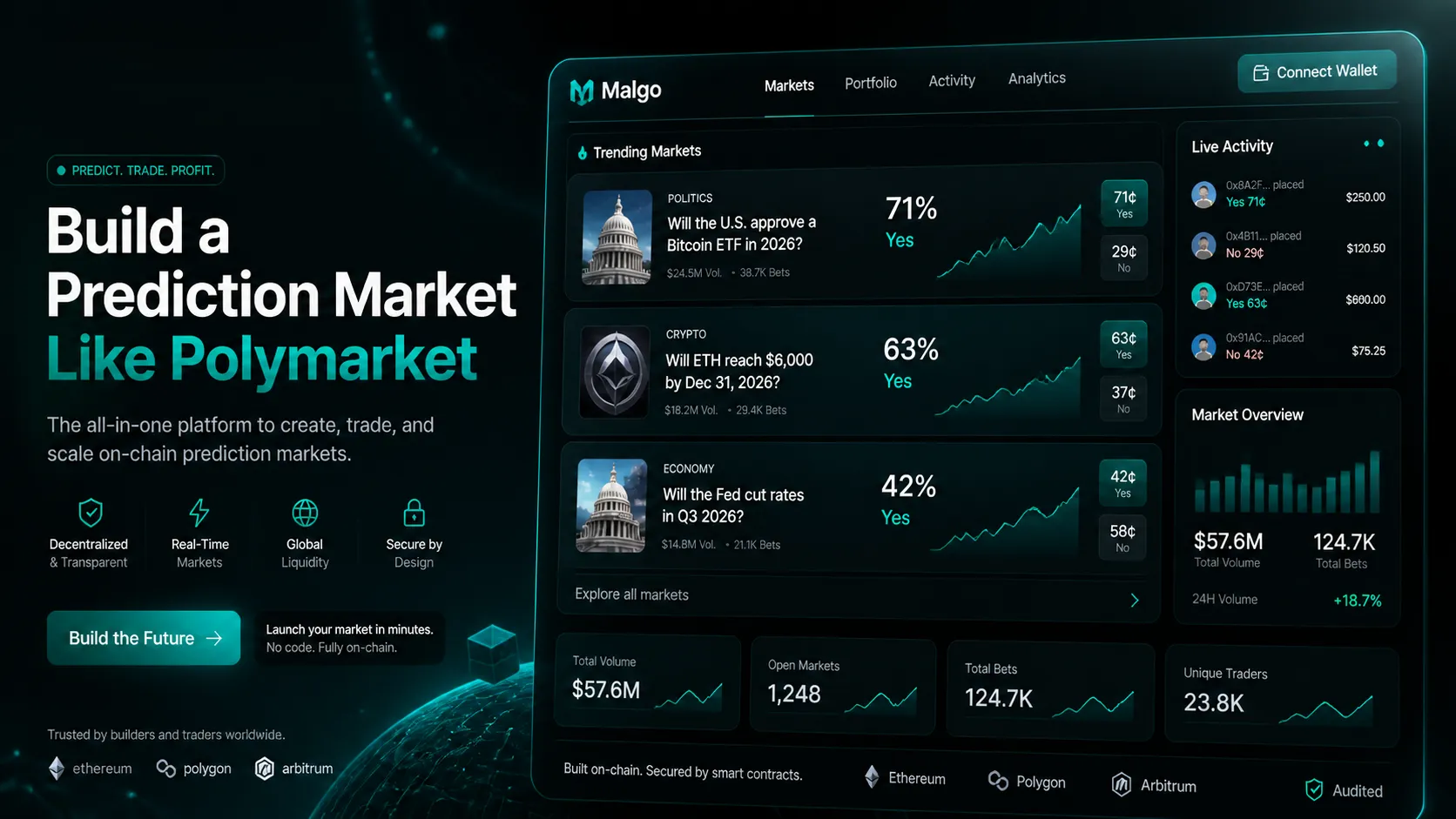
- Real-time market dashboards
- Trading UI similar to stock charts
- Wallet connection (MetaMask, WalletConnect, etc.)
- Mobile-friendly responsive design
4. Backend & Data Oracles
To ensure accuracy and reliability:
- Oracle integration for real-world data feeds
- Event verification systems
- Indexing services for blockchain data
- Notification and analytics systems
Key Factors That Influence Development Scope
Instead of focusing on direct financial figures, it is more meaningful to understand what shapes the overall development effort:
1. Feature Complexity
Adding features like automated market making, social trading, or AI-driven forecasting increases system complexity significantly.
2. Blockchain Choice
Different networks impact performance, scalability, and transaction speed requirements.
3. Liquidity Model Design
Order book systems and AMM-based prediction pools require different architectural approaches.
4. Security & Compliance Layer
Prediction markets demand strong protection against manipulation, oracle attacks, and fraudulent reporting.
5. User Experience Expectations
Modern users expect fast execution, real-time updates, and frictionless onboarding.
Advanced Features for 2026-Ready Platforms
To compete with leading decentralized prediction ecosystems, platforms now include:
- AI-assisted market creation (event suggestion engines)
- Social prediction feeds
- Multi-chain interoperability
- Layer-2 scaling integration
- Token-based governance systems
- Reputation scoring for traders
- API access for third-party apps
Common Development Approaches
MVP Approach
Focuses on:
- Basic market creation
- Simple trading mechanism
- Wallet integration
- Limited event categories
Full-Scale Platform Approach
Includes:
- Advanced trading models
- Cross-chain liquidity
- High-frequency market updates
- Institutional-grade security systems
Challenges in Building a Prediction Market Platform
Even experienced teams face challenges such as:
- Ensuring oracle reliability
- Preventing market manipulation
- Maintaining liquidity depth
- Managing regulatory uncertainty
- Scaling real-time trading infrastructure
Future of Polymarket Style Platforms
The future of prediction markets is moving toward:
- Fully decentralized governance
- AI-enhanced forecasting systems
- Real-world asset integration
- Wider mainstream adoption beyond crypto-native users
As blockchain infrastructure improves, these platforms are expected to become more accurate, faster, and more accessible globally.
Final Thoughts
Developing a polymarket style platform in 2026 is no longer just a blockchain experiment—it is a full-scale financial and data infrastructure project. Success depends on smart architecture design, scalable systems, and a strong focus on user experience and market integrity.
A well-built polymarket style platform can evolve into a powerful ecosystem for collective intelligence, where global users contribute to forecasting real-world outcomes in real time.

























Sign in to leave a comment.