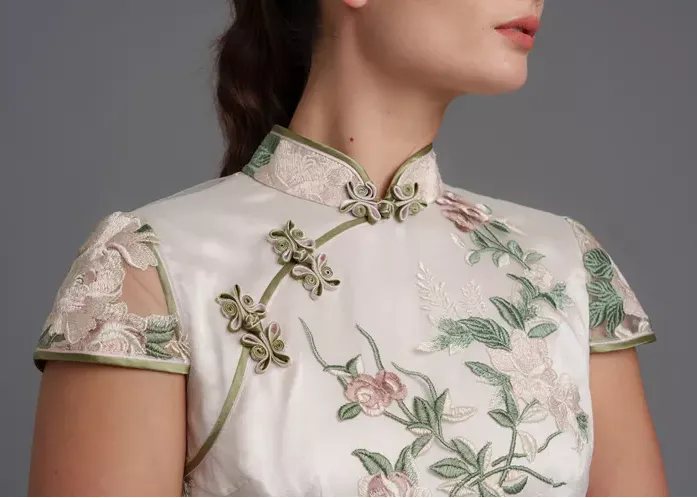

A qipao, also known as a cheongsam, is a classic Chinese dress known for its elegant lines and close-fitting silhouette. It highlights the natural shape of the body while maintaining modesty and grace. One of the most common questions when making or ordering a qipao is simple: how much fabric is needed?
The answer is not always straightforward. The amount of fabric depends on several factors such as body size, design style, fabric width, pattern matching, and tailoring techniques. In this article, we will explore each factor in detail so you can estimate fabric needs with confidence.
Understanding the Structure of a Qipao

Before calculating fabric, it helps to understand how a qipao is constructed.
Main Components of a Qipao
A traditional qipao includes:
- A fitted bodice that follows the torso closely
- A high mandarin collar
- Side slits for movement
- Set-in or cap sleeves (or sleeveless design)
- A long, continuous body panel
Unlike Western dresses, a qipao often uses fewer seams but requires precise cutting. This means fabric layout becomes very important.
Why Fabric Calculation Matters
Qipao tailoring emphasizes symmetry and pattern alignment. If the fabric has prints, florals, or embroidery, extra material may be needed to ensure the design flows correctly across seams.
Basic Fabric Requirement Estimates
Standard Fabric Width
Most modern fabrics come in two common widths:
- 114 cm (45 inches)
- 140–150 cm (55–60 inches)
The wider the fabric, the less length you may need.
General Fabric Guidelines
Here are simple estimates for an average adult woman:
For 114 cm width fabric:
- Short qipao (above knee): 2.5 to 3 meters
- Knee-length qipao: 3 to 3.5 meters
- Long qipao (below knee to ankle): 3.5 to 4 meters
For 140–150 cm width fabric:
- Short qipao: 2 to 2.5 meters
- Knee-length qipao: 2.5 to 3 meters
- Long qipao: 3 to 3.5 meters
These are base estimates. Actual needs can vary.
Key Factors That Affect Fabric Usage
Body Measurements
A larger body size requires more fabric. Important measurements include:
- Bust circumference
- Waist circumference
- Hip circumference
- Shoulder width
- Dress length
For example, if the hip measurement is wide, extra fabric is needed to allow ease and movement.
Dress Length
Length is one of the biggest factors.
- Short qipao: Uses less fabric but still needs enough for shaping.
- Long qipao: Requires continuous fabric panels, increasing total length.
If the qipao reaches the ankle, fabric consumption rises significantly.
Sleeve Design
Sleeves change fabric requirements:
- Sleeveless: least fabric
- Cap sleeves: slight increase
- Short sleeves: moderate increase
- Long sleeves: significant increase
Long sleeves often require an additional 0.5 to 1 meter depending on width.
Collar Style
The classic mandarin collar uses minimal fabric. However, variations such as:
- Higher collars
- Decorative collars
- Layered collars
may require extra material.
Side Slits
Side slits do not directly increase fabric usage, but they affect cutting layout. High slits may require careful pattern placement.
Fabric Pattern Considerations

Plain Fabrics
Plain fabrics are the easiest to work with. They allow efficient cutting with minimal waste.
Printed Fabrics
Printed designs require alignment. For example:
- Floral patterns must match at seams
- Vertical designs must stay straight
This can increase fabric needs by 10% to 20%.
Directional Patterns
If a fabric has a clear top and bottom direction, all pieces must be cut in the same orientation. This reduces layout efficiency and increases fabric usage.
Large Motifs
Large designs, such as dragons or peonies, require careful placement. You may need extra fabric to position the motif correctly on the chest or back.
Fabric Type and Its Impact
Silk
Silk is traditional and luxurious. It drapes well but is slippery. Extra fabric may be needed to account for cutting errors.
Cotton
Cotton is stable and easy to cut. It allows more efficient use of fabric.
Velvet
Velvet has a pile direction. All pieces must face the same way. This increases fabric requirements.
Lace and Embroidery
Lace overlays or embroidered fabrics often require additional base layers. This doubles fabric usage in some cases.
Traditional vs Modern Qipao
Traditional Qipao
Traditional styles are:
- Looser in fit
- Longer in length
- Less structured
They may use slightly more fabric due to length.
Modern Qipao
Modern styles are:
- More fitted
- Shorter or varied in length
- Often use stretch fabric
Stretch fabrics can reduce fabric requirements slightly because they conform to the body.
Cutting Layout and Efficiency
Single vs Double Layer Cutting
Some tailors cut fabric in a single layer for precision. This can increase fabric usage.
Pattern Placement
Efficient placement reduces waste. However, for high-end qipao, aesthetics are prioritized over efficiency.
Seam Allowance
Always include seam allowance. Typically:
1 to 2 cm per seam
This adds to total fabric needed.
Example Fabric Calculations
Example 1: Simple Knee-Length Qipao
Fabric width: 140 cm
Sleeveless
Plain fabric
Estimated fabric: 2.5 to 3 meters
Example 2: Long Silk Qipao with Sleeves
Fabric width: 114 cm
Long sleeves
Patterned silk
Estimated fabric: 4 to 4.5 meters
Example 3: Wedding Qipao with Embroidery
Fabric width: 140 cm
Heavy embroidery
Floor-length
Estimated fabric: 3.5 to 4 meters (plus lining fabric)
Lining Fabric Considerations

When Lining Is Needed
Lining is used for:
- Thin fabrics
- Formal qipao
- Comfort and structure
How Much Lining Fabric
Lining usually requires:
80% to 100% of the outer fabric amount
For example, if outer fabric is 3 meters, lining may need 2.5 to 3 meters.
Tailoring Style Differences
Handmade Qipao
Traditional tailoring uses:
- More precise cutting
- Less waste
- Higher skill
Fabric use may be slightly optimized.
Factory-Made Qipao
Mass production prioritizes efficiency. Fabric use is standardized but may not account for custom fitting.
Common Mistakes When Estimating Fabric
Underestimating Fabric Needs
Many people buy too little fabric. This can lead to:
- Incomplete garments
- Poor pattern alignment
Ignoring Pattern Matching
This is a major mistake for printed fabrics.
Not Accounting for Shrinkage
Some fabrics shrink after washing. Always add extra length if needed.
Tips for Accurate Fabric Planning
Consult a Tailor
An experienced qipao tailor can give precise estimates based on measurements and design.
Buy Extra Fabric
It is safer to buy 0.5 to 1 meter extra. This allows for adjustments or mistakes.
Use a Pattern Template
If available, lay out pattern pieces on fabric to estimate usage before cutting.
Conclusion
The amount of fabric needed for a qipao depends on many factors. These include body size, dress length, sleeve design, fabric width, and pattern type. A simple, sleeveless qipao may need only 2 to 2.5 meters of wide fabric. A long, formal qipao with sleeves and patterns may require up to 4 meters or more.
Understanding these variables helps you plan better and avoid costly mistakes. When in doubt, always allow extra fabric. Precision and balance are key elements of qipao design, and proper fabric planning ensures the final garment reflects both beauty and craftsmanship.
FAQs
How much fabric is needed for a plus-size qipao?
Plus-size qipao usually require an additional 0.5 to 1 meter of fabric compared to standard sizes. This depends on bust, waist, and hip measurements, as well as fabric width.
Can I make a qipao with 2 meters of fabric?
Yes, but only for a short, sleeveless qipao using wide fabric (around 140–150 cm). Longer or more complex designs will need more fabric.
Does fabric width matter when making a qipao?
Yes, fabric width is very important. Wider fabric allows more efficient cutting and reduces the total length required.
Is lining necessary for a qipao?
Lining is not always required, but it is recommended for thin or formal fabrics. It improves comfort, structure, and durability.


















Sign in to leave a comment.