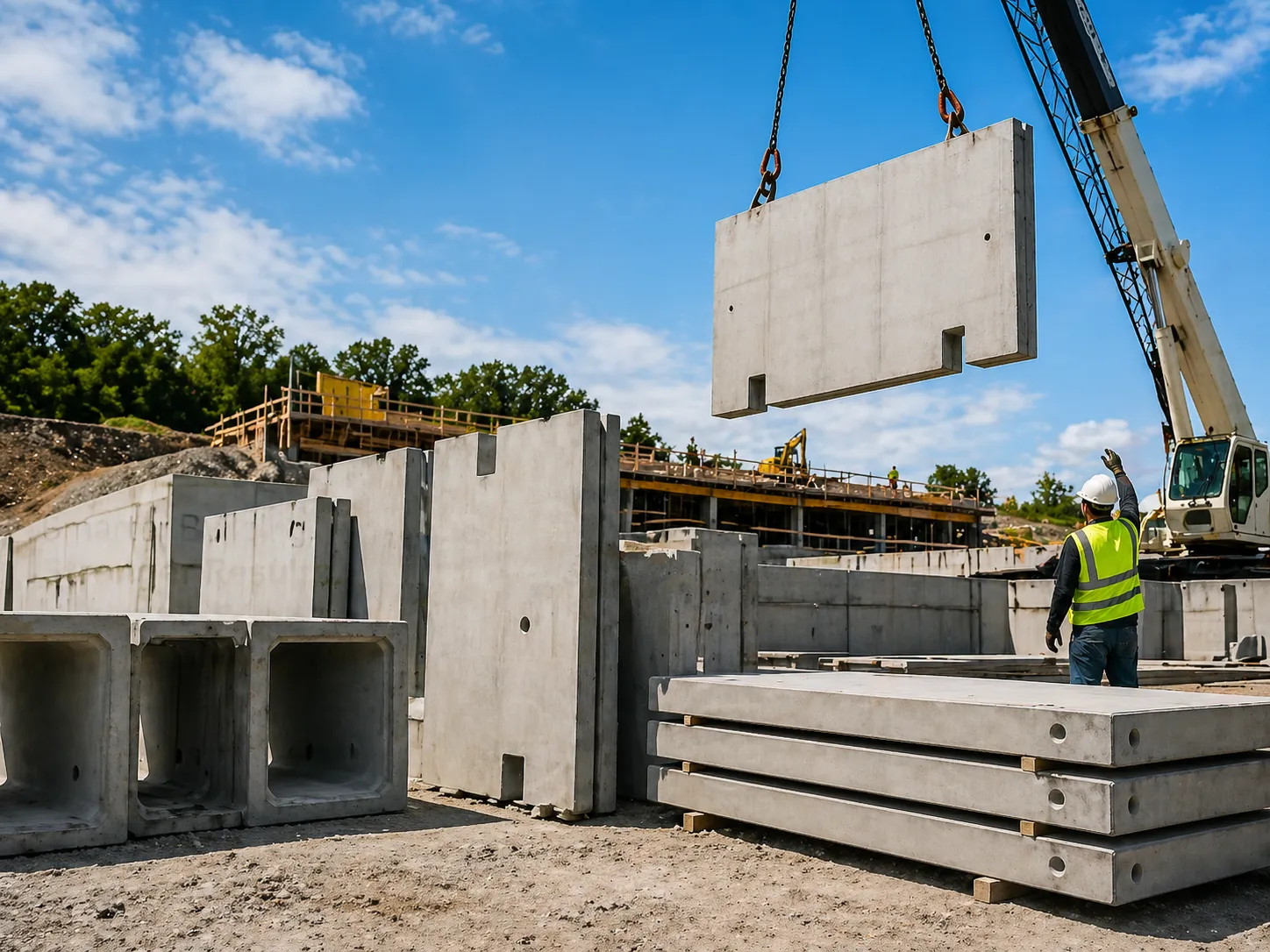

Most construction delays aren’t caused by big disasters. They come from small issues that keep stacking up. Weather delays a pour. Labor shows up late. Concrete doesn’t cure on time. One delay turns into three.
That’s why many builders now rely on a trusted precast company in Greenville to keep projects moving. Precast doesn’t fix everything—but it removes a lot of the usual headaches.
How Does Precast Save Time and Effort?
Precast products reduce construction time and effort by:
- Eliminating on-site curing time
- Reducing labor needs
- Speeding up installation
- Improving planning and scheduling
In simple terms, most of the hard work is already done before materials reach the site.
Problem: Too Many Moving Parts on Job Sites
Traditional construction depends on too many variables:
- Weather conditions
- Crew availability
- Material timing
- On-site decision making
When one thing slips, everything else follows.
What usually fails is not the plan—it’s execution under pressure.
Solution: Precast Simplifies the Process
Precast shifts a big portion of the work off-site. Concrete is produced, cured, and finished before it arrives.
That means:
- No waiting for forms
- No curing delays
- Less dependence on perfect conditions
A reliable precast company in Greenville helps reduce chaos by turning unpredictable work into a controlled process.
Faster Installation Is the Biggest Advantage
Why Speed Changes Everything
Precast products arrive ready to install. In many cases, components can be placed in hours instead of days.
That speed:
- Shortens project timelines
- Reduces labor hours
- Keeps other trades on schedule
On busy job sites, faster installs aren’t just convenient—they’re necessary.
Less Labor Means Less Risk
Why Labor Causes Delays
Concrete work requires skilled labor. And skilled labor isn’t always available when needed.
When crews rush:
- Quality drops
- Mistakes increase
- Rework becomes likely
How Precast Helps
Precast reduces the amount of work done on-site. Fewer workers are needed, and tasks are simpler.
Working with a professional precast company in Greenville lowers dependence on large crews and reduces the chance of human error.
Weather Stops Being a Major Problem
Why Weather Slows Traditional Construction
Rain delays pours. Heat affects curing. Cold slows everything down.
Builders often lose days just waiting for the right conditions.
Why Precast Avoids This
Precast is made in controlled environments. Weather doesn’t affect production the same way.
When materials arrive, they’re ready to go.
Planning Becomes Easier (And That Saves Time Too)
Precast requires planning ahead. That might sound like extra work—but it actually saves time later.
Clear planning means:
- Fewer surprises
- Better coordination
- Less rework
What usually works is simple: plan early, install fast.
What often fails is trying to figure things out on-site.
Consistency Reduces Rework
Rework is one of the biggest time-wasters in construction.
Cast-in-place concrete can vary from one pour to another. Small mistakes don’t always show immediately.
Precast products are consistent. They’re made under controlled conditions, so quality stays the same.
That consistency reduces:
- Fixes
- Adjustments
- Callbacks
Effort Drops Because the Hard Work Is Already Done
Think about everything involved in traditional concrete:
- Formwork
- Pouring
- Finishing
- Curing
- Inspection
Precast removes most of that from the job site.
Less effort on-site means:
- Less stress
- Fewer delays
- Faster completion
The Common Challenges When Using Precast
Precast isn’t perfect.
The common challenges include:
- Delivery coordination
- Equipment planning (like cranes)
- Finalizing designs earlier
But here’s the key difference—these challenges are predictable.
Compared to weather delays or failed pours, they’re much easier to manage.
What Usually Works vs What Often Fails
What Usually Works
- Early coordination with suppliers
- Clear design plans
- Using engineered precast systems
What Often Fails
- Rushed on-site pours
- Poor scheduling
- Ignoring weather impact
Honest take: job sites don’t need more flexibility—they need fewer things that can go wrong. Precast helps with that.
Why Builders Keep Switching to Precast
Once contractors use precast on a project that runs smoothly, they rarely go back.
Why?
Because:
- Timelines improve
- Stress drops
- Fewer things break later
That’s why working with an experienced precast company in Greenville becomes a long-term choice, not a one-time decision.
Conclusion: Faster Builds Come From Better Systems
Precast products don’t just speed up construction—they simplify it. By moving critical work off-site and into controlled environments, precast reduces delays, labor issues, and costly mistakes.
Garrett Precast continues to support builders with reliable solutions that save time and effort without sacrificing quality. When projects need to move faster and run smoother, choosing the right precast partner makes a real difference.
Key Takeaways
- Precast reduces on-site work and delays
- Faster installation improves timelines
- Less labor lowers risk
- Weather impact is minimized
- Planning upfront saves time later
Frequently Asked Questions (FAQ's)
1. How much time can precast save on a project?
It depends on the project, but installation time can be reduced significantly compared to on-site concrete work.
2. Does precast reduce labor costs?
Yes. Fewer workers and less on-site work lower overall labor needs.
3. Is precast better for tight deadlines?
Absolutely. Faster installation makes it ideal for time-sensitive projects.
4. Are there downsides to precast?
Planning and logistics need to be handled early, but those challenges are manageable.
5. Why do contractors prefer precast after using it once?
Because it reduces delays, improves consistency, and makes projects easier to manage.

















Sign in to leave a comment.