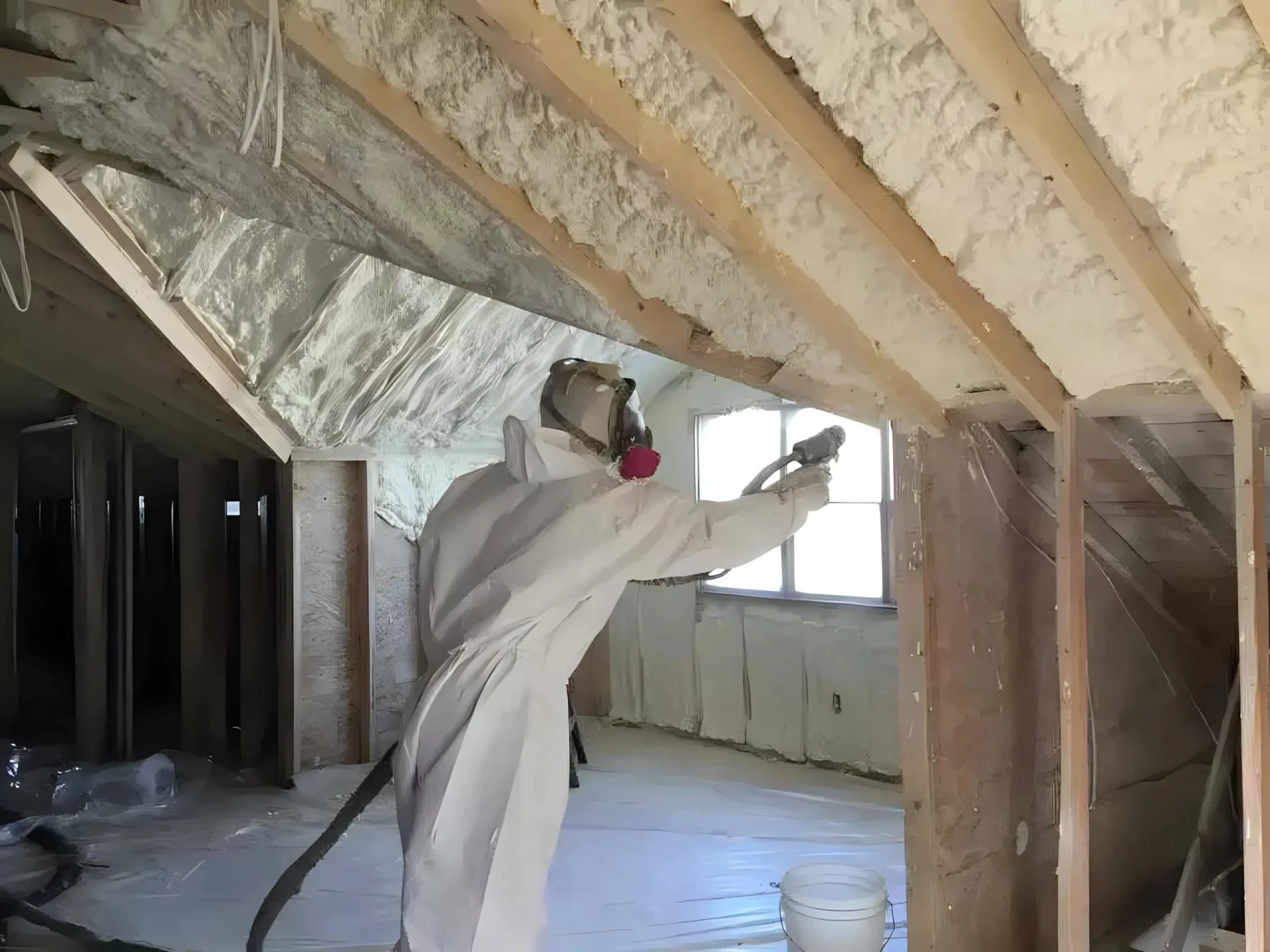

Spray foam insulation dramatically lowers monthly energy costs by establishing a complete air seal that prevents conditioned air from leaking out and outdoor air from entering a structure. While conventional insulation materials primarily slow down heat transfer through conduction, spray foam expands to fill cracks, voids, and crevices, effectively stopping air leakage entirely. The U.S. Department of Energy identifies uncontrolled air leakage as a primary source of wasted energy in both residential and commercial buildings. By addressing insulation and air sealing simultaneously, spray foam allows heating and cooling systems to maintain comfortable temperatures without constant operation, often resulting in utility bill reductions between 30% and 50%.
Achieving these significant energy savings requires a clear understanding of how heat moves through a building envelope and why effective air barriers are essential for energy efficiency. With proper installation, spray foam insulation performs reliably for the entire lifespan of the structure, providing a permanent solution to thermal loss that does not settle or degrade over time. By addressing both heat conduction and air convection, spray foam insulation delivers superior performance compared to traditional fiberglass and cellulose insulation, making it an ideal choice for homes and buildings.
The Science of Thermal Resistance and Air Barriers
To understand how spray foam conserves energy, one must look at the physics of heat transfer within a home or commercial building. Heat moves primarily through conduction, which is heat traveling through solid materials, and convection, which is heat moving through air currents. Standard insulation provides an R-value, which measures resistance to conduction, but often fails to stop air movement through gaps. Spray foam addresses both mechanisms by forming a rigid barrier that heat struggles to pass through while simultaneously plugging the holes that cause drafts.
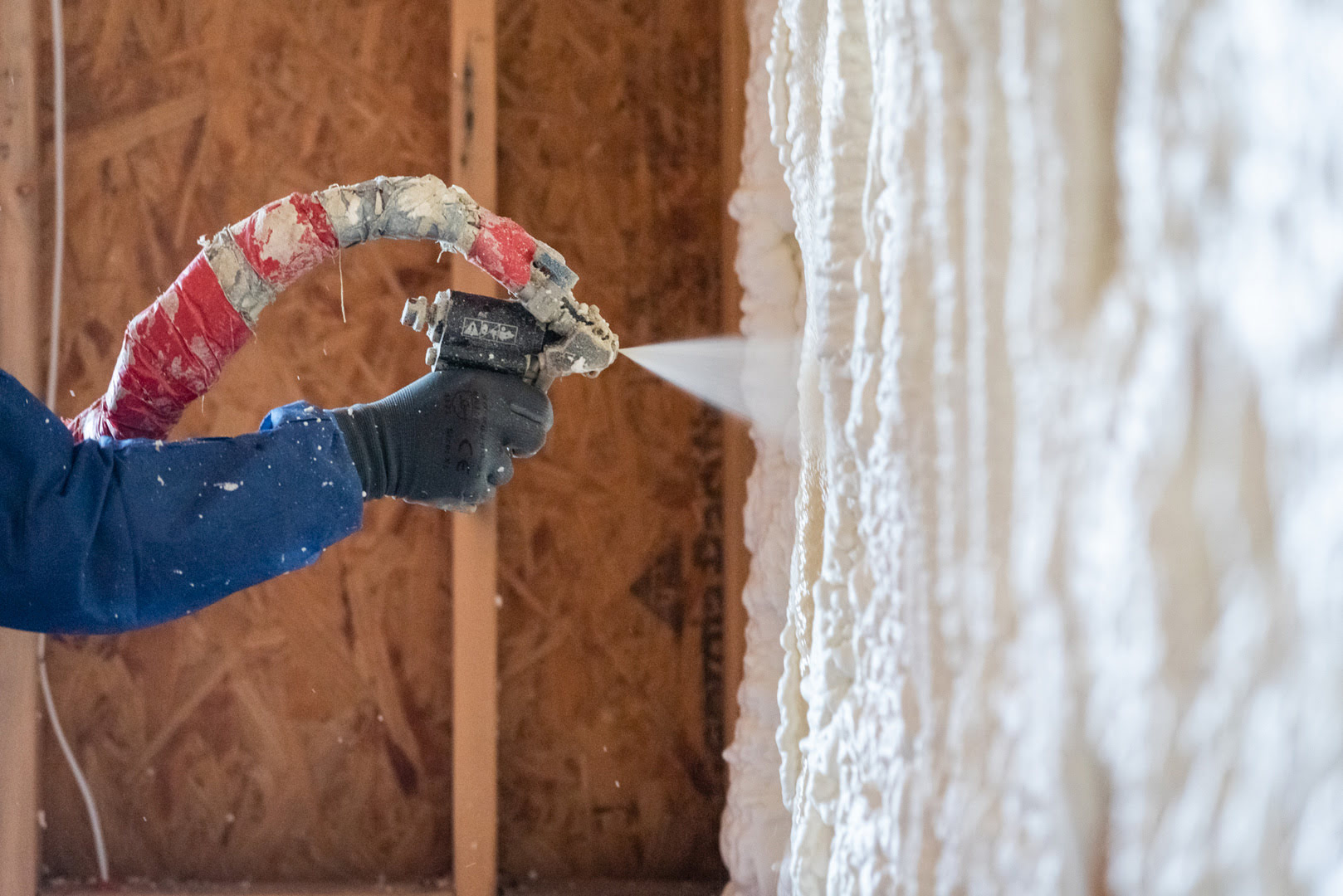
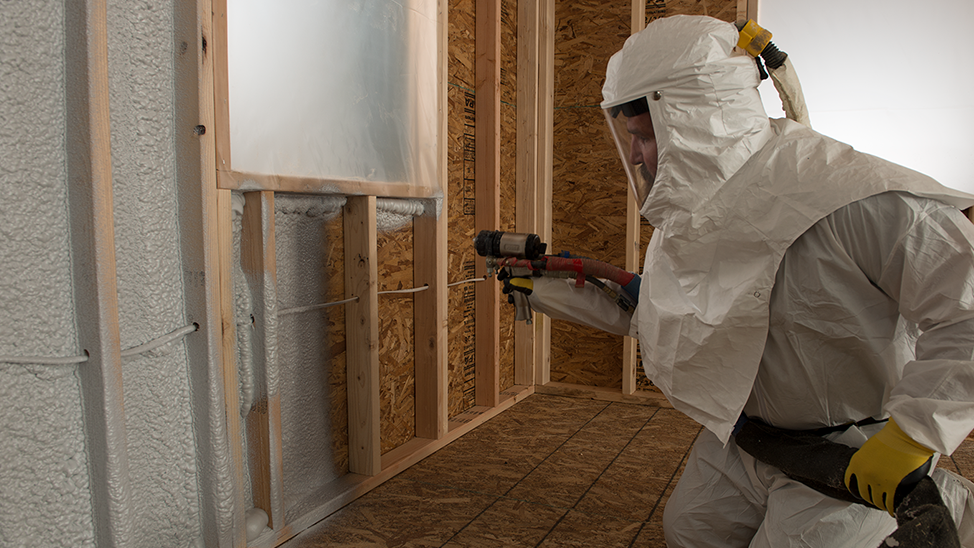
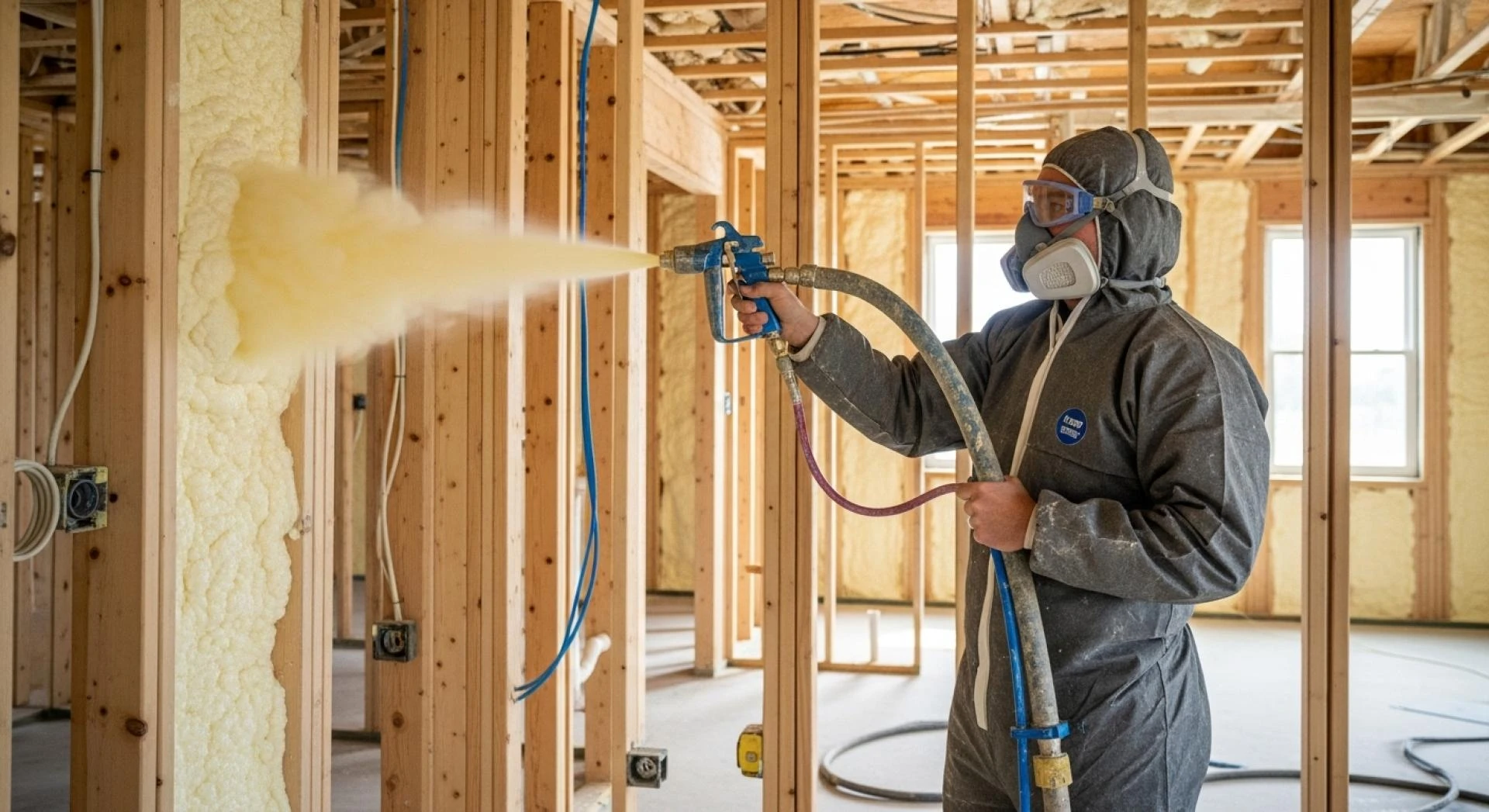
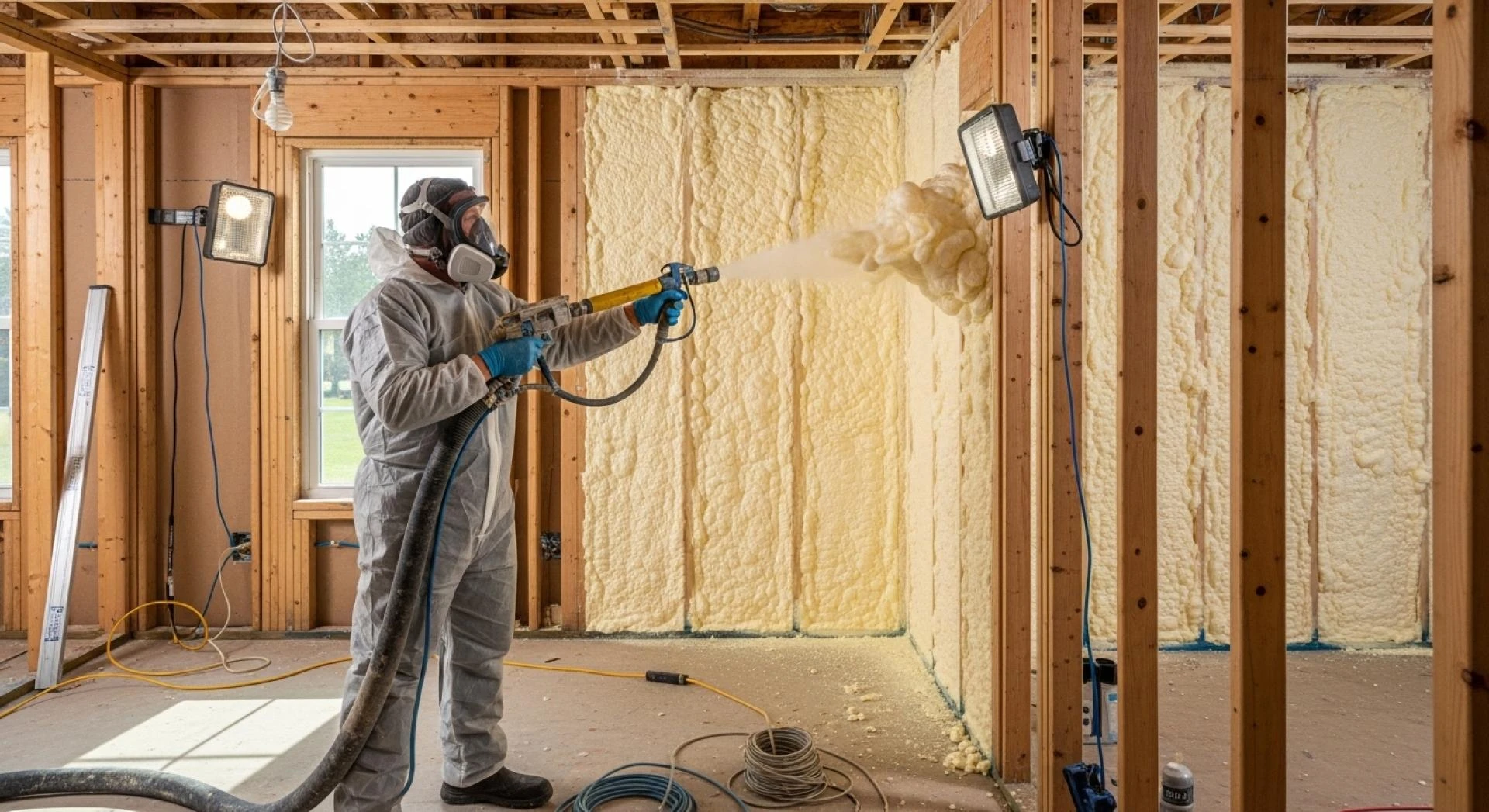
When air leaks through wall cavities, rim joists, and attic floors, the HVAC system must work much harder to condition new air entering the building from outside. Spray foam expands up to 100 times its liquid volume during installation, sealing these leakage points instantly upon application. This creates a tight thermal envelope that stabilizes indoor conditions and humidity levels, regardless of the weather outside.
Understanding Heat Flow Mechanisms
There are specific physical dynamics at play when a home loses energy to the outside environment during summer or winter. Understanding these concepts helps property owners see why air sealing is just as significant as the R-value of the material selected for the project.
The Stack Effect
In the winter, warm air rises and escapes through the upper levels of a building, creating a vacuum that pulls cold air in through the lower levels. This phenomenon is known as the stack effect and is responsible for cold floors and drafty rooms. Spray foam applied to the attic floor or roof deck stops this upward pressure, breaking the cycle of air movement and keeping the warmth inside where it belongs.
Comparing Insulation Material Performance
The following table outlines the technical differences between common insulation types regarding their ability to stop heat transfer and air leakage.
| Feature | Open-Cell Spray Foam | Closed-Cell Spray Foam | Fiberglass Batts | Cellulose (Blown-in) |
|---|---|---|---|---|
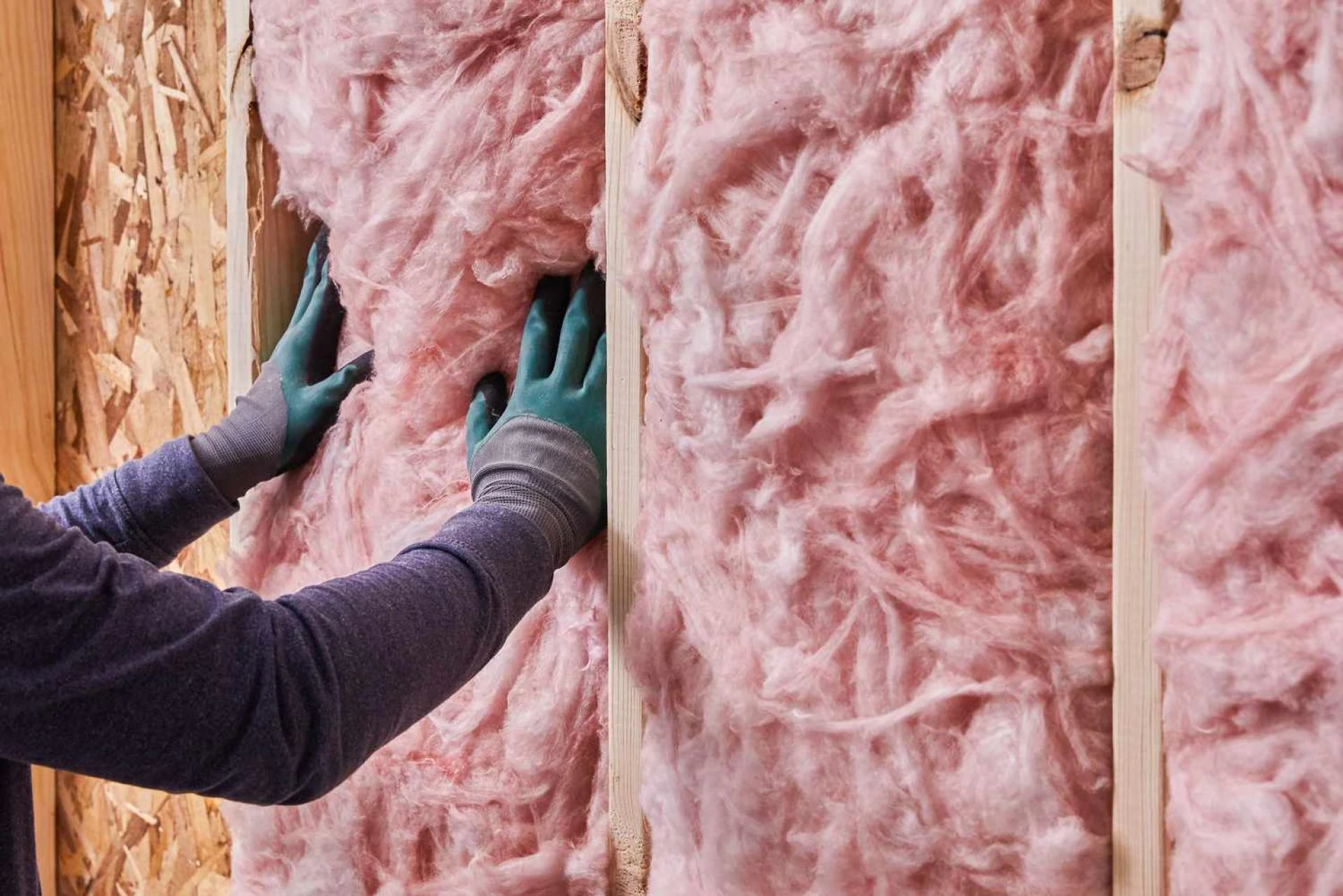
| R-Value per Inch | R-3.5 to R-3.7 | R-6.0 to R-7.0 | R-2.9 to R-3.8 | R-3.1 to R-3.8 |
| Air Barrier | Yes (at 3.5" depth) | Yes (at 1" depth) | No | No (slows air only) |
| Moisture Barrier | Permeable (breathable) | Impermeable (waterproof) | No | Absorbent |
| Settling Risk | None | None | High | High |
| Lifespan | 80+ Years | 80+ Years | 10-25 Years | 20-30 Years |
Reducing HVAC Workload and Equipment Wear
A significant portion of monthly energy expenses comes from the heating and ventilation system cycling on and off to satisfy the thermostat setting. In homes with significant air leakage, the system runs frequently because the conditioned air constantly escapes through the building envelope. This frequent operation consumes excess electricity and gas while accelerating mechanical wear and tear on the unit.
By sealing the building, spray foam drastically reduces the run-time required for the HVAC unit to reach the desired temperature. Industry data indicates that systems in foam-insulated homes run for shorter periods and cycle fewer times per day compared to traditional homes. This efficiency not only lowers monthly bills but also extends the operational lifespan of the furnace and air conditioner.
Downsizing Mechanical Systems
One often overlooked benefit of a tight building envelope is the ability to use smaller, more efficient HVAC equipment. Because the heating and cooling load is reduced, a massive unit is no longer necessary to keep the home comfortable.
Bonus Tip: Equipment Sizing
When building a new home or replacing an old HVAC unit, ask the mechanical contractor to perform a Manual J load calculation based on the spray foam insulation specs. Many homeowners find they can purchase a smaller, less expensive unit that runs more efficiently than the larger unit required for a traditionally insulated home.
Managing Moisture and Thermal Bridging
Water vapor naturally carries heat, and when humid air enters wall cavities, it brings that thermal energy along with it. Permeable materials allow moisture-laden air to pass through, which can lead to condensation forming within the walls. This moisture settles into the insulation, reducing its R-value and potentially causing mold growth or wood rot over time.
Spray foam, particularly closed-cell varieties, acts as a vapor retarder in addition to an insulator. It stops humid air from penetrating the walls, ensuring the insulation value remains consistent regardless of external humidity. Furthermore, spray foam adheres directly to the studs, which helps reduce thermal bridging. Thermal bridging occurs when wood studs transfer heat faster than the insulation between them.
Structural Integrity and Protection
Beyond energy savings, spray foam adds structural rigidity to walls and roofs by bonding components together. The material glues the building materials into a monolithic structure, which can be beneficial during high wind events or storms.
Reducing Thermal Shock
By maintaining a consistent temperature within the wall cavity, spray foam reduces the expansion and contraction of building materials. This reduction in thermal shock helps prevent drywall cracks and keeps the structure tighter for longer periods.
Regional Considerations for Climate Zones
The effectiveness of different insulation strategies depends heavily on the local climate and weather patterns. A generic approach does not work when dealing with building science across different geographic regions with varying humidity and temperature ranges.
Strategies for Hot and Humid Climates
In southern regions, the primary goal is keeping heat and moisture out of the living space to reduce cooling costs. Radiant heat from the sun can make attics extremely hot, forcing the air conditioner to work much harder to keep the home cool.
Attic Encapsulation
Applying spray foam to the underside of the roof deck prevents solar heat from entering the attic space. This creates an "unvented attic" where the temperature remains close to the living space temperature. Ductwork located in this conditioned space performs much more efficiently, as it is not carrying cold air through a 140-degree environment.
Strategies for Cold and Northern Climates
In northern regions, the focus is on retaining heat and preventing warm, moist air from contacting cold surfaces. If warm air reaches the cold roof sheathing, it melts snow which then refreezes at the eaves, causing ice dams.
Preventing Ice Dams
A well-sealed attic floor or a hot-roof design with spray foam prevents the heat loss that causes ice dams. Closed-cell foam is often preferred here for its higher R-value per inch and its ability to stop moisture drive from the interior to the exterior.
Special Considerations for Coastal Zones
In coastal areas prone to flooding, closed-cell foam is the only insulation material approved by FEMA for use in areas below the base flood elevation. It rejects bulk water and can be cleaned after a flood event, whereas fiberglass and cellulose must be removed and discarded immediately.
Things to Consider Before Making a Decision
Before committing to a spray foam installation, property owners should evaluate several factors to ensure the investment aligns with their specific needs and budget. It is important to look at the full picture of costs and benefits rather than just the initial price tag.
Initial Investment vs. Long-Term Payback
Spray foam costs more upfront than fiberglass or cellulose materials due to the chemical components and labor required. However, the return on investment typically takes 3 to 5 years through energy savings alone. If the plan is to stay in the home for many years, the mathematical case for spray foam is usually very strong.
Retrofit Logistics and Preparation
Installing foam in existing walls is more complex than in new construction projects where the walls are open. It often requires drilling holes in the exterior or interior walls to inject the foam, or removing drywall entirely. This process involves additional costs for repair and repainting that must be factored into the total budget.
Bonus Tip: Rebates and Incentives
Check with local utility providers before scheduling the work to see what financial help is available. Many utility companies offer substantial rebates for air sealing and insulation upgrades that can significantly offset the initial installation cost.
Frequently Asked Questions About Spray Foam Efficiency
Does spray foam insulation lose its R-value over time?
No, unlike loose-fill insulation that can settle or fiberglass that can sag, spray foam maintains its shape and density indefinitely. Once cured, the cellular structure remains stable, ensuring that the thermal resistance and air barrier properties last for the life of the building without needing replenishment.
Is it possible to seal a house too tightly?
A tight house is energy efficient, but it requires mechanical ventilation to ensure fresh air exchange occurs. Modern building codes often require the installation of an Energy Recovery Ventilator (ERV) in foam-insulated homes to bring in fresh, filtered air while exhausting stale air without losing energy.
Can spray foam be applied directly to the roof deck?
Yes, applying foam to the underside of the roof is a standard practice called creating a "hot roof" or unvented attic assembly. This brings the attic space into the conditioned envelope of the house, which protects HVAC equipment and ductwork from extreme temperature fluctuations.
How much can I realistically save on energy bills?
While every home is different, savings generally range from 30% to 50% compared to traditional insulation methods. The most dramatic savings are seen in older homes that previously had significant air leakage issues and poor insulation levels in the attic and rim joists.
Which is better for homes, open-cell or closed-cell foam?
Open-cell foam is generally sufficient for interior walls and attics in moderate climates, as it is more affordable and allows for bi-directional drying. Closed-cell foam is superior for basements, exterior applications, and areas needing high R-value in limited space due to its density and moisture resistance.
Summary of Energy Saving Benefits
Spray foam insulation stands out as a superior solution for energy conservation because it performs two critical functions: stopping heat transfer and eliminating air leakage. By sealing the thousands of tiny gaps that standard insulation misses, it relieves the strain on HVAC systems and maintains a comfortable indoor environment with minimal energy input. Property owners looking to reduce their carbon footprint and monthly expenses find that air sealing is the most effective step they can take.
Evaluating the specific needs of a building requires a professional assessment to identify where energy loss is occurring most rapidly. Homeowners should review their utility history and inspect their property for drafts to determine if spray foam is the right solution for their long-term goals.
Taking the Next Step in Energy Efficiency
For property owners seeking to maximize their home's performance, professional guidance provides the necessary clarity on material selection and application methods. Prestige Insulation Solutions offers detailed energy assessments to determine the most effective strategy for residential and commercial structures. They assist clients in navigating the technical specifications of R-values and air sealing to ensure the chosen solution delivers lasting value.
Those interested in evaluating their property's insulation needs can contact Prestige Insulation Solutions at [email protected] or call (850) 429-4969. Their team is prepared to provide insights into proper installation techniques that align with building codes and efficiency goals.
Author: Rene Zamarripa, spray foam installer and owner, began in the insulation industry in 2008 with Key Insulation in San Antonio. After 17 years of hands-on experience, now owns a successful insulation company with aspirations to franchise.
Reviewer: With over 13 years in spray foam insulation, Benjamin Lee reviewed this content and offered feedback aimed at helping growing businesses connect with local homeowners and commercial clients more effectively.



























Sign in to leave a comment.