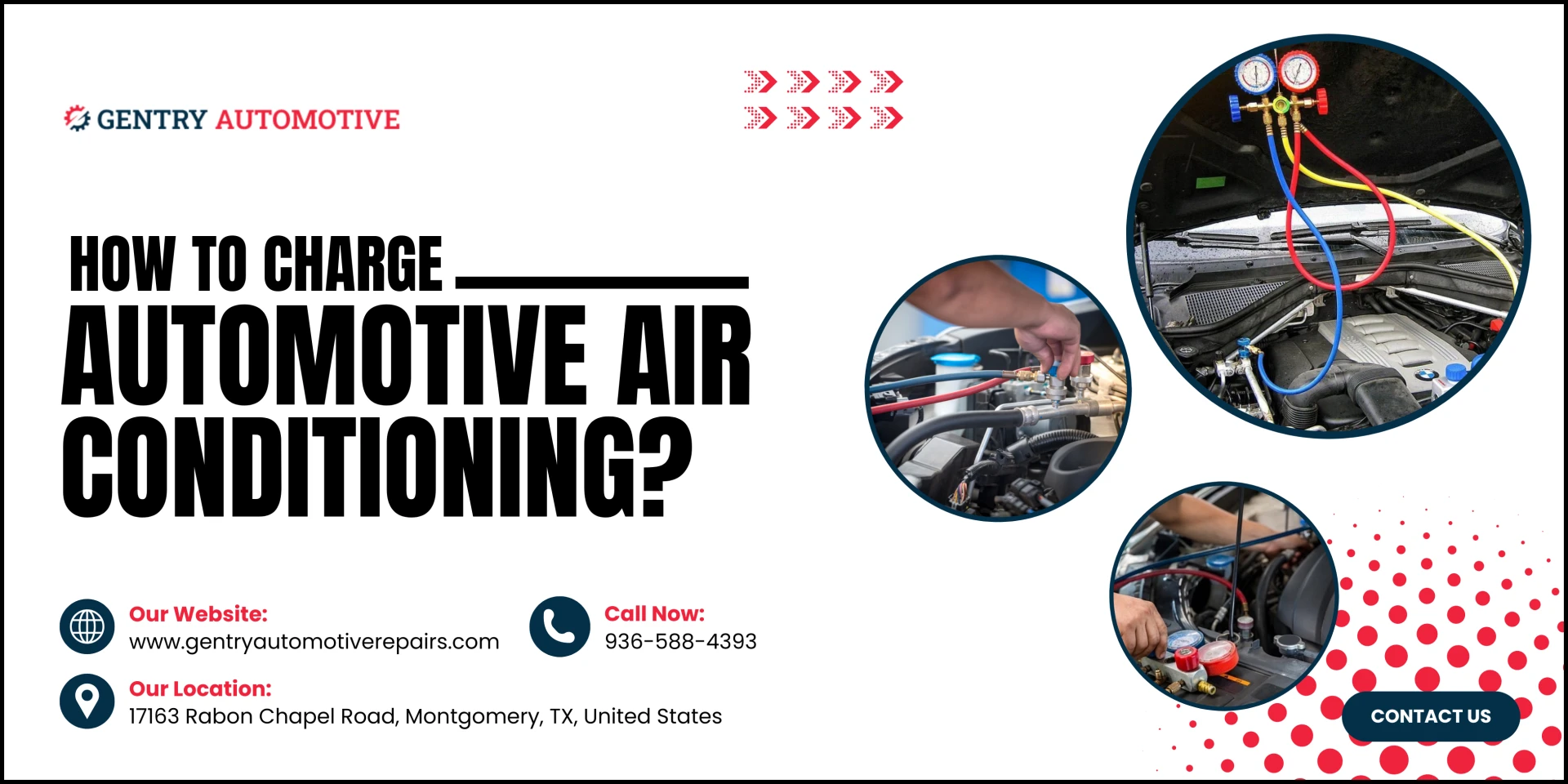

If you do it wrong, you can damage your compressor, waste money, or even break the law.
Let’s break down the correct way to recharge AC in car systems, what tools you’ll need, and when it’s smarter to hand the job over to professionals.
What Does Charging Auto AC Mean?
Recharging your car’s A/C means adding refrigerant to the system so it can blow cold air again. Over time, refrigerant naturally leaks out through seals, hoses, or fittings, and without it, your A/C can’t cool properly. But topping up isn’t always enough. Leaks, faulty compressors, or electrical issues may require a full Auto AC Repair Service.
Types of Refrigerants: Which Refrigerant Does Your Car Use?
Before you grab a kit, you need to know which refrigerant your car uses.
- R-134a: Found in most vehicles built before the mid-2010s. Safer for DIY recharges..
- R-1234yf: Found in most newer cars, more eco-friendly but mildly flammable and expensive. DIY recharge isn’t recommended.
Check under the hood for a label that tells you which refrigerant is in your system. Using the wrong one or mixing them can ruin your A/C.
Safety Rules for Recharging Your Car’s AC
- Never vent refrigerant into the air. It’s illegal and harmful to the environment.
- Wear gloves and eye protection to prevent frostbite injuries.
- Use the correct refrigerant for your car.
- If you’re not confident, search “auto air conditioning service near me” and let a certified technician handle it.
Step-by-Step Guide to Charging Auto AC
If your car uses R-134a, here’s the safest DIY approach:
- Find the low-side service port: Look for the cap marked “L” under the hood.
- Start your car and A/C: Set the A/C to max cool, max fan, and recirculate.
- Attach the gauge and check pressure: Use a kit with a built-in gauge. Cheap gauges are often inaccurate, so read carefully.
- Add refrigerant slowly: Spray in short bursts, stop, and recheck.
- Monitor vent temperature: Cold air should start flowing. Don’t keep adding once pressures are in range.
If pressures spike or your system doesn’t cool after adding refrigerant, stop immediately. That’s not a simple “low refrigerant” issue; you need professional help
When to Book a Professional Auto Air Conditioning Service?
DIY isn’t always the solution. Call a certified technician if:
- Your car uses R-1234yf refrigerant.
- The compressor doesn’t kick in.
- You see oily residue or smell refrigerant inside the cabin.
- The A/C still blows warm after recharging.
A professional shop will vacuum the system, fix leaks, and recharge it to factory specs. Searching for auto air conditioning service near me will lead you to certified experts with the right tools.
Final Word: DIY or Professional?
Your car’s A/C is a pressurized system that demands accuracy. A careless DIY recharge can burn out the compressor and cost you far more than a professional fix.
If you know your refrigerant and follow the steps carefully, go ahead and recharge. But if there’s even a hint of a leak, the wrong refrigerant, or a system that just won’t cool, stop wasting time. Call an auto AC repair service and let the pros handle it.





























Sign in to leave a comment.