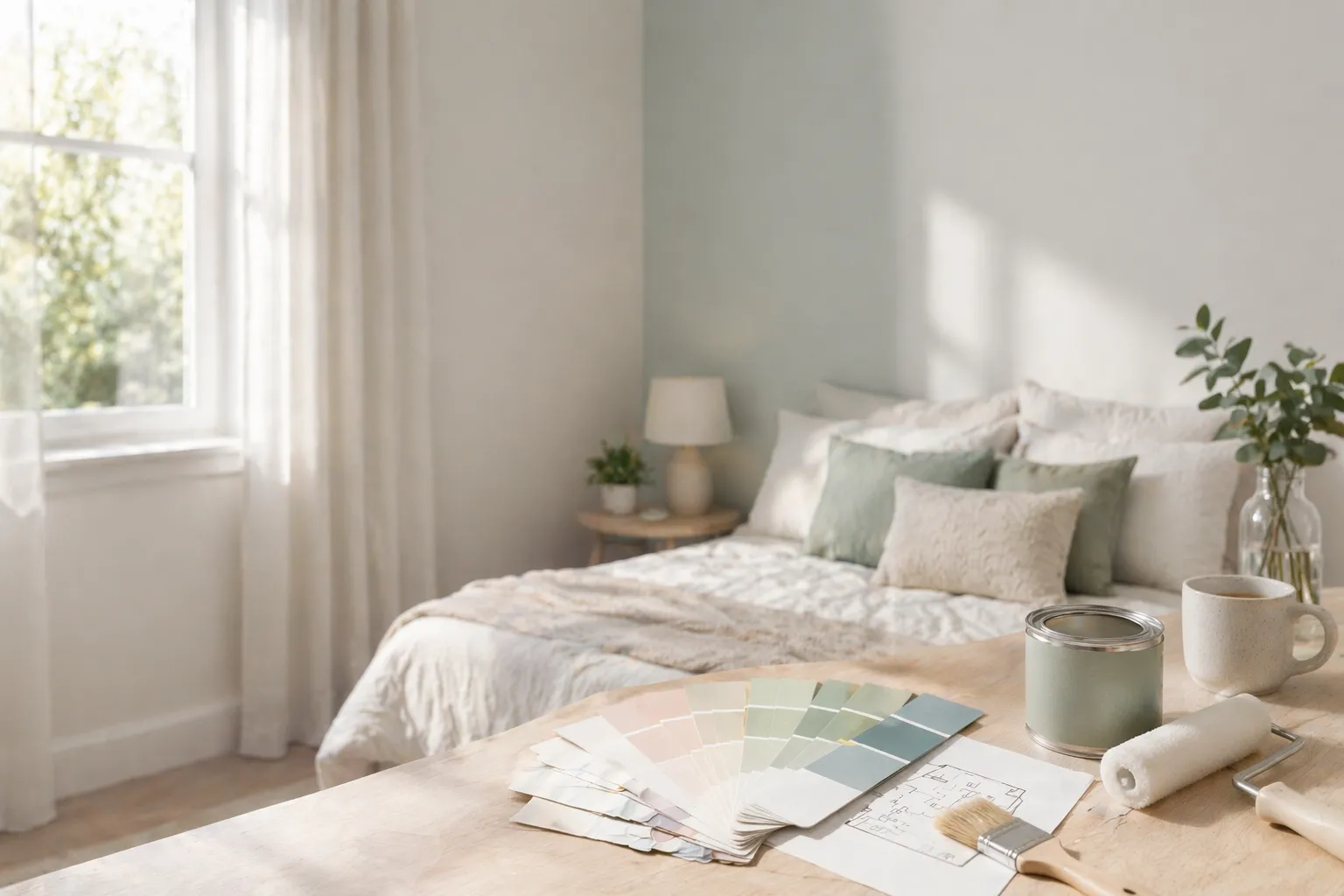

Picking a paint color for a small room can feel tricky. A shade that looks great in a store or on your phone might feel completely different once it’s on your walls. That’s because color doesn’t work alone. Light, space, and even furniture all play a part in how it finally looks.
The good news is, you don’t need to be a designer to get it right. A few smart choices can make a small room feel more open, brighter, and a lot more comfortable to spend time in.
Start with the light in the room
Before thinking about colors, take a moment to notice how much light the room gets. This step is often skipped, but it makes a huge difference.
If the room has plenty of natural light, you’ve got more freedom. Cooler tones like light grey or soft blue can look fresh and balanced. They won’t feel cold because sunlight warms them up during the day.
For rooms that feel a bit dark, warmer shades usually work better. Think of soft cream, beige, or even a light peach tone. These colors help the room feel less dull and more inviting.
Also, check how the color looks at night. Artificial lighting can change things quite a bit. A shade that looks calm during the day might turn too yellow or too dull under certain bulbs.
Light colors can open up the space
You’ve probably heard this before, and it’s true. Lighter shades tend to make a room feel bigger. They reflect light instead of absorbing it, which helps the space feel less closed in.
That said, you don’t have to stick with plain white. Soft neutrals are often a better choice. Off-white, pale grey, or light taupe can give you that open feel without looking too plain.
If you want a bit of color, go for soft tones. Light green, dusty blue, or a gentle pink can add character without making the room feel crowded. These shades bring life into the space while still keeping things calm.
Keep things simple with less contrast
Too many strong contrasts can make a small room feel busy. When your eyes keep jumping from one bold difference to another, the space can start to feel tighter than it really is.
A smoother look works better. Using similar shades or sticking to one color family can help everything blend nicely. For example, you might use a light shade on the walls and slightly deeper tones in your furniture or décor.
This kind of flow makes the room feel more relaxed and a bit more spacious.
Don’t be afraid of darker shades
Dark colors get a bad reputation when it comes to small rooms, but they’re not always a bad idea.
Used carefully, they can actually add depth. A darker accent wall can create a focal point and make the room feel less flat. In some cases, painting all the walls in a deeper tone can blur the edges, which gives a sense of more space rather than less.
The trick is balance. If your walls are dark, try to keep furniture, curtains, or décor on the lighter side. This keeps the room from feeling too heavy.
Look up at the ceiling
The ceiling matters more than most people think. It can change how tall or short a room feels.
A lighter ceiling compared to the walls usually makes the room feel higher. This is especially helpful in spaces where the ceiling feels a bit low. Keeping it simple and bright often works best.
If you want something different, you can try a very soft tint. Just don’t go too dark, or the room might start to feel closed in.
Small details like trim can make a difference
Trim and edges might seem like minor things, but they affect how the whole room comes together.
If the trim is a completely different color from the walls, it creates sharp lines. That can make the space feel a bit tighter. Matching the trim closely with the wall color softens those edges and creates a smoother look.
It’s a small change, but it helps the room feel more open and less broken up.
Use paint to guide the eye
Color placement can change how a room feels without changing its size.
For example, slightly darker tones lower on the wall can ground the space, while lighter shades above can make it feel taller. Vertical patterns or subtle stripes can also draw the eye upward.
Another simple trick is to paint shelves or built-ins the same color as the walls. This helps them blend in instead of standing out, which reduces visual clutter.
Think about how the room is used
Every room has its own purpose, and the color should match that.
Bedrooms usually feel better with calm, soft tones. Light blues, greens, or warm neutrals can help create a relaxing space. For a small workspace, lighter shades can keep things feeling open and less distracting.
Bathrooms often benefit from fresh, clean colors that reflect light well. This helps them feel brighter, especially when space is limited.
When the color fits the function, the room just feels right.
The finish matters more than you expect
Paint finish is something people often overlook, but it can change how the color behaves.
Matte finishes give a soft look, but they don’t reflect much light. In a small room, that can make things feel a bit more closed in. Eggshell or satin finishes are usually a better middle ground. They reflect some light without drawing too much attention to imperfections.
Glossy finishes reflect a lot of light, but they can highlight flaws on the wall. They’re better for trim or smaller areas rather than full walls.
Keep colors connected across spaces
If your small room opens into another area, try not to make the colors feel completely separate. Sudden changes can make the space feel smaller and disconnected.
Using similar tones or colors that work well together creates a smoother transition. It helps everything feel more open and connected as you move from one room to another.
Test before making a final decision
It’s always worth testing a color before committing to it. Paint can look very different once it’s on a full wall.
Try a few samples and place them in different spots around the room. Check how they look during the day and at night. Notice how they change under different lighting.
This step might take a little extra time, but it saves you from choosing a color you might regret later.
Conclusion
Choosing paint for a small room isn’t about following strict rules. It’s more about understanding how light, color, and space work together. With the right shades and a bit of planning, even a compact room can feel open, comfortable, and well put together.
If you want help getting the exact shade right or matching colors perfectly, professional paint matching services in Las Vegas can make things much easier. For dependable support and quality work, you can connect with getzhandyman and get the job done with confidence.






























Sign in to leave a comment.