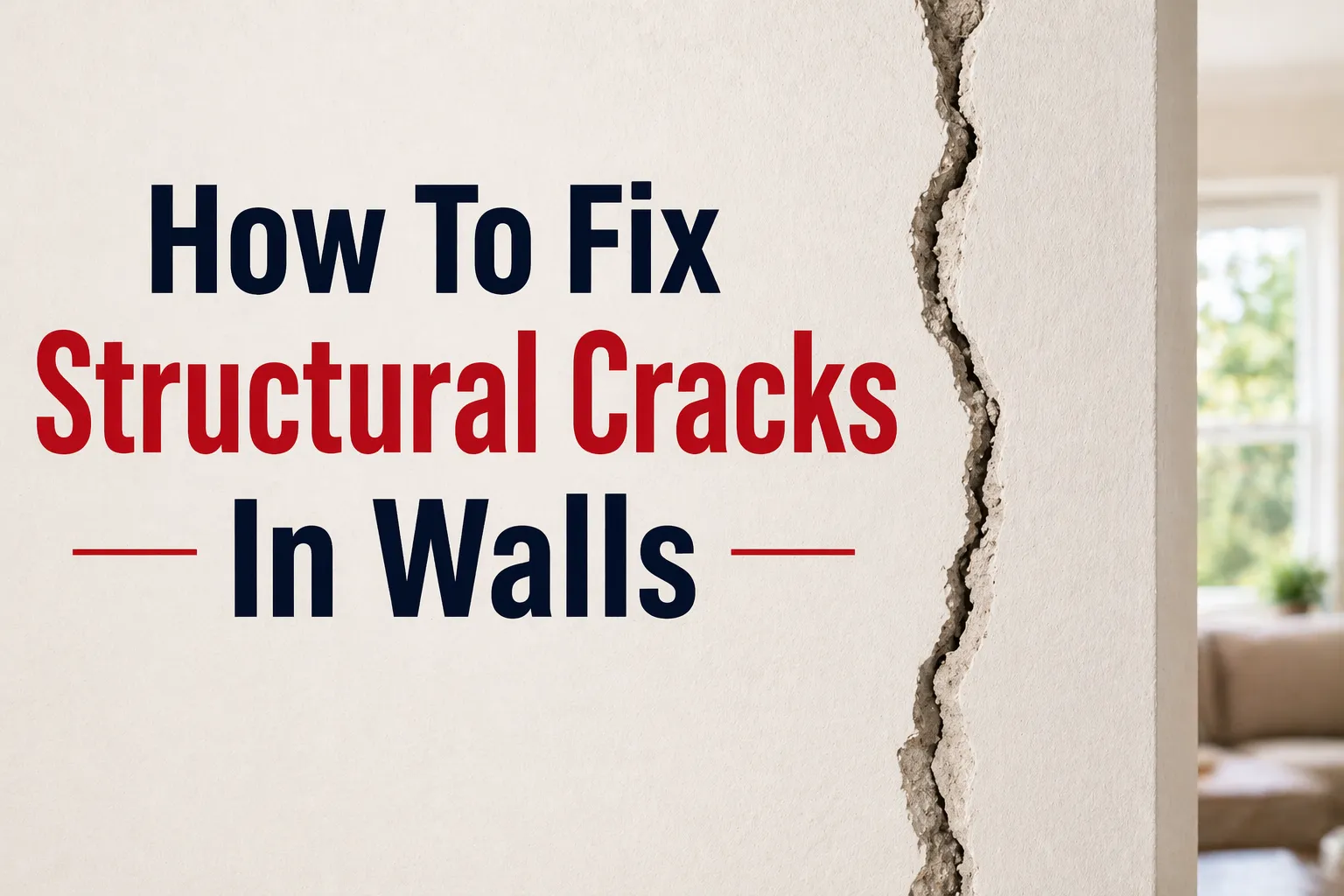

Cracks in walls tend to get ignored at first. A thin line here, a small split there. It doesn’t feel urgent until it starts spreading or getting deeper. That’s when people realize something more serious might be going on. Structural cracks are not just surface flaws. They can point to movement in the building, and fixing them properly takes more than a quick patch job.
This guide breaks things down in a simple, practical way so you can understand what’s happening and what steps actually help.
What Are Structural Cracks?
Not every crack means trouble. Some appear due to drying paint or plaster shrinkage. Structural cracks are different. They form when there is stress on the building itself.
These cracks often show up because of:
- Foundation movement
- Soil shifting under the structure
- Poor construction practices
- Water damage weakening the base
- Excess weight on walls or slabs
They usually look wider, deeper, and more uneven than cosmetic cracks. You might also notice them running diagonally or in a stair-step pattern along bricks.
Signs You Shouldn’t Ignore
It’s easy to assume a crack is harmless, but certain signs suggest a deeper issue.
Watch for:
- Cracks wider than a few millimeters
- Lines that keep getting longer over time
- Doors or windows that suddenly stick
- Gaps forming near ceilings or corners
- Floors that feel uneven
If more than one of these shows up together, it’s worth taking seriously.
Why Structural Cracks Happen
Before jumping into repairs, it helps to understand why the crack formed in the first place. Fixing the surface without fixing the cause usually leads to the same problem coming back.
Foundation Settlement
Buildings settle over time, but uneven settling creates stress. One side moves more than the other, and cracks appear to release that pressure.
Water Problems
Water is one of the biggest culprits. Poor drainage, plumbing leaks, or heavy rainfall can weaken the soil under the structure.
Temperature Changes
Materials expand and contract with heat and cold. Over time, this movement can create stress points in walls.
Low-Quality Materials
Weak cement mix or poor workmanship can make walls more likely to crack under pressure.
Structural Overload
Adding heavy elements like water tanks or extra floors without proper support can strain the structure.
How to Fix Structural Cracks in Walls
There’s no one-size solution. The right method depends on how severe the crack is and what caused it.
1. Start with Inspection
Before doing anything, take a close look at the crack:
- Measure its width
- Check its direction
- See if it’s growing over time
Mark the ends with a pencil and check again after a few weeks. If it’s expanding, you’re dealing with an active structural issue.
For serious cracks, getting a structural expert involved is the safest step.
2. Fix the Root Cause
This part matters more than the repair itself.
If the issue is:
- Water leakage → improve drainage or fix plumbing
- Foundation movement → soil stabilization or underpinning may be needed
- Load issues → reduce weight or add support
Skipping this step means the crack will likely return.
3. Repair Methods Based on Severity
Hairline or Minor Cracks
These are shallow and don’t affect the structure much.
Steps:
- Clean the area
- Apply wall filler or putty
- Sand it smooth
- Repaint
Simple and effective for small surface cracks.
Medium Cracks
Cracks that are visible but not severely deep need stronger treatment.
Steps:
- Widen the crack slightly to form a V-shape
- Remove dust and loose particles
- Fill with polymer-modified cement or crack filler
- Apply a mesh tape over the crack
- Replaster and paint
This helps prevent the crack from reopening.
Deep Structural Cracks
These require reinforcement techniques.
Epoxy Injection
A strong resin is injected into the crack. It bonds the structure back together and restores strength.
Crack Stitching
Metal bars or staples are placed across the crack. These hold the wall together and distribute stress.
Grouting
Cement or chemical grout is injected to fill gaps inside the wall.
Reinforced Plastering
Wire mesh is added before replastering to strengthen the surface.
These methods are usually handled by professionals with the right tools and experience.
Special Considerations for Drywall
In modern interiors, drywall is common. Cracks in drywall don’t always mean structural damage, but they can still signal movement.
Typical drywall crack causes:
- Poor joint finishing
- Frame movement
- Moisture exposure
Repair usually involves:
- Re-taping joints
- Applying joint compound
- Sanding and repainting
For recurring drywall cracks, experienced drywall repair specialists can assess whether the issue is surface-level or tied to framing behind the wall.
Preventing Cracks in the Future
You can’t always stop cracks completely, but you can reduce the chances.
- Keep water away from the foundation with proper drainage
- Fix leaks as soon as they appear
- Use quality materials during construction or renovation
- Avoid sudden heavy loads on walls and slabs
- Schedule occasional inspections, especially for older buildings
Small maintenance steps go a long way in preventing bigger repairs later.
When It’s Time to Call a Professional
Some situations are better handled by experts.
Consider professional help if:
- The crack is wider than 5 mm
- You see multiple cracks across different walls
- The crack keeps growing
- Structural movement is visible
Professionals have the tools to diagnose the real issue and fix it properly, not just cover it up.
Final Thoughts
Structural cracks are a warning sign, not just a cosmetic flaw. Acting early can save time, money, and stress. The key is to understand the cause, choose the right repair method, and avoid quick fixes that don’t last.
If you’re dealing with recurring wall damage or interior cracking issues, working with experienced Drywall contractors in las vegas can make a real difference. Skilled professionals like the team at getzhandyman know how to identify the root cause and apply long-lasting solutions. Reach out today to get your walls inspected and repaired the right way before the problem gets worse.





























Sign in to leave a comment.