
You’ve finally received your university offer, and the next big step is finding a place that truly feels like home. Choosing the right student accommodation isn’t just about having a roof over your head — it’s about shaping how you study, socialise, and recharge. Your course structure, timetable, and campus location all play a role in deciding where you’ll live.
Whether it’s a flat near the lab, a hall by the library, or a quiet corner for late-night study sessions, the right choice can transform your university experience into something comfortable, inspiring, and truly your own.
Steps To Choose Your Accommodation As Per Your Programme
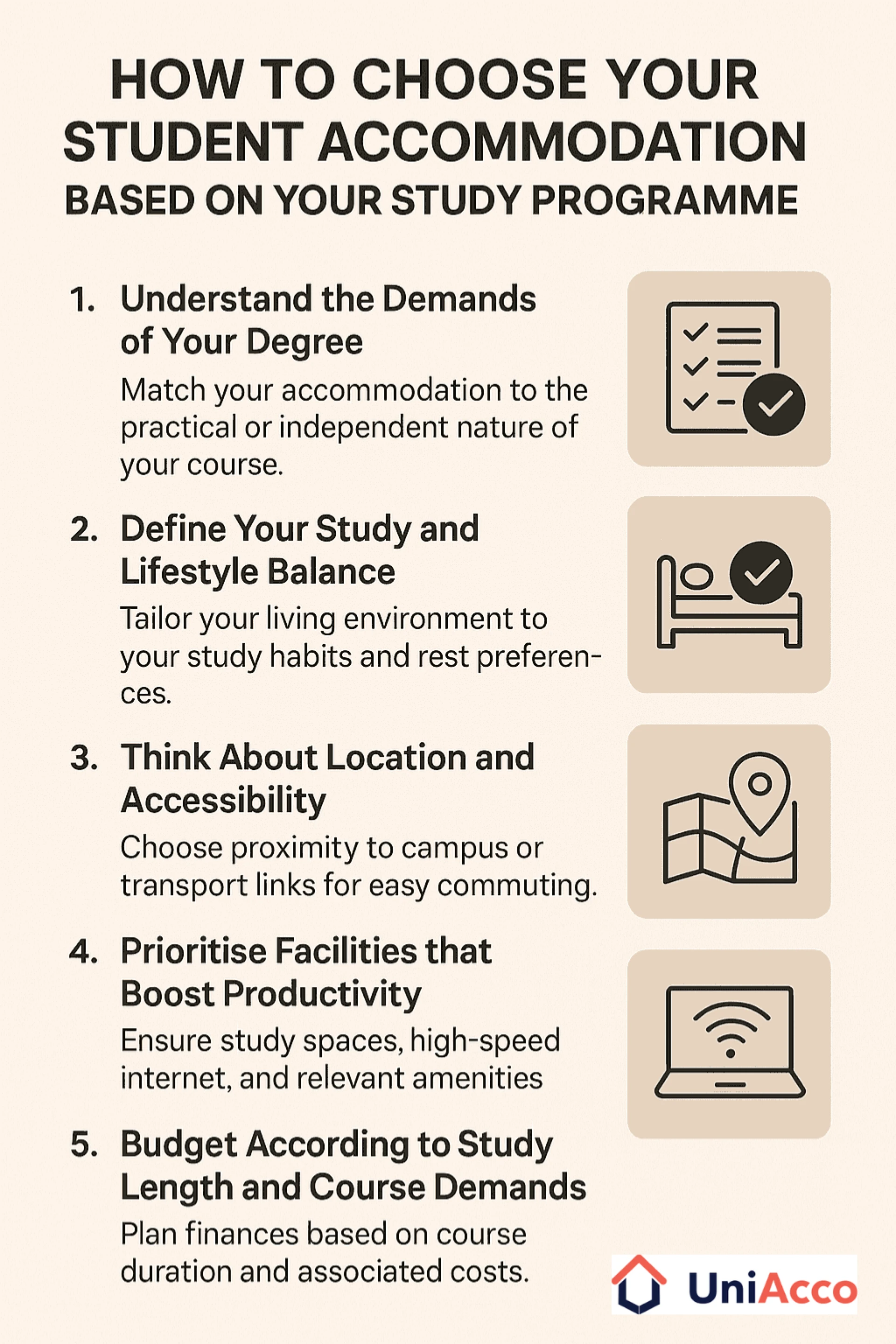
Understand the Demands of Your Degree
The first step is to match your accommodation to the demands of your study programme. Courses that rely heavily on practical sessions, such as engineering, medicine, or architecture, often require students to spend long hours on campus. Choosing student housing near the university ensures you can attend early labs or late-night group projects without having to travel far.
In contrast, humanities or business students who primarily work on independent projects or research may find off-campus student accommodation more suitable. These quieter settings, often slightly away from the city bustle, offer space to focus and reflect.
Define Your Study and Lifestyle Balance
Different courses require distinct routines. For example, design or fine arts students often thrive in creative student housing environments with open spaces or studios. In contrast, law or accounting students might prefer calmer settings ideal for reading and research.
Many universities also offer specific residential options aligned with their faculties. For instance, postgraduate or research-based students might benefit from smaller, quieter complexes focused on academic living rather than social events. Your student accommodation should reflect how you balance study, rest, and leisure.
Think About Location and Accessibility
Choosing the right location is crucial. Your student accommodation should ideally be close to your primary campus, especially if your course involves frequent lectures or lab sessions. Staying nearby reduces commuting time and makes it easier to attend early morning or late-evening sessions.
If your programme involves placements or internships, consider student housing with easy access to public transport. Proximity to bus and train routes ensures smoother travel to hospitals, offices, or laboratories that may be part of your study schedule. Additionally, always check for nearby amenities such as grocery shops, libraries, and cafés that can support your academic life.
Prioritise Facilities that Boost Productivity
A reasonable student accommodation should make daily life more convenient and support productive study habits. Look for well-equipped spaces with high-speed internet, ergonomic study desks, and calm communal study rooms. Reliable Wi-Fi is non-negotiable, particularly for courses involving data analysis, programming, or remote collaboration.
Students pursuing creative programmes, such as media or animation, often benefit from students housing that offers large workspaces or quiet zones for editing and design. Sports science or performing arts students might value on-site gyms and open spaces for practising and maintaining fitness.
Budget According to Study Length and Course Demands
Your degree’s structure also affects your housing budget. Specific courses, like architecture or medicine, extend over five to six years. Choosing student accommodation that offers long-term leases or flexible renewal policies can help avoid annual relocation stress. In contrast, short postgraduate or exchange programme students might prefer student housing with short-term rental options.
Factor in additional costs such as utilities, internet, and public transport. Many student housing providers now offer all-inclusive pricing, allowing students to focus on studies without worrying about fluctuating bills.
Consider the Social and Academic Environment
The community within your accommodation can profoundly shape your learning experience. Courses that involve frequent collaboration, such as group projects or presentations, benefit from social spaces where students can connect and share ideas. However, those in research-heavy or theoretical programmes may look for accommodations that promote quiet living and fewer distractions.
When choosing student accommodation, think beyond the four walls; it’s about the life you’ll live within it. Consider the community, culture, and support network, and how they align with your study programme. Living among peers with similar academic rhythms can boost motivation, balance, and well-being throughout the semester.
The best student accommodation becomes a foundation for growth, not just a place to sleep. By matching your housing choice to your programme, lifestyle, and comfort needs, you set yourself up for a university experience that’s productive, fulfilling, and genuinely memorable.






























Sign in to leave a comment.