
A data science certification course in Bangalore often explains why SQL backup and recovery matter in every project, helping data professionals feel responsible for safeguarding core business data for reporting, analysis, and operations. Clear backup steps support their confidence in maintaining system stability.
Key Ideas in SQL Backup and Recovery
SQL backup and recovery begin with defined data loss and downtime objectives. Recovery Point Objective indicates the extent of data loss a team can tolerate between backups. Recovery Time Objective specifies the period during which a system can remain offline during a restore. These are the two limits that apply when designing all backup and restore plans.
Most SQL platforms offer different recovery models. Understanding the importance of choosing between simple and complete recovery models helps teams design effective backup and restore plans based on data change frequency and database criticality.
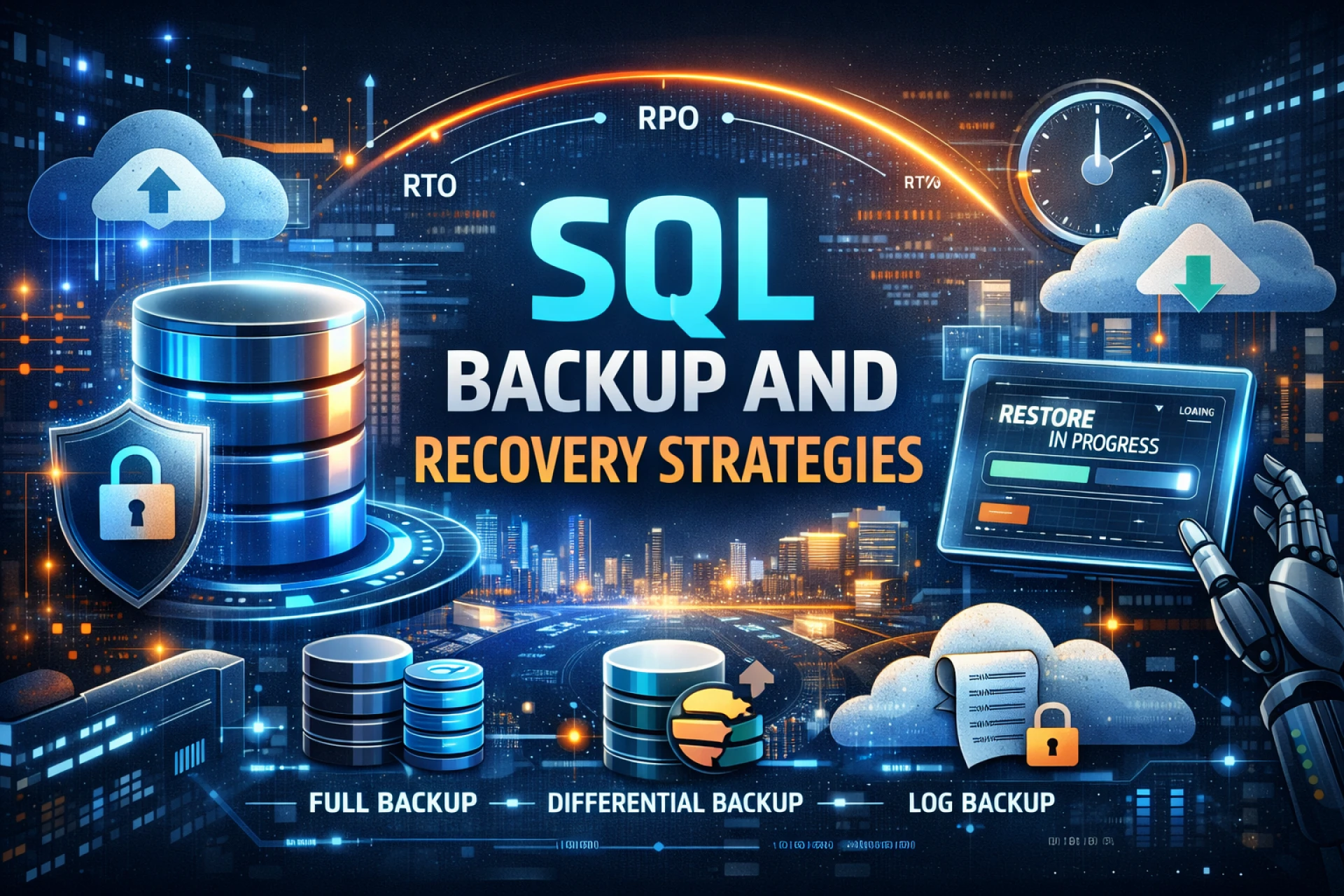
A clear understanding of backup types influences the plan. A complete backup copies the entire database, differential backups store changes since the last full backup, and log backups support point-in-time restore in full recovery mode. Data science training institutes in Bangalore often demonstrate these through practical lab tasks to reinforce learning.
Planning a Practical Backup Strategy
The backup strategy begins with a comprehensive list of all databases, giving teams confidence in their preparedness. Categorizing databases as critical, important, or low priority fosters confidence that they can meet RPO and RTO targets effectively.
Busy and critical databases usually need full recovery mode. These systems often use one full backup per day, several differential backups, and frequent log backups. This mix reduces both data loss and restore time compared with full backups alone. Less critical systems may use simple recovery with one full backup per day and, if needed, a differential backup between complete runs.
Location planning forms another part of the strategy. Teams store at least one backup copy on local storage for quick restores. They also keep extra copies on remote or cloud storage to handle disasters. Many training labs in data science certification courses in Bangalore use small sample databases to demonstrate how local and remote backup sets work together.
Implementing SQL Backup and Automation
Implementation starts with clear tools and simple standards. Teams can create backups through graphical tools, scripts, or scheduled jobs. They set folders, file names, and backup options so every file is easy to identify later. Many teams use naming patterns that include server, database, type, and date.
Automation keeps backup jobs consistent. Scheduled tasks run full, differential, and log backups at fixed times. Teams monitor job history and alerts to quickly resolve any failed backups. They also review backup size trends and storage use to avoid space issues. A data science training institute in bangalore can use exercises where learners script backups and then check job status.
The validation step reassures teams that their backups are reliable. Performing test restores and verifying data completeness helps them feel confident in their recovery plans, promoting a sense of security and control.
Recovery Steps and Good Practices
Healing commences with calm, straightforward steps. The teams will initially confirm a failure by identifying which databases have been impacted and the extent of the damage. Next, they choose the correct restore path based on the recovery model and the user's backup strategy. A written runbook can help them get lost when the workload is high.
In full recovery mode, a standard restore flow uses the last full backup, then the latest differential backup, and then the needed log backups. This flow brings the database close to the failure time with limited loss. In simple recovery mode, teams restore the latest full backup and, if available, the latest differential backup. Any changes made after that point are not restored, so this mode is suitable for less critical data.
Reconsideration of recovery steps is also a good practice. Teams refresh runbooks when they are altered, including changes to schedules, storage paths, or tools. They also include commentaries on actual events and exercises to enable future restores to proceed more quickly. Students in a data science training center in bangalore tend to train both full restores and point-in-time restores using small sample data sets.
Security for backup data completes the picture. Backup files may hold sensitive customer, finance, or internal data. Teams protect these files through encryption, strict access rules, and careful key management. They also monitor restore actions and keep records for audit needs. A data science certification course in Bangalore can tie these points to topics such as data privacy and compliance.
Conclusion
SQL backup and recovery strategies work well when teams set clear goals, choose the right recovery model, and use a simple mix of full, differential, and log backups. A data science certification course in Bangalore and a data science training institute in bangalore both help learners turn these ideas into repeatable, tested processes that protect real databases.



































Sign in to leave a comment.