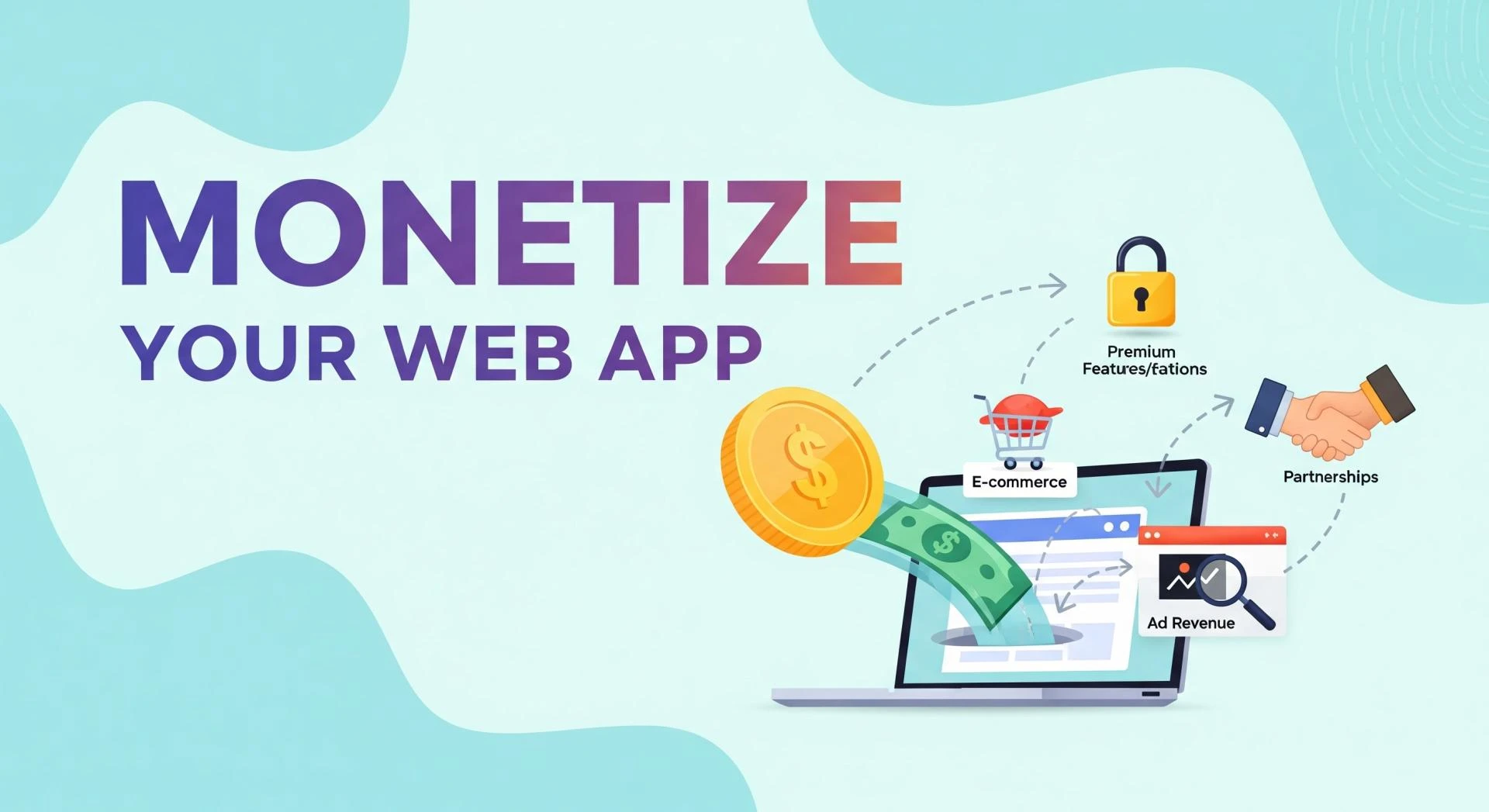

The digital landscape has shifted dramatically over the last few years. As we move through 2026, the era of "growth at all costs" has been firmly replaced by "profitability and sustainability." For founders and product managers, launching a web application is no longer just about acquiring users; it is about building a robust economic engine that delivers value while generating consistent revenue.
The barrier to entry for launching software is lower than ever, but the barrier to profitability has risen. Users are more discerning, privacy regulations are stricter, and competition is fierce. However, the opportunities for monetization have also evolved. From AI-driven dynamic pricing to the resurgence of the API economy, the methods to turn code into cash are more sophisticated than ever before.
Whether you are in the ideation phase or looking to pivot an existing product, understanding the monetization landscape of 2026 is critical. This guide explores the most effective strategies to monetize your web application, ensuring you don’t just build a product, but a thriving business.
The Foundation: Understanding Your Value Metric
Before you can charge a single cent, you must understand what your users actually value. In 2026, the most successful apps don’t just charge for "access"; they charge for outcomes. This requires a deep alignment between your pricing model and the value your user receives.
If you are just starting out, partnering with a reputable web app development company can help you architect your application with monetization in mind from day one. They can assist in building the analytics infrastructure required to track user behavior, allowing you to identify exactly which features drive the most engagement and value.
Once you have identified your value metric—be it time saved, revenue generated for the user, or exclusive access to data—you can select the right monetization vehicle.
Strategy 1: The Evolution of SaaS Subscriptions (Tiered & Usage-Based)
The subscription model remains the gold standard for web applications, but in 2026, the "Gold/Silver/Bronze" model has evolved. We are seeing a massive shift toward hybrid pricing models that combine flat subscription fees with usage-based components.
The "Keep the Lights On" Fee + Overage:
Many B2B applications now charge a lower base monthly fee to cover data storage and basic access, with variable pricing for heavy usage. For example, an AI writing tool might charge $10/month for access, but charge extra for every 10,000 words generated. This aligns the cost with the value received. If the user generates more content, they are likely getting more value, and therefore are happy to pay more.
AI-Driven Dynamic Pricing:
Advanced web apps are now utilizing AI to suggest pricing tiers based on user behavior during the trial period. If a user utilizes enterprise-grade security features during their trial, the system automatically highlights the "Enterprise" tier. When you build web apps today, you must consider how your pricing page can be as dynamic as the application itself.
Strategy 2: The Freemium 2.0 Model
Freemium is not dead, but it has matured. In the past, "freemium" often meant giving away too much value and struggling to convert users. In 2026, the "Reverse Trial" and "Credit-Based Freemium" are the dominant strategies.
The Reverse Trial:
Instead of starting a user on a limited free plan, you start them on the highest tier with all features unlocked for 14 days. When the trial ends, they are downgraded to a basic free plan unless they pay. This leverages "loss aversion"—users realize what they are losing (analytics, team seats, integrations) and are more motivated to upgrade.
Credit-Based Free Plans:
Rather than limiting features, you limit "credits." A project management tool might allow unlimited users but only 50 active tasks. This allows the user to experience the full power of the software (the features) without hitting a hard wall until they have adopted the tool into their daily workflow.
Strategy 3: Monetizing the API Economy
One of the most lucrative yet overlooked strategies in 2026 is "Headless Monetization." Your web app likely processes data or performs functions that other businesses could use within their own internal tools.
By exposing your backend functionality via an API (Application Programming Interface), you can charge other developers or companies for access. For example, if you built a weather tracking app for farmers, you could sell access to your weather prediction algorithm to logistics companies.
Implementing a secure, metered API requires robust architecture. This is where professional web application development services become essential. You need precise metering to count API calls, secure authentication (OAuth), and automated billing systems that trigger invoices based on usage volume. If your API is slow or insecure, your revenue stream will dry up instantly.
Strategy 4: The Marketplace & Commission Model
If your web application connects two parties—like buyers and sellers, or consultants and clients—the commission model is highly effective. You take a percentage of every transaction that occurs on your platform.
Escrow and Trust:
In 2026, the value of a marketplace is trust. You aren't just processing a payment; you are holding funds in escrow and ensuring service delivery. The technical complexity here is high. You need split-payment capabilities (e.g., taking a 10% cut and sending 90% to the vendor automatically).
Featured Listings:
Beyond commissions, you can monetize the supply side of your marketplace. Vendors can pay a premium to be listed at the top of search results. This is pure profit, as it doesn't cost you anything to alter the search ranking algorithm.
To execute this, you need custom web development solutions that integrate with modern payment gateways like Stripe Connect or Adyen, which are designed specifically for platform business models. These integrations handle the complex "Know Your Customer" (KYC) regulations that are now mandatory in most global markets.
Strategy 5: Data Monetization and Insights
Data privacy regulations (like GDPR and CCPA) are stricter than ever, but ethical data monetization is booming. This does not mean selling user email addresses. It means aggregating anonymized data to provide industry insights.
If your HR management app tracks hiring trends across 5,000 companies, you possess valuable data on salary benchmarks and hiring velocities. You can package this anonymized data into "Industry Reports" or a "Benchmarking Dashboard" that you sell as a premium add-on.
The "Pro" Analytics Tier:
Users love to know how they compare to the average. By offering a "Pro" tier that unlocks comparative analytics (e.g., "See how your spending compares to similar companies"), you monetize the data you already have.
Strategy 6: White Labeling and Enterprise Licensing
If you have built a successful B2C (Business to Consumer) app, there is a high probability that a larger enterprise wants that same technology for their internal use.
White Labeling:
This involves removing your branding and selling the software to another company, allowing them to put their logo on it. For instance, a fitness coaching app could white-label its platform to a gym franchise. The gym pays a hefty annual licensing fee to offer "their" app to members.
On-Premise / Private Cloud:
Some enterprises in highly regulated industries (finance, healthcare) cannot use shared cloud software. Offering a version of your app that can be self-hosted on their private servers allows you to charge premium enterprise rates, often 10x to 20x higher than standard pricing.
Strategy 7: In-App Advertising (The Native Way)
Display ads (banners) are largely ineffective for modern web apps and can degrade the user experience. However, "Native Advertising" is thriving.
If you run a community platform for designers, you don't show Google Ads. Instead, you have a "Tools We Love" section where software companies pay to be featured. Or, you offer "Sponsored Challenges." The key is relevance. The ad must provide genuine value to your specific user base. This preserves trust while opening a significant revenue stream.
Technical Execution: Building for Revenue
Monetization is not just a business decision; it is a technical challenge. A paywall that is easily bypassed, a billing system that double-charges, or an API that crashes under load will destroy your reputation.
Scalability is Key:
As your revenue grows, your traffic will grow. Your database must be able to handle thousands of concurrent read/write operations if you are using usage-based billing.
Security:
When you handle payments, you are a target. Compliance with PCI-DSS (Payment Card Industry Data Security Standard) is non-negotiable.
To navigate these complexities, you generally have two paths: build an in-house team or partner with experts. If you choose to build in-house, you will need to hire web app developers who specialize in fintech integrations and secure database architecture. It is not enough to just find a coder; you need engineers who understand the stakes of handling financial transactions.
For larger scale platforms, you might need to hire web developers with specific experience in microservices. This allows you to isolate your billing service from your core application, ensuring that even if the app goes down for maintenance, your billing and subscription renewals continue uninterrupted.
Conclusion: Continuous Iteration
The "set it and forget it" era of monetization is over. In 2026, the most profitable web apps are those that treat monetization as a feature, not an afterthought. They constantly A/B test their pricing pages, experiment with new packaging of features, and listen to customer feedback regarding value.
Whether you choose a complex hybrid subscription model, a transaction-based marketplace, or a high-end enterprise white-label solution, the technology must support the strategy. Ensure your code is clean, your payment gateways are secure, and your user experience remains seamless. By focusing on delivering undeniable value and choosing the right revenue model to capture it, your web app can become a dominant player in the 2026 digital economy.

























Sign in to leave a comment.