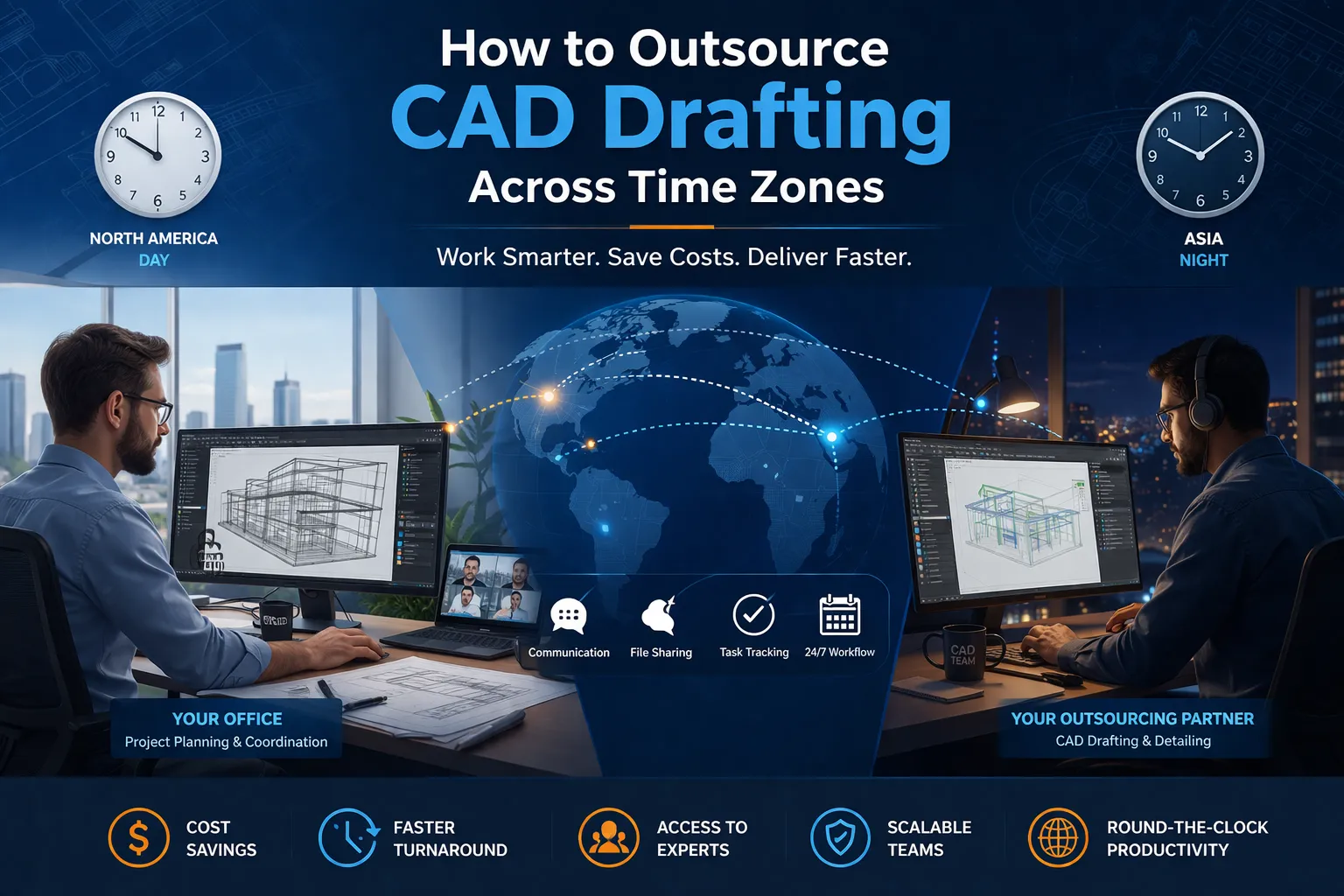

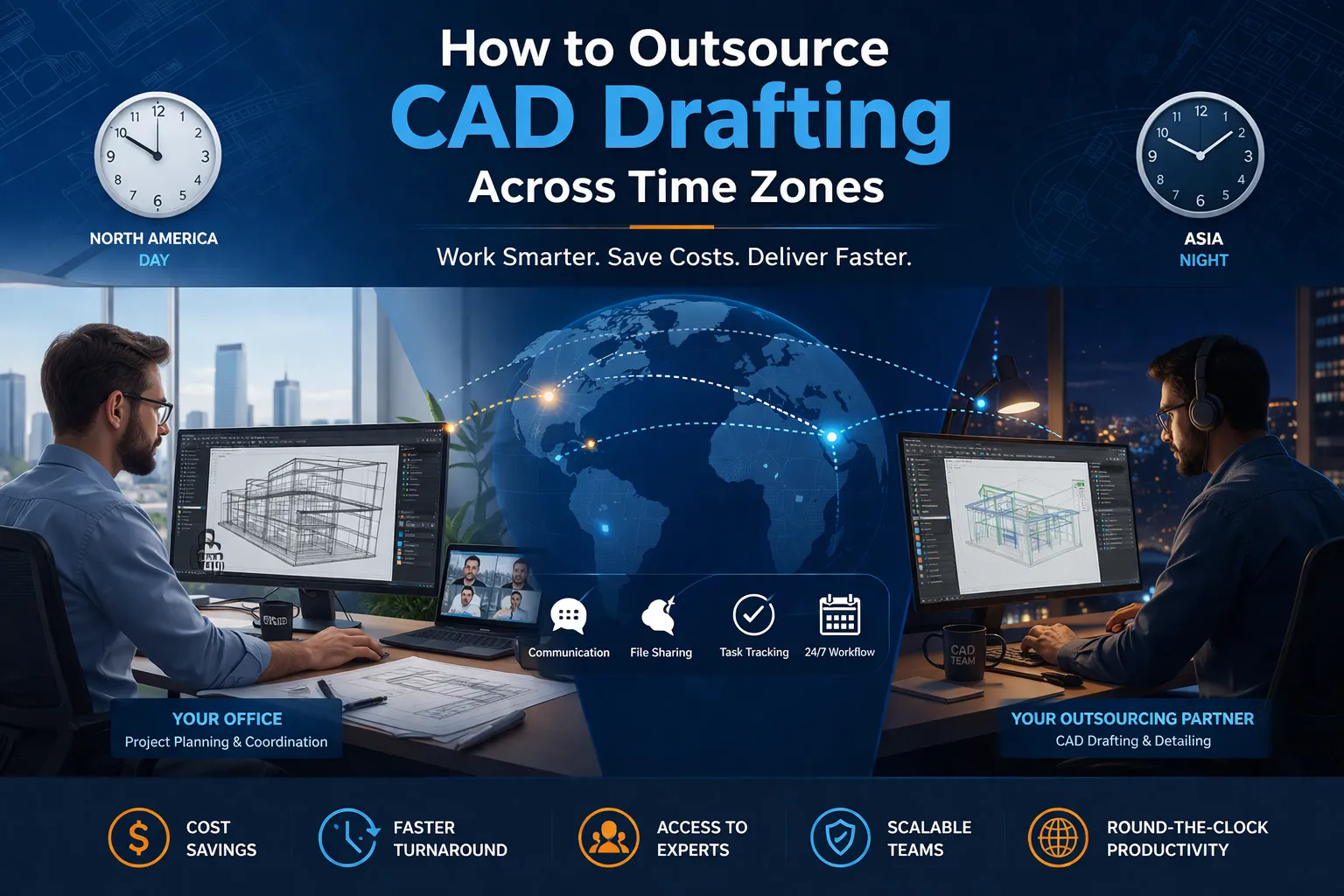
Sending your drafting work to external teams offers immense value for architecture and engineering firms. It provides flexibility and scales your output rapidly. However, collaborating across oceans introduces a major hurdle. When your local team logs off for the day, your external partners might just be pouring their morning coffee.
Managing this geographical gap is critical. A misaligned schedule can lead to delayed feedback, frustrated teams, and missed delivery dates.
You need a clear plan to navigate asynchronous work. This guide provides actionable strategies to successfully Outsource Cad Drafting Services across different time zones without compromising your project deadlines.
Why Outsource CAD Drafting?
Before tackling the logistical challenges, it helps to understand why firms look beyond their local borders for drafting support.
First, it is highly cost-effective. Operating expenses drop when you partner with firms in regions with different economic scales. You pay for the exact hours or project milestones you need, avoiding the overhead of full-time, in-house hires.
Second, you gain immediate access to specialized talent. Finding local drafters with specific software expertise can take months. Global talent pools offer seasoned professionals ready to start immediately.
Finally, global partnerships increase efficiency. When managed correctly, handing work off at the end of your day means progress happens overnight. You arrive at the office the next morning to completed files, effectively doubling your project turnaround speed.
The Hurdle of Time Zone Differences
Working with a team 12 hours away is not without friction. Communication gaps are the most immediate issue. A simple question that would take two minutes to resolve in the office can stall progress for an entire day if the remote drafter has to wait for you to wake up.
These delays easily breed misunderstandings. Without real-time clarification, asynchronous work can result in errors. A drafter might make an assumption about a vague project note to keep moving forward, leading to costly revisions later.
Project management also becomes far more complex. Tracking progress, scheduling milestone reviews, and aligning external work with internal deadlines require meticulous oversight and strict adherence to schedules.
Strategies for Seamless Cross-Time Zone Collaboration
You can neutralize the friction of distant time zones with the right operational habits. Implementing the following strategies keeps your projects moving smoothly.
Clear Communication Protocols
Relying on scattered email threads guarantees confusion. You must establish centralized communication. Use project management tools like Asana, Trello, or Jira to track every task, comment, and file in one place.
Schedule regular check-ins. Even a brief weekly video call establishes rapport and clears up nuanced questions that text cannot convey. Furthermore, document your processes. Create a standard operating procedure (SOP) manual for your drafting standards, layer naming conventions, and preferred formats so your partner has a reliable reference guide.
Establishing Overlapping Work Hours
Total asynchronous work is difficult to sustain. Identify key collaboration windows where both time zones overlap. If your morning is their late evening, dedicate that hour entirely to addressing questions, reviewing progress, and setting the agenda for the next phase.
Encourage flexible work schedules where possible. Sometimes shifting your start time by just one hour creates enough overlap to keep the project momentum alive.
Comprehensive Project Planning
Remote teams cannot read your mind. Detailed project briefs and scope definitions are mandatory. Provide exhaustive markups, reference files, and clear instructions before the project begins.
Break down massive projects into manageable chunks. Instead of requesting a full building model in two weeks, request the floor plans by Wednesday and the elevations by Friday. This approach limits the damage if a misunderstanding occurs early on. Pair these smaller chunks with highly realistic deadlines that account for a 24-hour feedback loop.
Technology and Tools for Collaboration
Modern tools bridge the geographical divide. Cloud-based CAD software and secure file-sharing networks ensure everyone works from the most current version of a drawing.
Adopt communication platforms like Slack or Microsoft Teams for daily updates. Most importantly, implement version control systems. When multiple people touch a DWG or Revit file, tracking changes prevents overlapping work and lost data.
Building a Strong Relationship with Your Partner
Treat your remote drafters as an extension of your own team. Transparency and trust yield better results than micromanagement.
Be culturally aware and sensitive to local holidays and work customs. Regular feedback is also vital. Conduct performance reviews after major milestones to discuss what went well and where communication can improve for the next project.
Real-World Success
Many firms have turned time zone differences into a strategic advantage. For instance, companies partnering with Archdraw Outsourcing frequently utilize a "follow the sun" workflow. An architect in New York finishes the initial design at 5 PM and uploads the sketches. The drafting team in India downloads the files, works through their day, and uploads the completed CAD files by the time the New York architect arrives the next morning. This continuous 24-hour cycle drastically reduces project delivery times.
Best Practices for Quality Control
Speed means nothing if the drawings are inaccurate. Quality control must be integrated into your asynchronous workflow.
Implement strict review cycles. Require the outsourced team to self-check their work against your SOP documentation before submitting. Utilize standardized checklists that both teams share. Finally, use phased approvals. Reviewing 20% of the project early ensures the foundational setup is correct before the team spends another 40 hours detailing the wrong components.
Mastering Remote CAD Collaboration
Navigating time zones requires discipline, clear communication, and robust technology. By setting precise expectations, establishing overlapping communication windows, and implementing phased quality control, you can completely eliminate the risks of remote collaboration. A well-managed offshore team does more than just save money; it transforms your firm into a 24-hour operation. As remote work continues to evolve, mastering global collaboration will remain a defining advantage for successful design firms.



























Sign in to leave a comment.