
Table of Contents
- Introduction
- Why a Tree on Power Line Is More Dangerous Than It Looks
- First Steps to Take Immediately
- Who to Call and When to Call Them
- What Happens During Professional Removal
- How to Prevent Trees Growing Into Power Lines
- Seasonal Risks and Storm Considerations
- Conclusion
- Book a Tree Service Today!
- Frequently Asked Questions
Key Takeaways
- A tree on power line creates serious electrical and fire hazards.
- Never attempt DIY trimming or removal near energized lines.
- Utility companies and certified arborists must coordinate for safe resolution.
- Proactive trimming helps prevent trees growing into power lines.
- Storm preparation reduces the risk of a tree fell on power line emergencies.
Introduction
Discovering a tree on power line near your home or business can be alarming. Whether caused by a storm, unchecked growth, or structural weakness in the tree, this situation demands caution and informed action. Electrical lines are not just wires overhead. They carry high voltage currents capable of causing severe injury, fires, and widespread outages.
For homeowners, business owners, and property managers, understanding what to do next can make the difference between a controlled response and a dangerous accident. This guide explains the risks, outlines the correct steps to take, and offers long term strategies to prevent future incidents.
Why a Tree on Power Line Is More Dangerous Than It Looks
At first glance, a leaning branch resting on a line may not seem urgent. However, electricity can energize parts of a tree without visible signs. Even dry wood can conduct electricity under certain conditions.
Here are key risks to understand:
Electrical Shock Hazard
If a branch is touching a live wire, the entire tree can become energized. Anyone who touches the trunk, nearby ground, or even a metal fence connected to the area could be at risk.
Fire Potential
Friction between branches and lines can create sparks. In dry or windy conditions, this may lead to fires that spread quickly.
Structural Collapse
A weakened tree that is partially supported by a line may fall unexpectedly. When a tree fell on power line during storms, it often leads to both power outages and property damage.
Liability Concerns
Property owners may face responsibility if neglected trees growing into power lines cause damage to neighboring homes or public infrastructure.
Understanding these dangers highlights why immediate and professional action is critical.
First Steps to Take Immediately
If you notice a tree touching or leaning on electrical lines, avoid panic and follow these safety steps:
1. Keep Your Distance
Maintain at least 30 feet between yourself and the affected area. Electricity can arc through the air, especially in wet weather.
2. Prevent Access
Keep children, pets, employees, or visitors away from the site. If possible, block off nearby walkways or driveways.
3. Do Not Attempt DIY Removal
Avoid ladders, chainsaws, ropes, or poles. Even experienced landscapers should not handle branches in contact with energized lines.
4. Observe From a Safe Location
Take note of visible damage, sparks, leaning poles, or hanging lines. This information will be helpful when contacting professionals.
Taking these steps protects everyone on the property while the proper authorities respond.
Who to Call and When to Call Them
Handling a tree on power line typically involves two key parties: your local utility provider and a certified tree service.
Contact the Utility Company First
If the tree is actively touching a live wire, the utility company must assess and possibly de-energize the line before any tree work begins. Provide:
- Exact location
- Description of the tree size
- Whether lines are sparking or sagging
- Any nearby property damage
If the line is down or actively sparking, treat it as an emergency and call immediately.
Hire a Certified Tree Service
Once the area is safe, trained arborists can remove or trim the tree using specialized equipment designed for working near electrical infrastructure. They follow strict safety standards and understand how to stabilize compromised trees.
Professional coordination ensures the issue is resolved without increasing danger.
What Happens During Professional Removal
Many property owners are unsure what to expect during the process. Here is a simplified overview:
Site Assessment
Arborists inspect the tree’s structure, the line tension, and surrounding obstacles such as fences, roofs, or vehicles.
Controlled Line Clearance
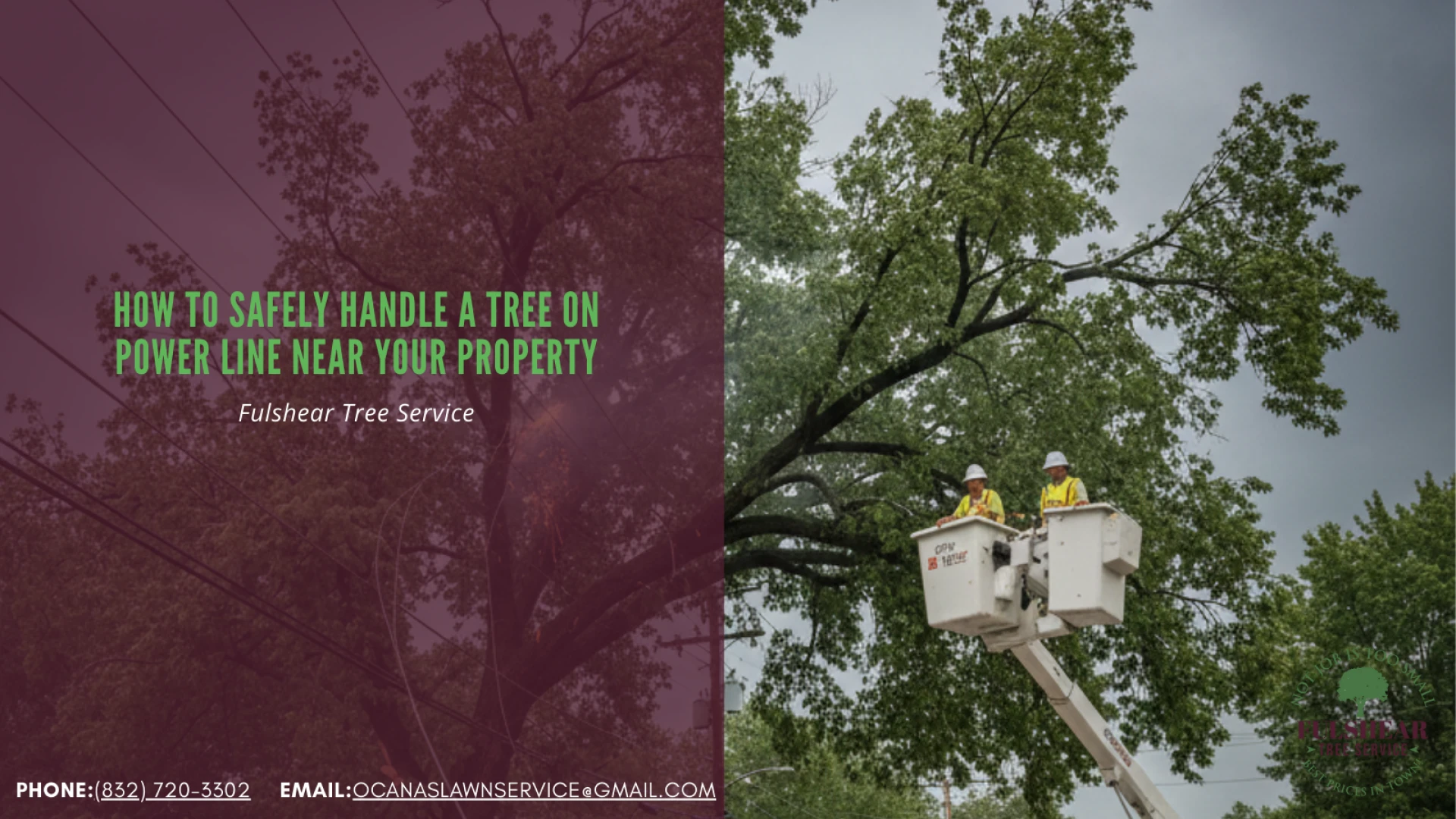
If the utility has confirmed power is off or secured, technicians use insulated tools and bucket trucks to carefully cut and lower sections of the tree.
Debris Management
Branches and trunk sections are removed in controlled pieces to prevent sudden shifts that could pull on the line.
Final Inspection
The crew verifies that remaining vegetation is clear and safe from future contact.
This systematic approach minimizes risk and ensures compliance with safety regulations.
How to Prevent Trees Growing Into Power Lines
Prevention is far less stressful than emergency removal. Trees naturally expand toward available light and space, often encroaching on overhead utilities.
Here are practical prevention strategies:
Schedule Routine Inspections
Annual property checks help identify early signs of branches nearing power lines. Early trimming is easier and safer.
Understand Growth Patterns
Fast growing species require more frequent pruning. Consulting an arborist about appropriate spacing during planting can prevent long term issues.
Trim Gradually
Avoid aggressive topping. Instead, use proper pruning techniques that maintain tree health while directing growth away from lines.
Monitor After Storms
Even if no immediate damage is visible, wind can shift branches closer to wires. A quick visual inspection after severe weather is wise.
Addressing trees growing into power lines early reduces the chance of emergency calls later.
Seasonal Risks and Storm Considerations
Weather plays a major role in power line incidents.
Heavy Rain and Saturated Soil
Wet ground weakens root systems, making trees more likely to lean or fall.
High Winds
Strong gusts increase branch movement and friction against lines.
Lightning Strikes
Lightning can split trees, causing sudden collapse onto wires.
Preparing before storm season by removing dead limbs and structurally weak branches lowers the risk that a tree fell on power line during severe weather.
Conclusion
A tree on power line is not just a maintenance issue. It is a serious safety concern that requires immediate attention and professional coordination. By keeping a safe distance, contacting your utility provider, and working with certified arborists, you reduce the risk of injury, fire, and costly damage.
Proactive care, including routine inspections and proper pruning, helps prevent trees growing into power lines and reduces the likelihood of emergency situations. Informed action and early intervention remain the safest approach for any property owner.
Book a Tree Service Today!
If you are dealing with a hazardous tree or want to prevent future risks, schedule a professional tree trimming service today. Certified arborists can assess your property, address dangerous growth patterns, and ensure your trees remain safe around utility lines.
Do not wait until a storm turns a minor issue into a major emergency. Contact a qualified tree service and protect your home or business with expert care.
Frequently Asked Questions
1. What should I do if I see a tree on power line near my house?
Stay at least 30 feet away and contact your local utility provider immediately. Never attempt to remove or trim it yourself.
2. Is it dangerous if trees growing into power lines are not touching yet?
Yes. Even close proximity can become hazardous during wind or rain. Early trimming reduces future risk.
3. What happens if a tree fell on power line during a storm?
Treat it as an emergency. Stay clear of the area and notify the utility company right away.
4. Who is responsible for removing a tree on power line?
The utility company handles electrical safety, while certified tree professionals perform trimming or removal once the line is secured.
5. How often should trees near power lines be inspected?
At least once a year, and after major storms, to identify branches approaching overhead lines.























Sign in to leave a comment.