

The transport and mobility industry is changing quickly. Customers now expect fast bookings, live tracking, digital payments, instant notifications, and a smooth app experience. Whether a business runs taxi services, shuttle operations, airport transfers, car rentals, carpooling, or logistics, technology has become an important part of daily operations.
This is why many transport companies are now choosing white-label and SaaS-based mobility platforms instead of building software from scratch. A ready mobility SaaS platform can help businesses launch faster, reduce technical risk, and manage operations more efficiently.
However, choosing the right mobility software provider is not only about selecting an app. It is about choosing a long-term technology partner who can support your business growth.
What Is a Mobility SaaS Platform?
A mobility SaaS platform is a cloud-based software solution that helps transport businesses manage bookings, drivers, vehicles, customers, payments, routes, tracking, and reports from one system.
Most mobility SaaS platforms include:
- Customer app
- Driver app
- Admin panel
- Dispatcher dashboard
- Real-time GPS tracking
- Online payment system
- Booking and trip management
- Reports and analytics
The main advantage of SaaS is that businesses do not need to spend years building their own software. They can start with a ready platform and customise it according to their service model.
Why Businesses Prefer White-Label Mobility Software
White-label mobility software allows companies to launch their own branded platform. The business can use its own logo, brand colours, service name, pricing model, and customer flow.
This is useful for transport startups and existing operators that want to enter the digital market without heavy development costs.
Some major benefits of white-label mobility software include:
- Faster market launch
- Lower development investment
- Own brand identity
- Tested software structure
- Easy app deployment
- Ongoing upgrades
- Scalable business model
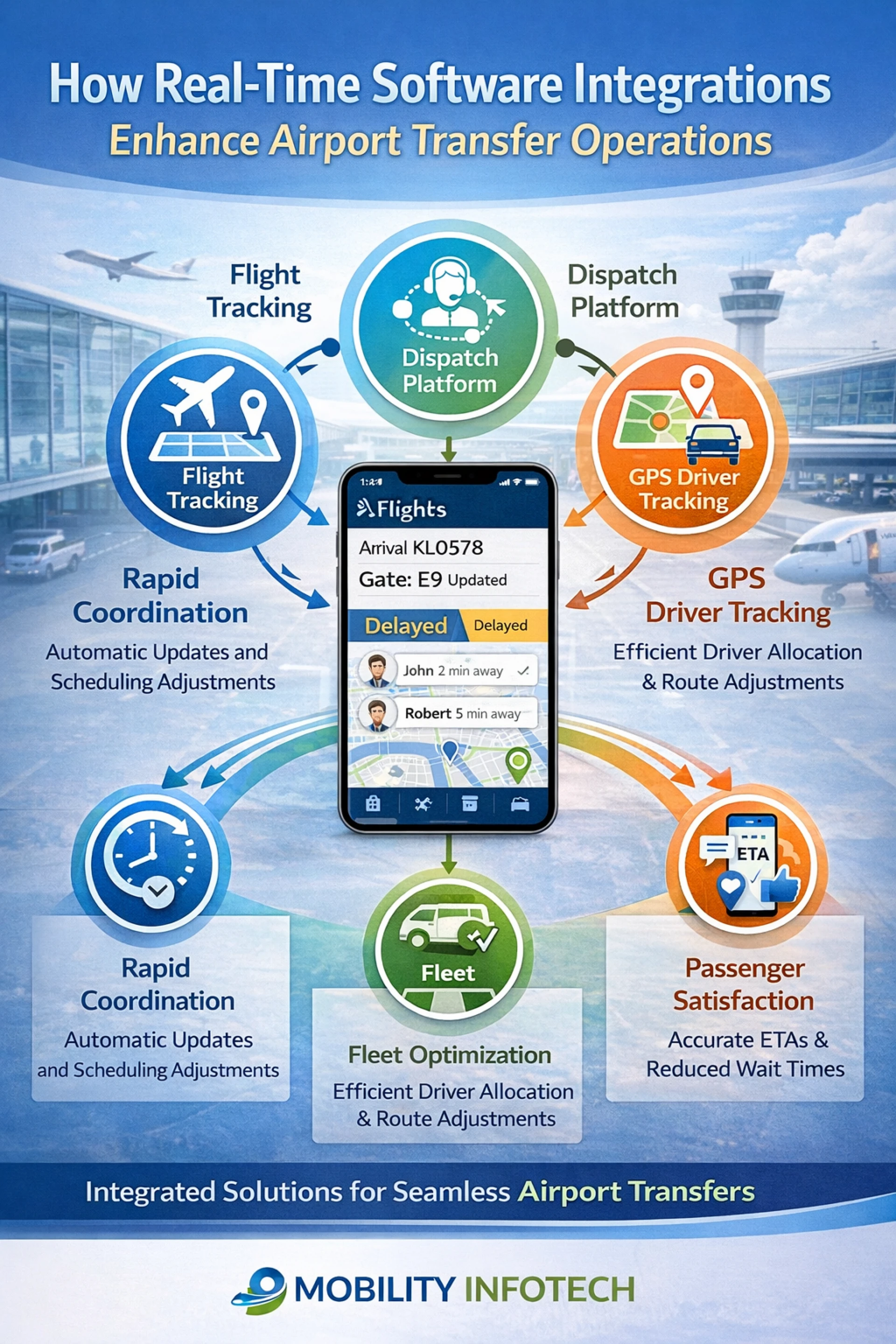
For example, a taxi business may need instant ride booking, while an airport transfer company may need scheduled bookings and flight details. A shuttle company may need route planning, passenger lists, and recurring trips. A good SaaS provider should understand these differences.

Key Things to Check Before Choosing a Mobility SaaS Provider
Before selecting a software partner, businesses should look beyond pricing and app design. The provider’s experience, technology, support, and roadmap matter more in the long term.
Here are some important points to check.
1. Technical Stack and Platform Stability
The technical stack is the foundation of the software. If the technology is outdated or weak, the business may face problems like slow performance, app crashes, poor tracking, and limited scalability.
A strong mobility platform should support real-time operations such as:
- Driver location updates
- Live booking requests
- Route tracking
- Payment processing
- Push notifications
- Fleet status updates
The platform should also be secure, stable, and ready for integrations with maps, payment gateways, SMS, email, and third-party APIs.
2. Live Market Experience
A software demo can look attractive, but real business performance is different. Before choosing a provider, check whether the company has live clients using the platform.
Live clients show that the software has already been tested in real operating conditions. This reduces risk for new businesses because the product has already handled real users, real drivers, real payments, and real booking flows.
A provider with live market experience usually understands practical business challenges better than a company offering only a basic demo product.
3. Scalability for Future Growth
A transport business may start with one city or a small fleet, but future growth should always be planned. As the business expands, the software must be able to manage more users, vehicles, drivers, bookings, and locations.
A scalable mobility SaaS platform should support:
- Multi-city operations
- Multiple vehicle categories
- More drivers and customers
- Higher booking volume
- Custom pricing rules
- New service modules
If the platform cannot scale, the business may need to rebuild everything later, which can increase cost and delay growth.
4. Customisation Options
Every mobility business works differently. Taxi booking, shuttle service, car rental, airport transfer, carpooling, and logistics all have different operational needs.
A reliable SaaS provider should offer customisation based on business requirements. This may include pricing changes, booking flow changes, driver allocation rules, payment options, reports, or customer app features.
Customisation helps businesses stay competitive and adapt the software to their local market.
5. Reliable Support After Launch
Software is not a one-time product. It needs regular updates, bug fixes, app store support, server monitoring, and performance improvements.
Many businesses make the mistake of ignoring post-launch support. But in real mobility operations, even a small issue in booking, tracking, or payment can affect customers and revenue.
A good SaaS provider should offer clear communication, fast issue resolution, technical guidance, and regular product improvements.
6. Product Roadmap
A SaaS platform should keep improving with time. Customer expectations, payment methods, app store rules, and market requirements continue to change.
Before choosing a provider, ask whether they have a product roadmap. A future-ready provider will keep improving the platform with new features, better performance, stronger security, and updated integrations.
This helps businesses stay ahead without rebuilding their entire system again and again.
Why the Right Partner Matters
The right mobility SaaS partner can help a business launch faster, operate smoothly, and grow with confidence. The wrong provider can create long-term challenges such as poor support, limited features, high maintenance cost, and customer dissatisfaction.
A good provider should act as a technology partner, not just a software seller.
For a more detailed checklist, you can read this guide on how to choose the right white-label or SaaS mobility provider.
Final Thoughts
Choosing a mobility SaaS provider is an important business decision. Transport operators should carefully evaluate the provider’s technology, live client experience, scalability, customisation options, support system, and future roadmap.
A strong white-label mobility platform can help businesses manage taxi dispatch, shuttle operations, car rental, airport transfers, carpooling, and logistics from one smart system.
Instead of focusing only on the lowest price, businesses should choose a provider that can support long-term success.





























Sign in to leave a comment.