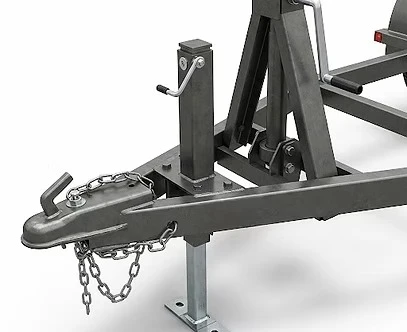

When you're managing heavy trailers day after day, the right equipment can make or break your operation. Shop owners constantly search for the best hydraulic trailer jack because they understand a simple truth: time is money, and efficiency drives profit. Whether you're running a commercial fleet or managing a busy repair shop, choosing between hydraulic and manual trailer jacks isn't just about preference it's about maximizing productivity while minimizing strain on your crew.
This comparison will help you understand which jack type delivers the best value for your specific needs, examining everything from lifting capacity to long-term maintenance costs.
Understanding Trailer Jack Fundamentals
What Makes a Quality Trailer Jack?
Every reliable jack system starts with robust trailer jack parts that can withstand constant use. The core components include the lifting mechanism, base assembly, and support structures. While both hydraulic and manual systems serve the same primary function—lifting heavy loads—they accomplish this through entirely different methods.
Manual jacks rely on mechanical advantage through gearing systems, while hydraulic systems use pressurized fluid to generate lifting force. This fundamental difference affects everything from operation speed to maintenance requirements.
Manual Trailer Jacks: The Traditional Choice
Advantages of Manual Systems
Manual jacks have dominated the market for decades, and for good reason. They're incredibly reliable, with fewer moving parts that can fail. The trailer jack handle provides direct mechanical control, giving operators precise feedback about load distribution and lifting progress.
These systems excel in situations where power sources aren't available. Remote job sites, emergency repairs, and temporary installations often favor manual jacks because they don't depend on electricity or compressed air.
Limitations to Consider
The primary drawback is physical effort. Lifting heavy trailers manually can be exhausting and time-consuming. For high-volume operations or particularly heavy loads, manual systems may slow down your workflow significantly.
Trailer jack stands often require more setup time with manual systems, as operators need to carefully position and adjust each component before beginning the lifting process.
Hydraulic Trailer Jack: The Modern Solution
Power and Efficiency Benefits
A hydraulic jack for trailer applications transforms heavy lifting from a physical challenge into a simple button press. These systems generate tremendous force with minimal operator effort, making them ideal for frequent use scenarios.
Speed becomes a major advantage in commercial settings. While manual jacks might take several minutes to reach full height, hydraulic systems accomplish the same task in seconds. This efficiency translates directly to increased productivity and reduced labor costs.
Heavy-Duty Performance
Heavy-duty jacks for trailers often feature hydraulic systems because they can generate forces that would be impractical with manual mechanisms. When you're regularly handling trailers weighing 10,000 pounds or more, hydraulic power becomes essential rather than convenient.
Companies like Asquare Parts Inc. have developed hydraulic systems specifically designed for commercial applications, incorporating features that address the unique demands of high-volume operations.
Cost Analysis: Initial Investment vs. Long-Term Value
Upfront Costs
Manual jacks typically require lower initial investment. Simple mechanical systems cost less to manufacture and purchase, making them attractive for budget-conscious operations.
Hydraulic systems demand higher upfront costs but offer compelling long-term value propositions. When you factor in labor savings, reduced injury risk, and increased throughput, hydraulic systems often pay for themselves within months.
Maintenance Considerations
Manual jacks require regular lubrication and occasional gear replacement, but maintenance is generally straightforward. Most technicians can service these systems with basic tools.
Hydraulic systems need periodic fluid changes and seal inspections. However, quality hydraulic trailer jack models from reputable manufacturers often run for years with minimal maintenance when properly serviced.
Performance in Real-World Applications
Commercial Fleet Operations
High-volume operations consistently favor hydraulic systems. The speed advantage becomes multiplicative—saving two minutes per trailer adds up to hours of increased productivity across dozens of daily lifts.
Occasional Use Scenarios
For shops that handle trailers occasionally, manual systems might provide better value. The lower initial cost and simpler maintenance requirements make sense when utilization rates remain low.
Making the Right Choice for Your Operation
The decision ultimately depends on your specific circumstances. Consider these key factors:
Volume: High-frequency use justifies hydraulic investment
Load Weight: Heavier trailers benefit from hydraulic power
Operator Availability: Hydraulic systems reduce labor requirements
Budget Constraints: Manual systems offer lower entry costs
Conclusion
Both hydraulic trailer jack and manual systems have their place in modern operations. For high-volume commercial applications, hydraulic systems deliver superior efficiency and reduced operator fatigue. Manual jacks remain excellent choices for occasional use or budget-conscious operations.
Evaluate your specific needs, consider long-term costs, and choose the system that best aligns with your operational goals. The right jack investment will serve your operation reliably for years while maximizing productivity and minimizing downtime.

























Sign in to leave a comment.