
Copper pipe is a popular choice mainly because of its long lifespan and resistance to non-corrosive factors; however, in some cases, the pipes can be ruined by localized attacks, which can affect and cause the entire plumbing framework to collapse.
Localized decay causes small, specific cracks that lead to deep penetrations, often remaining undetected until a catastrophic leak occurs.
These small pinholes are the result of complicated chemical reactions occurring between the water's composition and the copper surface, in which case the facility managers have to be constantly on the lookout for copper pipe pitting corrosion in order not only to steer clear of humongous losses of property but also to keep the plumbing system in proper working order.
Key Takeaways
- Recognizing the visual indicators of localized oxidation on pipe surfaces.
- Understanding the role of water chemistry and stagnant flow in metal decay.
- How to differentiate between harmless surface patina and active pitting?
What Are The Early Warning Signs Of Pitting Corrosion In Copper Pipes?
Formation Of Small Blue-Green Crusty Deposits
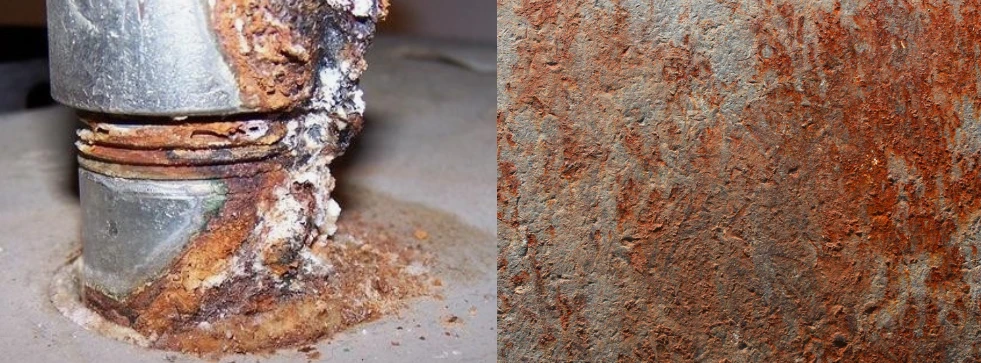
The formation of small, localized mounds of crusty material, which are often called "tubercles" or "pimples," is one of the first and most obvious signs of a problem.
Usually blue or green in color, these deposits form precisely where the metal is corroding. The byproduct of the chemical reaction is copper pipe pitting corrosion that builds up on the surface of the pipe, indicating that a pinhole is either being created or has already pierced through the wall.
The presence of these colorful crusts during a routine inspection is a clear indication that the internal protective film of the pipe has given way and the decay process is already in progress.
Unexpected Dampness And Low-Volume "Pin-Hole" Leaks
Degradation of this type gives birth to the extremely narrow channels through the metal, for which the initial leaks are often tiny and may release nothing more than a fine mist or a slow drip. The localities can become damp, mold can grow, or "phantom" water damage may appear to be happening behind walls and ceilings with no apparent source.
Which is why early detection of copper pipe pitting corrosion calls for keeping an eye out for slight water staining or a drop in water pressure that cannot be attributed to fixture usage.
The size of these holes is such that they often become sealed temporarily with mineral buildup and then burst open later under a pressure surge, making constant monitoring necessary for the deteriorating and aging infrastructure.
Changes In Water Quality And Metallic Aftertaste
It is quite common for the water to demonstrate signals of internal degradation before the physical signals become apparent on the pipe. In this case, if residents or users report a constant metallic taste, or if the water appears slightly blue or green from the faucet when first turned on in the morning, the pipes may be leaching copper ions due to active localized decay.
Water stagnation in the pipes will lead to the maintenance of copper pipe pitting corrosion due to aggressive ions settling on the pipe floor and low levels of protective oxygen. Systematic flushing of the system and water testing for copper levels can be employed as an early diagnostic measure to detect a plumbing network that is about to fail before it results in a major rupture of the pipes.
Conclusion
Early detection of localized metal failure is a proven method that significantly reduces repair costs and ensures the security of a building's water supply. Moreover, in the case of industrial or high-pressure settings, it is equally crucial to be informed of the other specialized risks, such as carbonate stress corrosion cracking, which could shorten the life of the metal parts.




















Sign in to leave a comment.