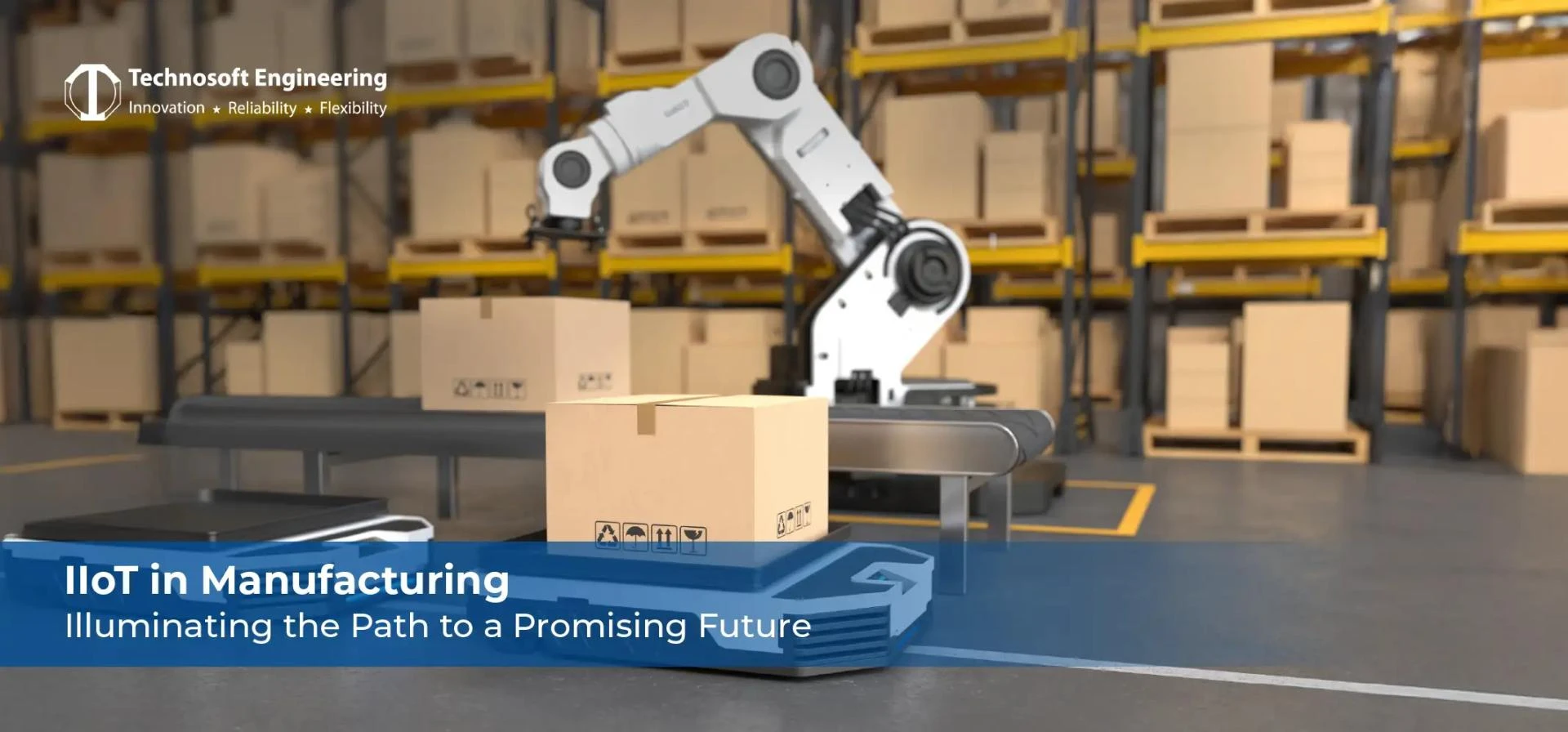

The period between Industry 4.0 and Industry 5.0 presents an opportunity to divert focus from machines to people. This transition will not only change production in terms of efficiency, sustainability, and customization but will also make human workers the center of gravity for manufacturing made for IoT in Manufacturing.
Instead, Industry 5.0 will focus on humans as opposed to Industry 4.0, which worked with automation and AI to the greatest extent. This transition bridges production efficiency, personalization, and sustainability into a story that puts human workers in the center of IoT in Manufacturing, wherein human beings are not merely part of the process; they are the process.
What is Industry 5.0?
Industry 5.0 is a future brimming with possibilities, where human-machine collaboration takes center stage. Advanced technologies such as IIoT, AI, robotics, and edge computing work in harmony to create flexible, ethical, and environmentally friendly production processes. IIoT, in particular, is a key enabler of Industry 5.0, connecting machines, systems, and humans in a seamless network. It builds upon the connected and automated world of Industry 4.0, taking it a step further by focusing on human-machine cooperation. It utilizes advanced technologies to augment human intelligence and enhance problem-solving processes.
Major Trends Defining the Future of IIoT in Industry 5.0
1. Human-Centric IIoT Systems
Future IIoT technologies will be designed to support functions without overwhelming them. This means that the systems will be designed with the human user in mind, ensuring that they are intuitive, user-friendly, and enhance the user’s capabilities.
Augmented Reality (AR): Using guidance devices powered by AR-enabled IIoT devices, the workers will be directed to assembly, maintenance, and troubleshooting.
Collaborative Robots (Cobots): Cobots enabled by IIoT will readjust their functioning concerning human intervention, making the workplace safer and more efficient.
2. Hyper-Personalization in Manufacturing
Individualized products require lean production. IIoT will create the capability of:
Mass Customization: Assembly lines that can alternate on-the-fly between different options of a product.
Real-Time Feedback: Connected devices will also gather user data to improve the product continually.
3. Circular Economy Integration & Sustainability
IIoT will be operating on the following as one of the cornerstones of Industry 5.0 environmental responsibility:
- Immediate measuring of energy, water, and emissions in order to use them optimally.
- Wise recycling operations that find and repurpose substances harvested from natural resources.
4. Edge Computing and Real-Time Insights
In the epoch of a huge stream of IIoT data, edge computing will:
- Data processing should be done locally to realize instant responses.
- Enhance cybersecurity by minimizing data transfer.
5. 5G and Beyond
5G, and even the next generation of 6G will put IIoT adoption on steroids in the following ways:
- Hundreds of millions of devices are connected via a massive deployment of IoT.
- Engineering of the mission-critical purposes with deployment of Ultra-Reliable Low Latency Communication (URLLC), e.g., autonomous operations.
6. AI and Machine Learning
Development of predictive intelligence using the AI-enabled IIoT systems throughout:
- Advanced predictive maintenance for spotting problems ahead
- Self-learning machines that can reprogram themselves
Technologies Leading IIoT Industrial 5.0
Digital Twins: A model that reproduces physical assets virtually to conduct simulations and gauge performance.
Blockchain: Increasing chain-of-trust in supply chains and device authentication.
Next-Gen Sensors: Self-powered multi-modal devices that detect multiple parameters simultaneously.
Quantum Computing: The ability to solve industrial optimization problems that would have taken a significant amount of time to solve using conventional computers.
Challenges Ahead
Although exciting, the IIoT vision of Industry 5.0 has challenges:
Interoperability: The process of dissimilar devices is complicated.
Cybersecurity: The greater the number of connected devices, the greater the opportunity to attack.
Cost Barriers: High initial setup costs were likely to slow down SMEs.
Future of the IIoT in Industry 5.0
Industry 5.0 is conducive to combining technology with human creativity. The companies that embrace these trends, especially in the realm of IoT in Manufacturing, will be the ones setting the pace in efficiency, customization, and ecological sustainability. The real challenge lies in overcoming integration and security issues; however, with determination and preparation, these can be addressed, unlocking the full potential of Industry 5.0 and transforming the future of manufacturing processes.
Have you decided to modernize your operations to be Industry 5.0 ready? With Technosoft Engineering, transform the future of manufacturing processes in your organization. To incorporate IoT Smart, secure solutions that align with your human-friendly, sustainable Industry 5.0 era.























Sign in to leave a comment.