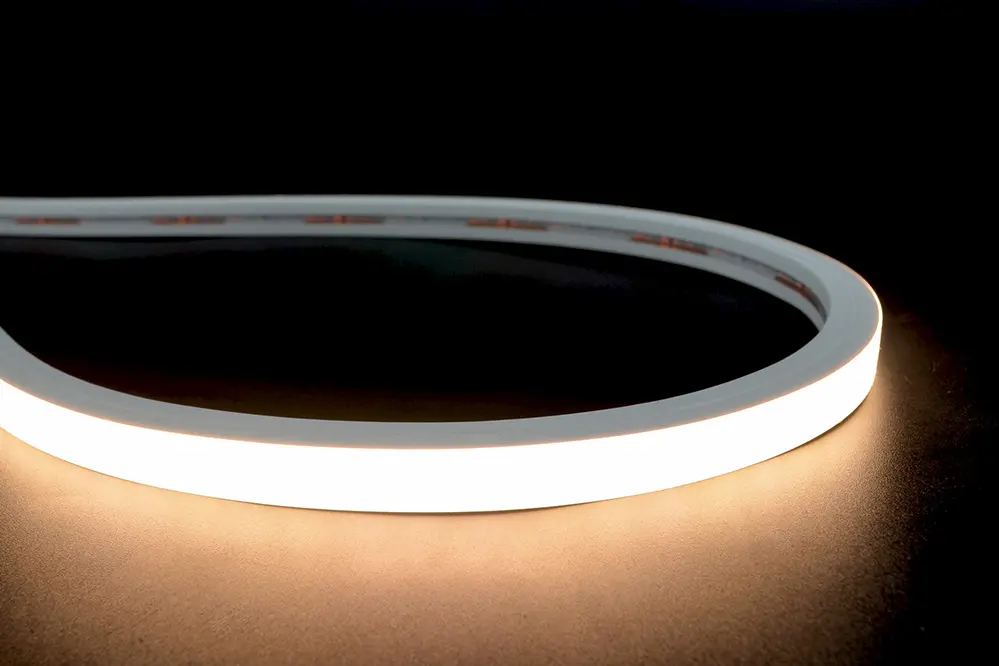

In the world of lighting design, technology and artistry are finally speaking the same language. No longer confined to static fixtures or harsh fluorescents, today’s lighting is fluid, flexible, and full of personality. At the heart of this revolution are LED strip lights and LED neon flex — two versatile tools that have reshaped the way architects, designers, and homeowners think about illumination.
From minimalist interiors to bold architectural façades, these lighting innovations are redefining how we create ambiance, express emotion, and shape spaces with light.
The Subtle Art of Modern Illumination
Lighting has always been more than just utility. It’s atmosphere, storytelling, and emotion rendered through luminosity. The evolution of LED technology has taken lighting design beyond its traditional boundaries — giving rise to solutions that are both artistic and efficient.
Among these, LED strip lights have become a designer’s favorite tool. They can be hidden in coves, tucked under shelves, or lined along architectural edges to create floating illusions of light. Unlike conventional fixtures, strips provide even illumination without the clutter of bulky housings.
Take for instance the modern COB LED strip light — it offers a seamless, dot-free glow ideal for luxury interiors or retail environments where visual consistency is paramount. These strips transform ordinary surfaces into luminous canvases, adding depth and texture to walls, ceilings, and furniture.
From Flexibility to Freedom: The Rise of LED Neon Flex
If LED strips are the brushstrokes of modern design, then LED neon flex is the sculptor’s chisel. Inspired by traditional neon but reimagined for a sustainable age, these flexible lights allow designers to bend, twist, and shape illumination in three dimensions.
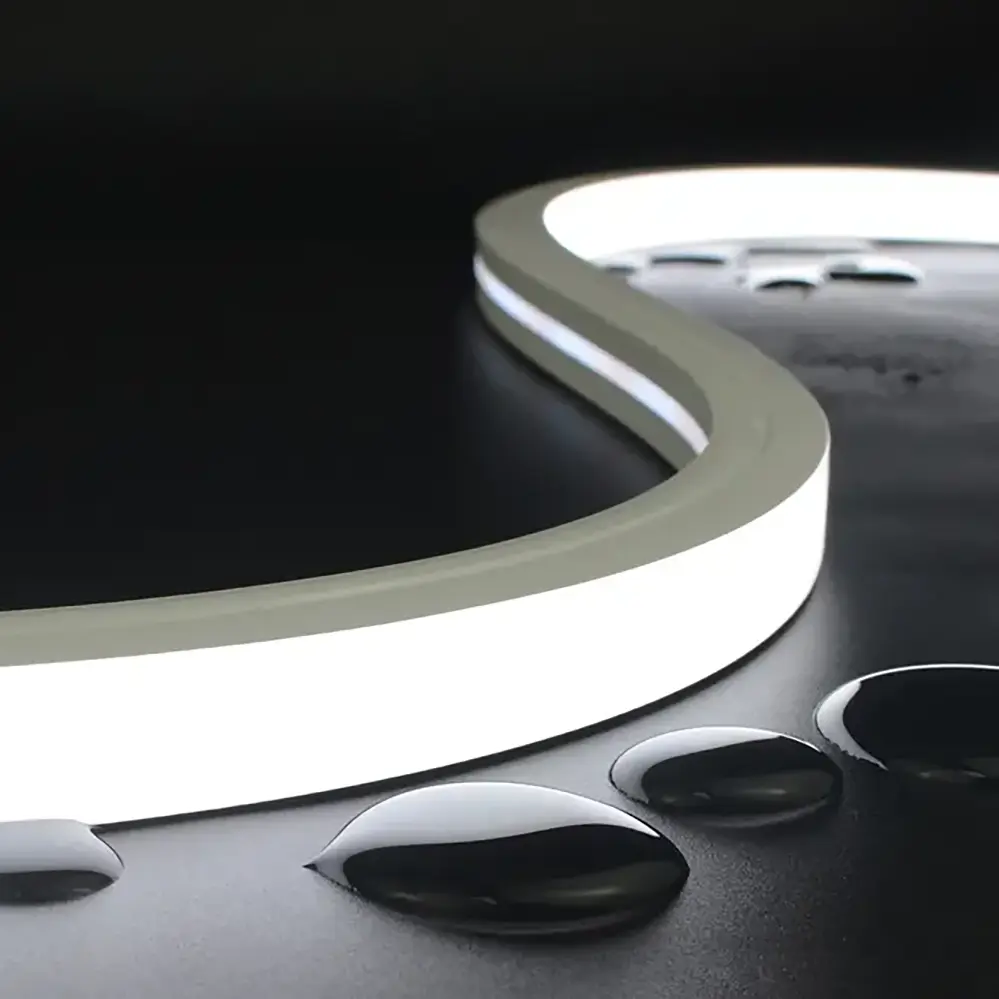
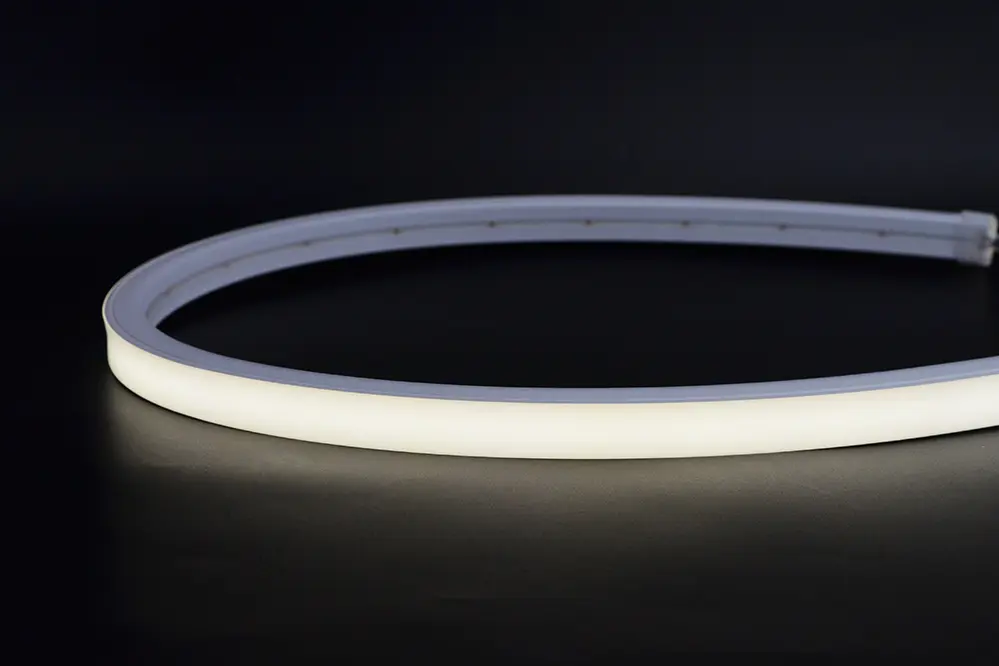
Unlike glass neon, LED neon strips are made from durable silicone or PVC, offering vibrant, continuous light that’s safe to touch and easy to install. The result is pure creative freedom — ideal for signage, architectural contours, or artistic installations that need both performance and presence.
Imagine a restaurant façade glowing with a Top Bend LED neon strip, elegantly tracing the curves of its exterior. Or picture an immersive art exhibit using 3D LED neon strips to create light sculptures that seem to float mid-air. These aren’t just design fantasies — they’re real-world examples of how flexible illumination is shaping the spaces of tomorrow.
Energy Efficiency Meets Emotional Impact
In the era of sustainability, beauty alone isn’t enough. Lighting must perform responsibly, conserving energy while enhancing human experience. This is where LED technology truly shines.
Compared to traditional neon or halogen systems, LED strip and neon lights consume a fraction of the power while lasting exponentially longer. High-efficiency options like the CSP LED strip light deliver brilliant output with exceptional thermal management — reducing maintenance costs and environmental impact.
What makes this even more compelling is how these products blend technology with sensory design. Warm tones can soften a minimalist space; cool whites can accentuate clean lines; dynamic color-changing LEDs can turn a room into an interactive environment. Every hue, every gradient, can be tuned to human emotion.
Beyond the Surface: Lighting as Architectural Language
In modern architecture, lighting isn’t an afterthought — it’s structure. It defines the geometry of a space and the perception of its volume.
When integrated into architectural lines, LED strips can make walls appear to float or ceilings to dissolve into light. Outdoor variants like the IP68 LED neon strip withstand harsh weather, making them ideal for façades, bridges, and urban landscapes that demand both resilience and beauty.
For retail designers, dynamic lighting serves as a silent salesperson. For homeowners, it transforms spaces into sanctuaries. And for artists, it’s a medium as expressive as paint — but alive, radiant, and ever-changing.
The Human Element of Light
What’s fascinating about this evolution isn’t just technological — it’s emotional. Humans are hardwired to respond to light. We associate it with safety, celebration, and inspiration. The soft glow under a handrail, the halo outlining a sculpture, or the rhythmic pulse along a city skyline — all evoke visceral responses.
This is where craftsmanship meets empathy. A thoughtful designer doesn’t just illuminate a space; they choreograph an experience. And tools like LED strips and neon flex offer infinite possibilities for such storytelling through light.
Lighting the Path Ahead
As cities grow smarter and interiors more immersive, the demand for adaptable, energy-efficient lighting will only intensify. The future belongs to systems that merge sustainability with artistry — light that’s programmable, personal, and profound.
For those exploring these possibilities, Unitop (China) Co., Limited stands at the forefront of LED innovation. With years of expertise in strip lighting and neon flex solutions, the company continues to push the boundaries of what’s possible — helping designers, architects, and creators worldwide bring their visions to life.
Conclusion: Shaping Light, Shaping Experience
LED strip lights and neon flex aren’t just products — they’re expressions of a new design philosophy. One that celebrates flexibility, efficiency, and creativity in equal measure. They invite us to see light not merely as illumination, but as emotion, architecture, and art.
Whether you’re illuminating a boutique, highlighting a sculpture, or crafting the mood of a living room, the right lighting can transform not only your space — but the way people feel within it.
For more insights or to discuss your next lighting project, reach out via Contact. The future of light is flexible, fluid, and brilliantly alive — and it starts here.

























Sign in to leave a comment.