
Light has always been one of humanity’s most powerful storytelling tools. From the flicker of a candle to the glow of a skyline, illumination defines emotion, atmosphere, and identity. But in the 21st century, lighting has evolved beyond mere function — it’s become an integral part of architecture, design, and even brand expression.
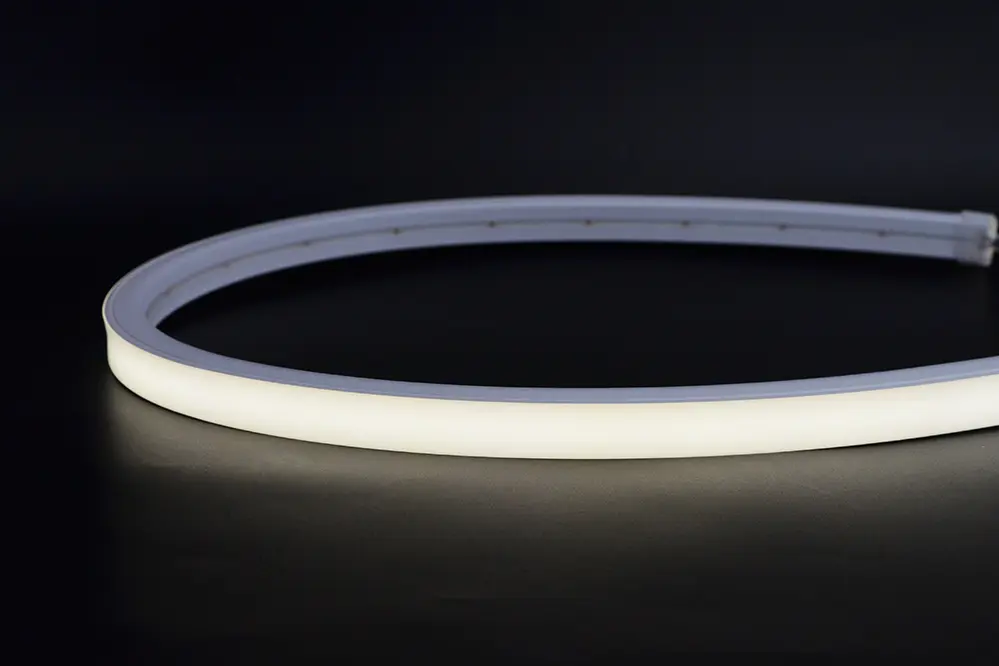
Leading this transformation are LED strip lights and LED neon flex, two technologies that have turned light itself into a flexible, sculptural material. Whether used in luxury homes, creative retail spaces, or avant-garde public installations, these innovations are rewriting what’s possible with illumination.
The Beauty of Versatility: LED Strip Lights
Imagine a single ribbon of light tracing the edges of a staircase, illuminating a minimalist gallery, or wrapping softly under a bar counter. That’s the magic of the LED strip light — elegant, compact, and endlessly adaptable.
Once used mainly for accent lighting, LED strips have matured into a staple of modern architecture and interior design. Their flexibility allows them to contour around structures, highlight textures, and emphasize geometry — without ever distracting from the form itself.
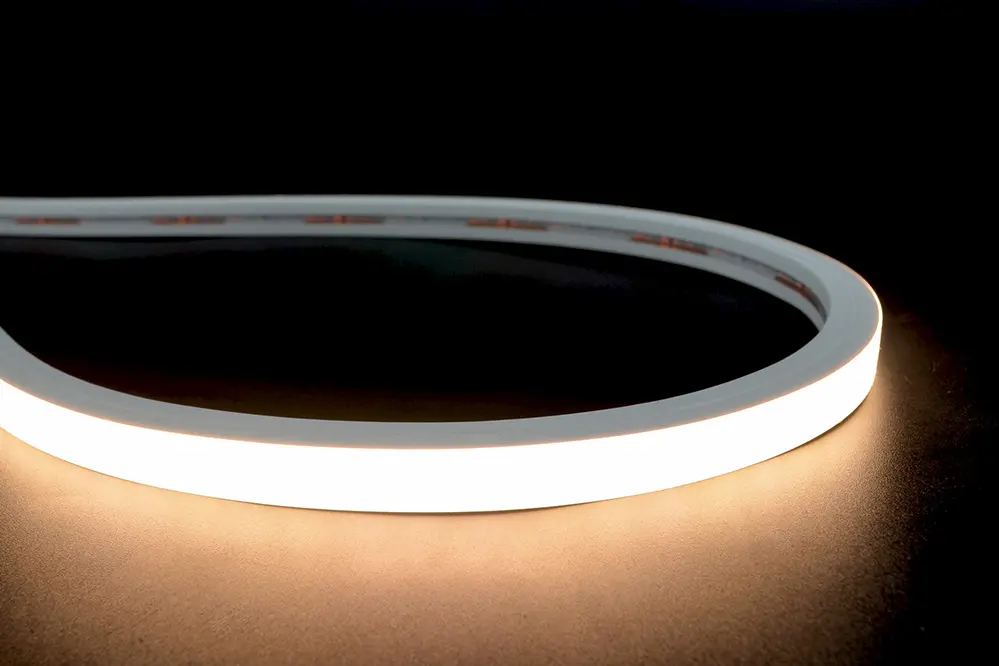
Take, for example, the COB LED strip light. Unlike traditional LEDs that emit light from visible diodes, COB (Chip on Board) technology produces a smooth, continuous glow — no dots, no harsh transitions. It’s ideal for designers seeking soft illumination in high-end settings like museums, boutique hotels, or luxury residences.
Meanwhile, CSP and SMD LED strips deliver unparalleled brightness and precision, perfect for retail displays or architectural outlines that demand clarity and contrast.
The artistry lies in subtlety: a gentle gradient beneath a shelf, a linear glow defining a hallway, or a warm halo surrounding a mirror. LED strips give light direction and rhythm — like visual music that guides the eye through space.
The Sculptural Side of Illumination: LED Neon Flex
If LED strips are the paintbrush, LED neon flex is the clay — shaping light into three-dimensional form. Inspired by traditional glass neon, LED neon flex brings the same vibrancy and boldness, but with modern sustainability, durability, and ease of use.
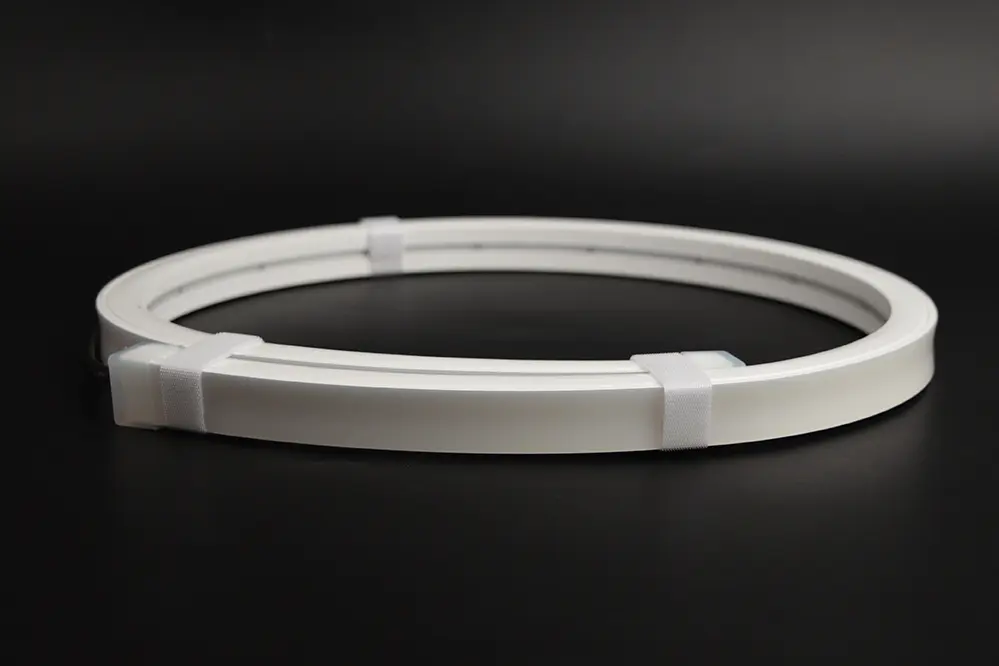
Unlike fragile neon tubes, LED neon strips are made of flexible silicone or PVC materials that can bend and twist into almost any design. The result? Pure creative freedom.
Picture a curved architectural façade illuminated by a Top Bend LED neon strip, or a brand logo rendered in glowing lines across a building front. In art galleries, 3D neon flex lights can be woven into installations that seem to hover in space — dynamic, luminous, and alive.
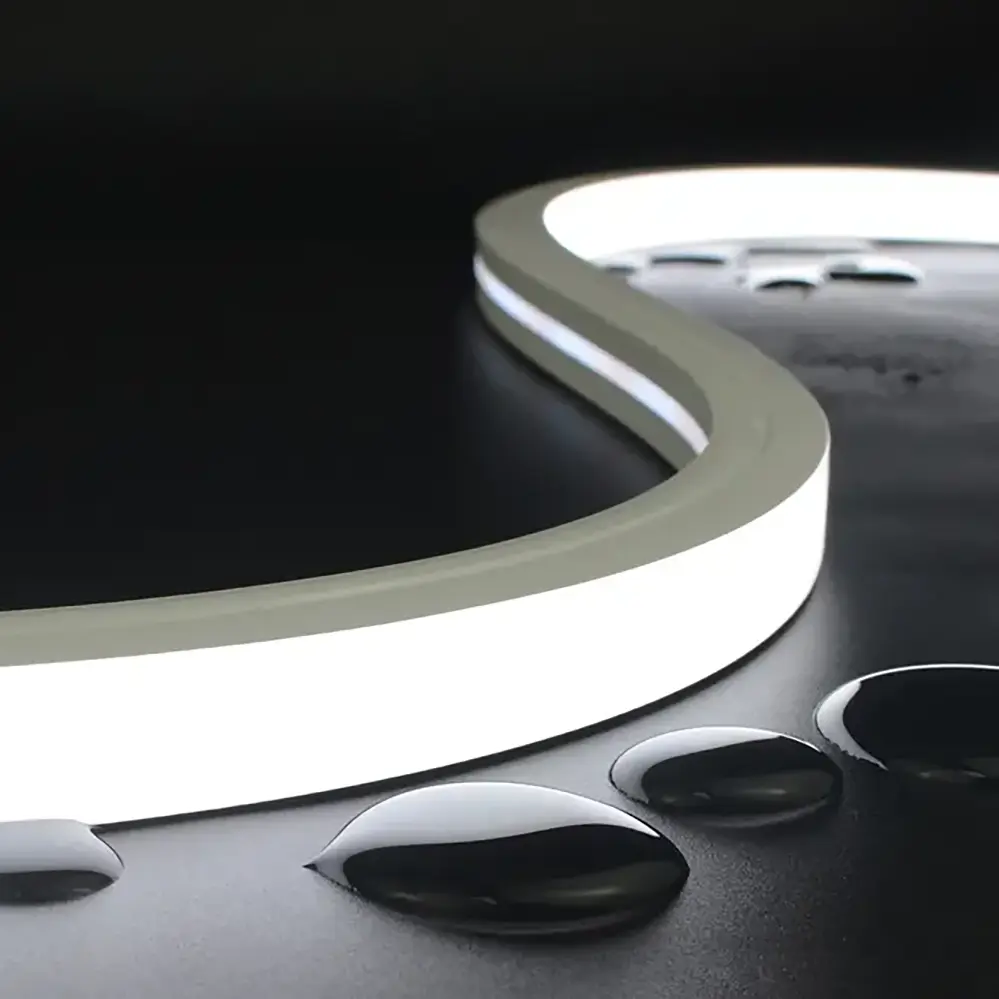
Outdoor designers are also embracing high-durability options like the IP68 LED neon strip, which can withstand rain, dust, and extreme temperatures while maintaining brilliant luminosity. These lights are equally at home lining a beachfront resort, highlighting a bridge, or animating an urban plaza.
In essence, LED neon flex has democratized neon art — turning what was once a fragile and energy-intensive medium into an eco-friendly, design-forward statement.
Light That Thinks: The Fusion of Technology and Design
LED lighting isn’t just beautiful; it’s intelligent. With the integration of smart controls, motion sensors, and dynamic color tuning, designers can now choreograph light like a living performance.
Imagine a retail store that subtly shifts from warm white in the morning to cool white by evening, enhancing both products and mood. Or an office that adjusts color temperature to align with natural circadian rhythms, improving focus and wellbeing.
Even public spaces are becoming interactive. Motion-triggered LED installations in parks and walkways encourage play and exploration — merging art, light, and human connection.
Energy efficiency is the quiet hero of this story. Modern LEDs consume a fraction of the energy of incandescent or halogen lights while offering up to 50,000 hours of lifespan. That means lower carbon footprints, reduced maintenance, and a greener planet — without compromising beauty.
Lighting as Architecture
The most visionary architects now see lighting not as decoration, but as structure. It defines volume, carves pathways, and creates perception.
Consider a museum atrium where linear LED strips trace the skeleton of the architecture, or a minimalist home where light itself becomes a material — flowing across walls, bending around corners, and dissolving boundaries.
LED strips and neon flex enable architects to blur the line between light and form. Surfaces appear to float. Edges disappear. The building itself seems to breathe with light.
Even in small spaces, this philosophy thrives. A well-placed strip under a bed frame, behind a TV, or along a ceiling cove can completely transform the ambiance of a room. Light is no longer something you turn on — it’s something you live within.
The Human Connection to Light
Beyond all the technology and design lies something deeply human. We are creatures of light — drawn to it, comforted by it, inspired through it.
The glow of LED neon in a café window evokes nostalgia. A strip of soft white beneath a countertop feels warm and inviting. A pulse of color at a concert electrifies emotion.
This is the essence of modern lighting: not just function or fashion, but feeling. Every installation tells a story, every hue sparks emotion. And LED technology gives designers the tools to compose those emotional symphonies with precision and grace.
Lighting the Future
As cities evolve and sustainability becomes imperative, lighting will play a pivotal role in shaping how we experience the built environment. The future isn’t just bright — it’s dynamic, responsive, and artfully designed.
Companies like Unitop (China) Co., Limited are at the forefront of this movement, pioneering innovations in LED strip and neon lighting that empower architects, creators, and dreamers to design with light in ways once thought impossible.
From artistic interiors to intelligent infrastructure, LED strip lights and neon flex are leading a quiet revolution — one that blends energy efficiency, creativity, and emotion into every beam of light.
If you’re ready to illuminate your next project or explore the latest in lighting design, reach out via Contact to connect with Unitop’s team of experts. The future of light is flexible, sustainable, and endlessly inspiring — and it starts here.
























Sign in to leave a comment.