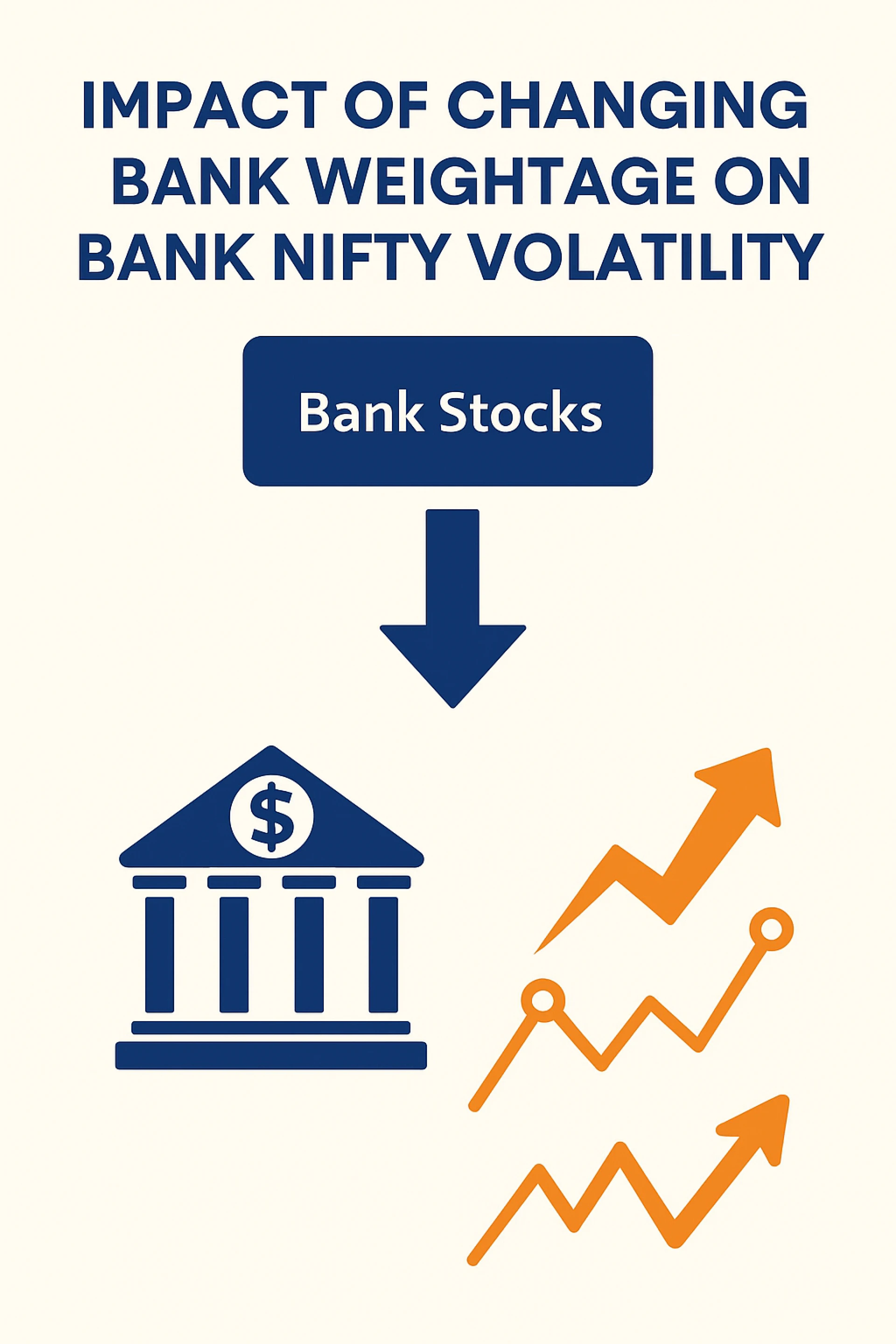

The weightage on Bank Nifty volatility plays a significant role in shaping short-term and intraday market movements. Bank Nifty, which represents the top banking stocks in India, is not static—its composition and the proportion of each bank’s influence evolve over time. Understanding how these weightage changes impact volatility helps traders make more informed decisions, especially in fast-moving sessions.
1. What Is Bank Weightage and Why Does It Matter
Each bank in the Bank Nifty index contributes differently to its overall movement. Heavier-weighted banks like HDFC Bank, ICICI Bank, or SBI influence the index more strongly than smaller participants. When these major banks experience price swings, their larger share amplifies overall volatility in Bank Nifty.
For traders, grasping this concept through resources like understanding the weightage of banks in Bank Nifty index can offer a deeper view of how index behavior is shaped daily.
2. Shifting Weightage and Its Immediate Market Effects
Changes in the index’s composition often occur due to quarterly reviews or corporate actions such as mergers and capital infusions. When a high-cap bank’s weight increases, its influence on the index grows—meaning even minor fluctuations in that bank’s stock can trigger sharper intraday moves.
Conversely, when smaller banks gain weightage, volatility may spread more evenly, making the index slightly more stable.
3. Correlation Between Banking Sector Performance and Volatility
Banking sector performance is often tied to interest rate cycles, liquidity, and credit growth.
- When large-cap banks lead in performance, the weightage on Bank Nifty volatility tends to rise.
- During periods when mid-sized or PSU banks contribute more, volatility may soften as the movement becomes distributed.
Understanding these relationships helps traders anticipate potential breakout or consolidation phases within the index.
4. Institutional Activity and Its Influence
Foreign Institutional Investors (FIIs) and Domestic Institutional Investors (DIIs) often adjust their portfolios based on changing bank weightages. A higher allocation in a large bank can draw institutional buying or selling, further amplifying market reactions. This makes tracking these institutional shifts essential for interpreting the weightage on Bank Nifty volatility in real-time.
5. How Traders Can Adapt Their Strategies
For intraday and positional traders, recognizing changing bank weightage helps fine-tune strategy selection.
- If volatility increases due to the dominance of a few heavyweights, traders might prefer tighter stop-loss levels or shorter time frames.
- When volatility drops, swing setups or range-bound strategies can be more effective.
This adaptability is crucial to managing risk and capturing opportunities based on index composition trends.
6. Why Weightage Monitoring Should Be Part of Your Analysis
Monitoring weightage changes shouldn’t be limited to analysts—active traders can benefit too. The influence of top banks evolves continuously with market capitalisation shifts and quarterly rebalancing. By combining this data with technical signals, traders gain a clearer understanding of potential volatility spikes before they occur.
Conclusion: The Subtle Power of Weightage on Volatility
The weightage on Bank Nifty volatility acts as a silent driver behind every major move in the index. As certain banks gain or lose influence, the overall behavior of Bank Nifty evolves—sometimes gradually, sometimes sharply.
By regularly tracking these shifts through insights like understanding the weightage of banks in Bank Nifty index, traders can better align their strategies with market realities. In today’s dynamic environment, awareness of weightage changes isn’t just data—it’s a perspective that refines timing, planning, and market understanding.



























Sign in to leave a comment.