

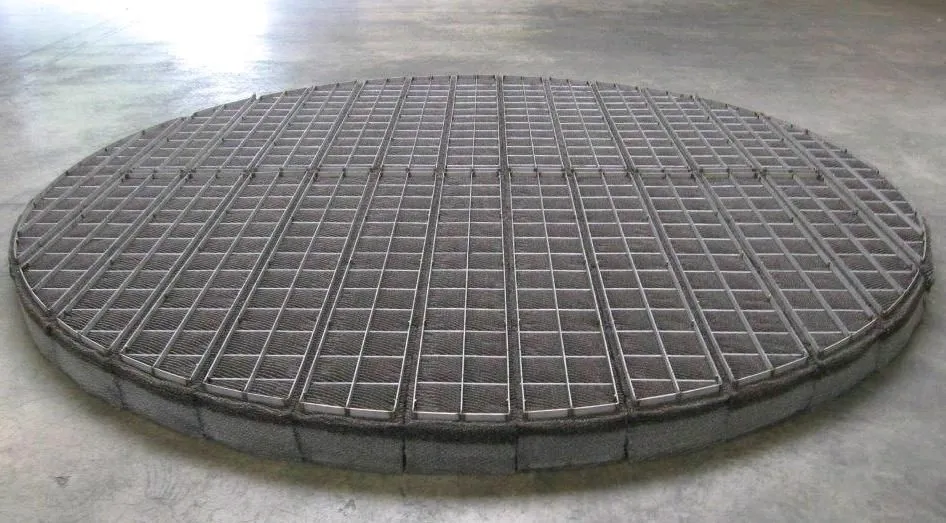
In industrial processing environments, controlling liquid carryover is essential for maintaining operational efficiency, protecting downstream equipment, and meeting product quality standards. One of the most effective solutions for gas-liquid separation is the industrial demister pad.
Demister pads are widely used across chemical processing, oil & gas, petrochemical, power generation, pharmaceuticals, fertilizers, and water treatment industries to remove entrained liquid droplets from vapor or gas streams.
This complete guide explains how demister pads work, how to select the right design, and what factors impact long-term performance.
What Is an Industrial Demister Pad?
A demister pad, also known as a mist eliminator, is a separation device installed inside process vessels, columns, scrubbers, evaporators, and separators to remove liquid droplets carried by gas or vapor streams.
The pad typically consists of a carefully engineered mesh structure made from metallic or non-metallic materials. As vapor passes through the mesh, droplets collide with the surface, merge into larger droplets, and drain back due to gravity.
The result is:
- Cleaner gas output
- Reduced product loss
- Improved process efficiency
- Protection of downstream equipment
How Does a Demister Pad Work?
The operation of a demister pad follows three primary stages:
1. Capture
Fine liquid droplets suspended in the gas stream contact the mesh surface.
2. Coalescence
Small droplets combine into larger droplets as they move through the media.
3. Drainage
Larger droplets become heavy enough to separate and flow back into the vessel.
This process allows high separation efficiency with relatively low pressure drop.
Types of Industrial Demister Pads
Choosing the correct type depends on operating conditions and application requirements.
Wire Mesh Demister Pads
The most commonly used design.
Advantages:
- High separation efficiency
- Cost-effective
- Suitable for fine droplet removal
- Low maintenance requirements
Applications:
- Distillation columns
- Absorption towers
- Flash drums
- Evaporators
Metal Demister Pads
Manufactured using materials such as:
- Stainless Steel 304
- Stainless Steel 316
- Monel
- Titanium
- Nickel alloys
Best for:
- High-temperature environments
- Corrosive applications
- Heavy industrial operations
Non-Metallic Demister Pads
Common materials:
- Polypropylene (PP)
- PTFE
- PVDF
Best for:
- Chemical resistance
- Lightweight installations
- Specialized process requirements
Key Factors for Selecting the Right Demister Pad
When evaluating suppliers and engineering capabilities, many industrial buyers compare demister pad manufacturers India based on material quality, customization options, process compatibility, manufacturing standards, and long-term operational performance.
1. Operating Temperature
Material selection must withstand actual process temperatures.
2. Pressure Conditions
Higher pressure systems may require reinforced structures.
3. Gas Velocity
Excessive velocity may cause re-entrainment of captured droplets.
4. Droplet Size Distribution
Smaller droplets often require finer mesh density.
5. Corrosion Resistance
Material compatibility is critical for long service life.
6. Pressure Drop Requirements
Balancing separation efficiency with minimal energy loss is essential.
7. Maintenance Accessibility
Design should allow easy cleaning and replacement.
Demister Pad Design Considerations
Proper design directly influences separator performance.
Mesh Density
- Lower density → lower pressure drop
- Higher density → improved droplet capture
Pad Thickness
Thicker pads generally improve efficiency but may increase resistance.
Vessel Diameter
Pad dimensions should align precisely with equipment geometry.
Support Grid Design
Adequate support prevents deformation under operating conditions.
Drainage Characteristics
Proper drainage minimizes flooding and improves longevity.
Performance Metrics That Matter
When evaluating industrial demister pads, monitor these indicators:
| Performance Parameter | Typical Objective |
|---|---|
| Separation Efficiency | High droplet removal |
| Pressure Drop | Minimized energy loss |
| Operating Life | Extended service interval |
| Fouling Resistance | Reduced maintenance |
| Gas Throughput | Stable process operation |
Well-designed systems can achieve extremely high liquid removal efficiency while maintaining stable process conditions.
Common Industrial Applications
Demister pads are critical across multiple industries:
Chemical Processing
Prevents contamination and protects downstream equipment.
Oil & Gas
Removes liquids from gas processing streams.
Petrochemical Plants
Supports efficient vapor-liquid separation.
Fertilizer Production
Improves product recovery and process stability.
Pharmaceutical Manufacturing
Maintains purity and contamination control.
Water & Wastewater Treatment
Enhances separation performance.
Maintenance Best Practices
To maximize demister pad life:
- Schedule periodic inspections
- Monitor pressure drop trends
- Clean accumulated deposits regularly
- Replace damaged mesh promptly
- Verify installation alignment during shutdowns
Preventive maintenance helps maintain consistent efficiency and reduces unplanned downtime.
Why Industrial Demister Pad Quality Matters
A properly selected and engineered demister pad contributes directly to:
- Higher process efficiency
- Lower operating costs
- Reduced emissions
- Extended equipment life
- Better product recovery
Whether installed in separators, towers, or scrubbers, investing in the right demister solution improves overall plant reliability and long-term performance.
Final Thoughts
Industrial demister pads remain one of the most effective solutions for gas-liquid separation across demanding industrial applications. Understanding the fundamentals of selection, design, and performance optimization helps ensure efficient operation, lower maintenance requirements, and improved production outcomes.
If your process demands reliable mist elimination, selecting the right demister pad configuration and material can make a measurable difference in operational performance.


























Sign in to leave a comment.