
Getting ISO certified in the UAE is not complicated. But most businesses waste months — and money — because they start without a clear plan.
This gives you straight answers. Costs. Timelines. Which standard you actually need. And what the process looks like step by step.
What Is ISO Certification — and Why Do UAE Businesses Need It?
ISO certification proves your business meets an international quality, safety, or management standard. A third-party body audits your operations and confirms you comply.
In the UAE, ISO certification is often required to:
- Win government tenders
- Join approved vendor lists
- Export to international markets
- Meet client or regulatory requirements
Without it, many doors stay closed — especially in construction, oil and gas, healthcare, and government contracting.
Which ISO Standard Does Your UAE Business Need?
The right standard depends on your industry. Here is a quick breakdown:
| Industry | Most Common ISO Standard |
|---|---|
| General Business / Quality | ISO 9001 |
| Construction & Infrastructure | ISO 9001, ISO 45001 |
| Food & Beverage | ISO 22000 |
| Oil & Gas | ISO 9001, ISO 45001 |
| Healthcare / Medical Devices | ISO 13485 |
| IT & Data Security | ISO 27001 |
| Environment & Sustainability | ISO 14001 |
| Energy Management | ISO 50001 |
| Building Information Modeling | ISO 19650 |
A trading company in Jebel Ali Free Zone typically starts with ISO 9001. A food manufacturer in Abu Dhabi usually needs ISO 22000. A hospital supplier goes for ISO 13485.
If you are unsure, start with a gap analysis. It tells you exactly where you stand before you commit.
How Much Does ISO Certification Cost in the UAE?
ISO certification in the UAE typically costs between AED 8,000 and AED 45,000+. The price depends on company size, number of employees, scope, and how prepared you already are.
Here is a realistic breakdown:
| Cost Component | Estimated Range (AED) |
|---|---|
| Consultancy / Implementation | 5,000 – 25,000 |
| Certification Body Audit Fee | 3,000 – 15,000 |
| Internal Training | 1,000 – 5,000 |
| Documentation & Tools | 500 – 3,000 |
Small businesses with 10–20 employees pay on the lower end. A construction firm with 200+ staff, multiple sites, and complex operations pays significantly more.
One thing to watch: some providers quote low upfront but charge extra for documentation, re-audits, or follow-up visits. Always ask for a fixed-scope proposal.
How Long Does ISO Certification Take in the UAE?
Most businesses get certified within 60 to 120 days. Faster is possible — but only if your systems are already in reasonable shape.
Here is a typical timeline:
- Week 1–2 — Gap analysis and scope definition
- Week 3–6 — Documentation and system setup
- Week 7–8 — Internal audit and management review
- Week 9–10 — Stage 1 audit (document review by certification body)
- Week 11–12 — Stage 2 audit (on-site assessment)
- Week 13–16 — Certificate issued
If your business already has documented processes, you can compress this. Starting from scratch? Plan for the full 4 months.
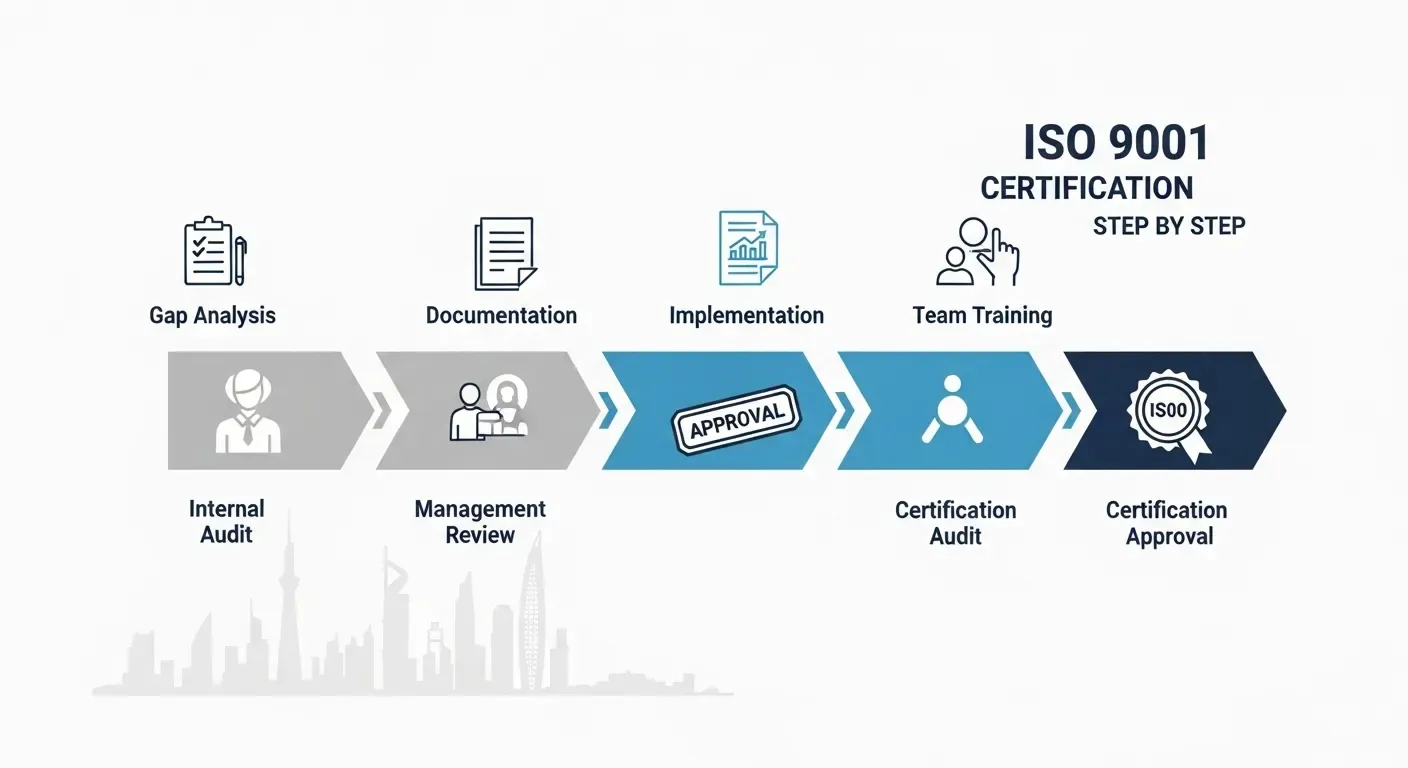
Step-by-Step: How ISO Certification Works in the UAE
Here is exactly what happens during a certification project.
Gap Analysis
A consultant reviews your current processes against the ISO standard. You get a clear picture of what is missing before spending a dirham.
Planning and Scope
You define what part of the business gets certified. A logistics company in Sharjah might certify just its warehousing division — not the entire operation.
Documentation
You build or update your Quality Manual, procedures, and work instructions. This is where most of the real work happens.
Training
Staff who run audits, manage records, or lead departments need basic ISO training. Usually one or two half-day sessions.
Internal Audit
Your team runs a self-check. You find non-conformities before the external auditor does. Fix them here — not during the certification audit.
Management Review
Senior leadership signs off on the system's readiness. This is a formal meeting with recorded minutes.
Certification Audit
The accredited certification body sends an auditor. They review documents first (Stage 1), then visit your site (Stage 2).
Certificate Issued
Once you pass, you receive your ISO certificate. Valid for 3 years — with annual surveillance audits in between.
ISO Certification by City — Does Location Matter?
The process is the same across the UAE. But requirements vary slightly depending on your free zone, municipality, or regulatory authority.
- ISO certification in Dubai — high demand from construction, tech, and trading sectors
- ISO certification in Abu Dhabi — often required by ADNOC and government-linked entities
- ISO certification in Sharjah — growing demand from manufacturing and logistics
- ISO certification in Ajman — popular with SMEs and industrial suppliers
- ISO certification in Ras Al Khaimah — common in ceramics, cement, and food industries
If your clients are in Abu Dhabi but you operate from Sharjah, certify against your main operational site — not your registered address.
Which Industries Need ISO Certification Most in the UAE?
Certain industries face the strongest pressure to certify:
- Construction — CIDB and local authority prequalification (ISO for construction)
- Oil & Gas — ADNOC and DEWA vendor requirements (ISO for oil & gas)
- Medical Devices — DHA and MoHAP regulatory compliance (ISO for medical devices)
- Transport & Logistics — client-driven quality requirements (ISO for transport)
- Food & Hospitality — Dubai Municipality food safety mandates (ISO for hotels & restaurants)
- Education — quality assurance for private institutions (ISO for education)
Browse the full industries we serve to find your sector.
What Happens After You Get Certified?
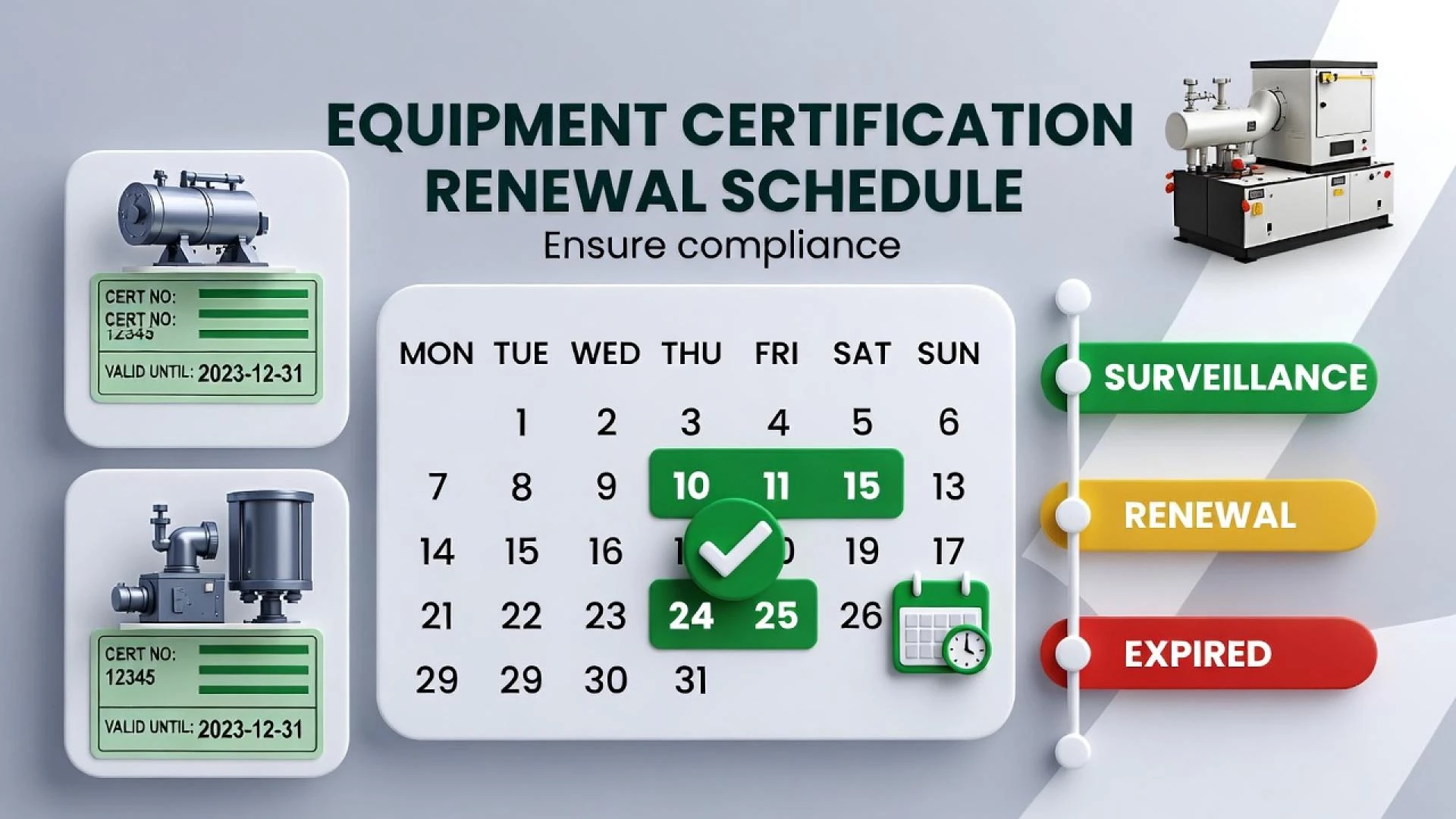
Certification is not a one-time event. Here is the 3-year cycle:
- Year 1 — Certification audit, certificate issued
- Year 2 — Surveillance audit (shorter, checks ongoing compliance)
- Year 3 — Surveillance audit plus recertification audit
Miss a surveillance audit and your certificate gets suspended. Ignore recertification and it lapses. Both hurt — especially when clients check certificate validity online.
Keep internal audits running. Update documentation when processes change. Run your management review every year without fail.
Common Reasons UAE Businesses Fail Their ISO Audit
Most failures come down to the same issues:
- Documented procedures that nobody actually follows
- No evidence of internal audits being completed
- Missing management review records
- Staff who cannot explain the quality policy
- Corrective actions promised but never closed
An operations manager at a Dubai construction firm once said: "We had a 40-page quality manual. Nobody had read it." That is the real problem. ISO is about what you do — not just what you write down.































Sign in to leave a comment.