
Introduction
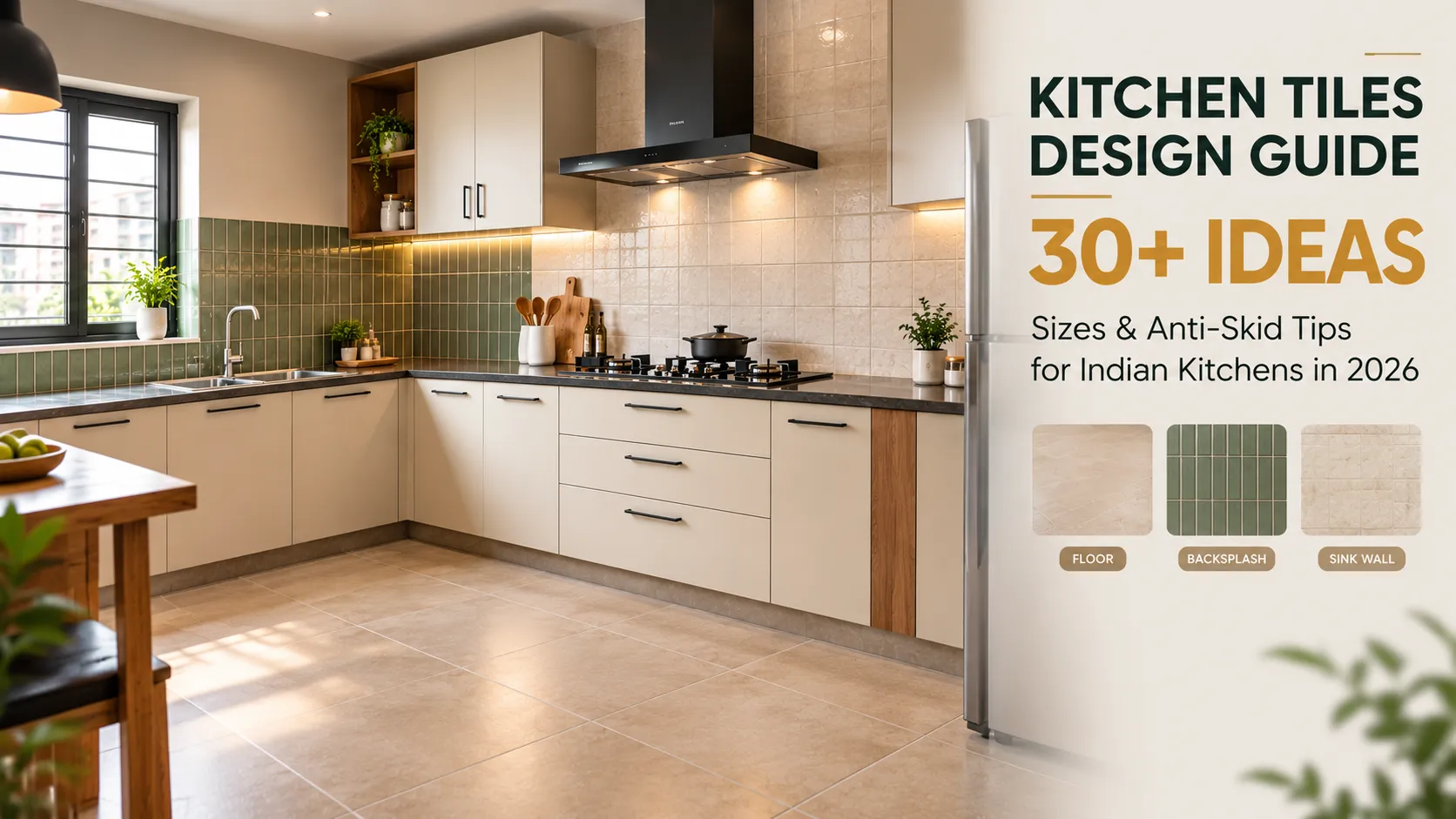
Designing a new kitchen is an exciting project, but selecting the right materials can quickly become confusing. When planning your kitchen tiles design, it is crucial to remember that surfaces in an active Indian kitchen deal with daily turmeric spills, hot oil splashes, and heavy foot traffic. Relying purely on visual appeal is a common mistake that can lead to high maintenance later. To build a space that is both beautiful and safe, you need a smart approach to your selection. Let us explore the most important factors you should consider before making a purchase.
Smart Kitchen Tiles Design: Match the Tile to the Zone
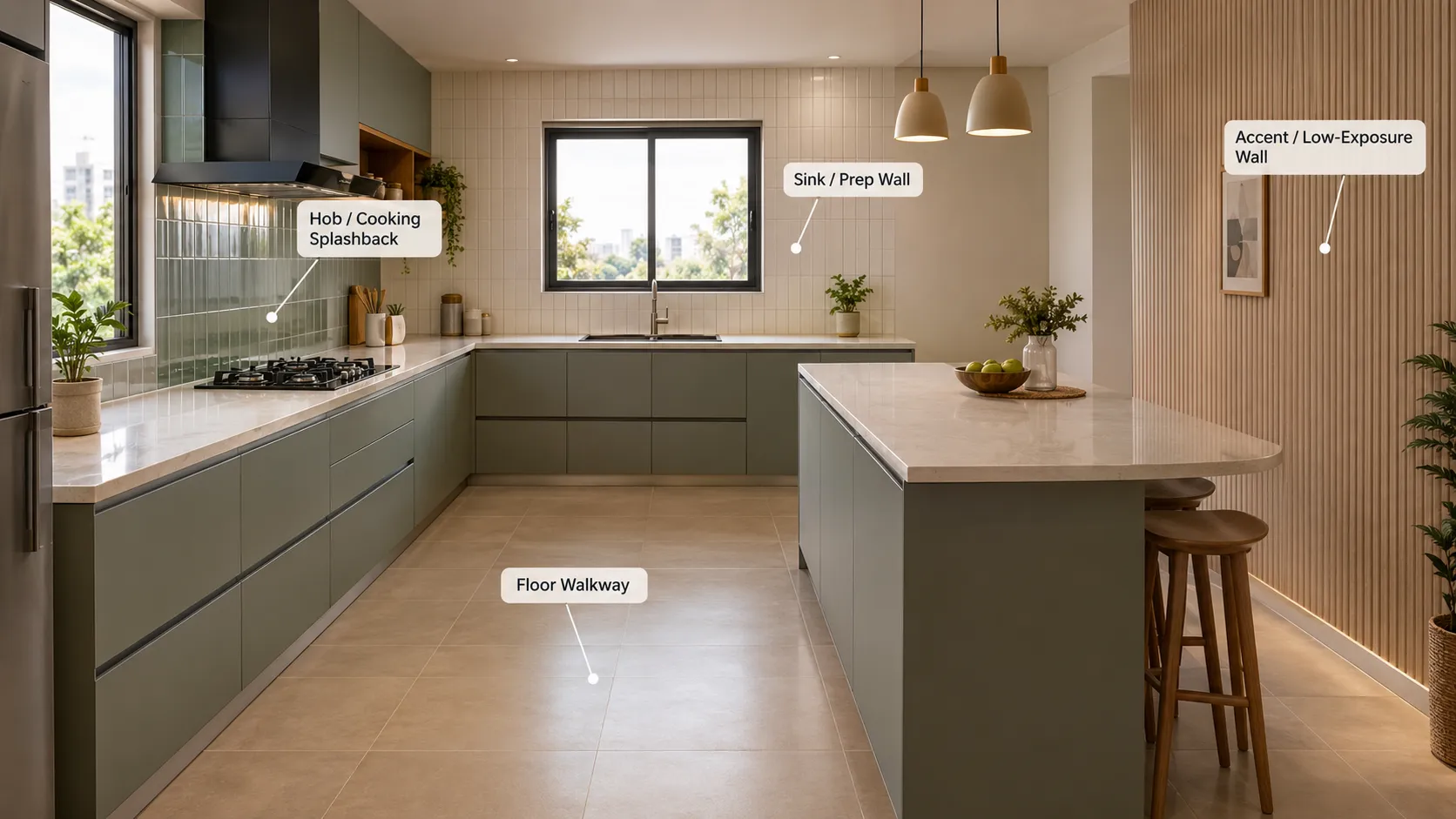
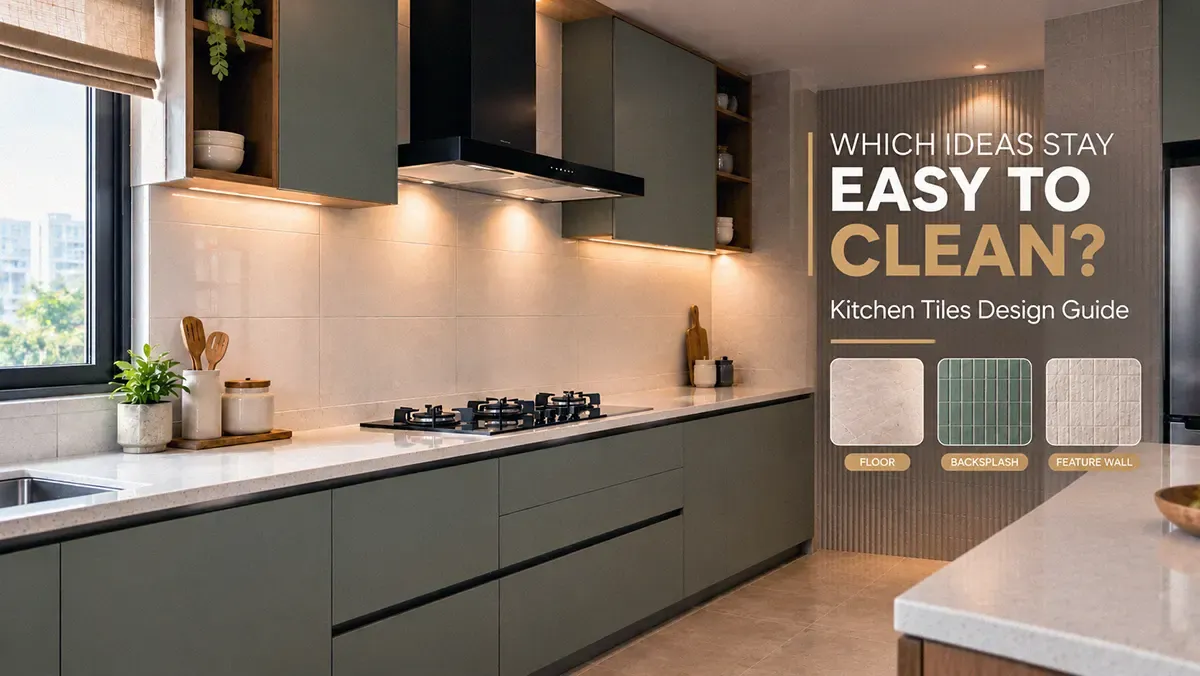
Many buyers try to find one universal tile for the whole room. However, your kitchen actually has distinct zones that face very different daily challenges. The floor needs to handle walking traffic, water drops, and occasional oil spills. The wall right behind your gas hob deals with intense heat and sticky grease. Meanwhile, the wall near your sink faces constant water splashes and cleaning chemicals.
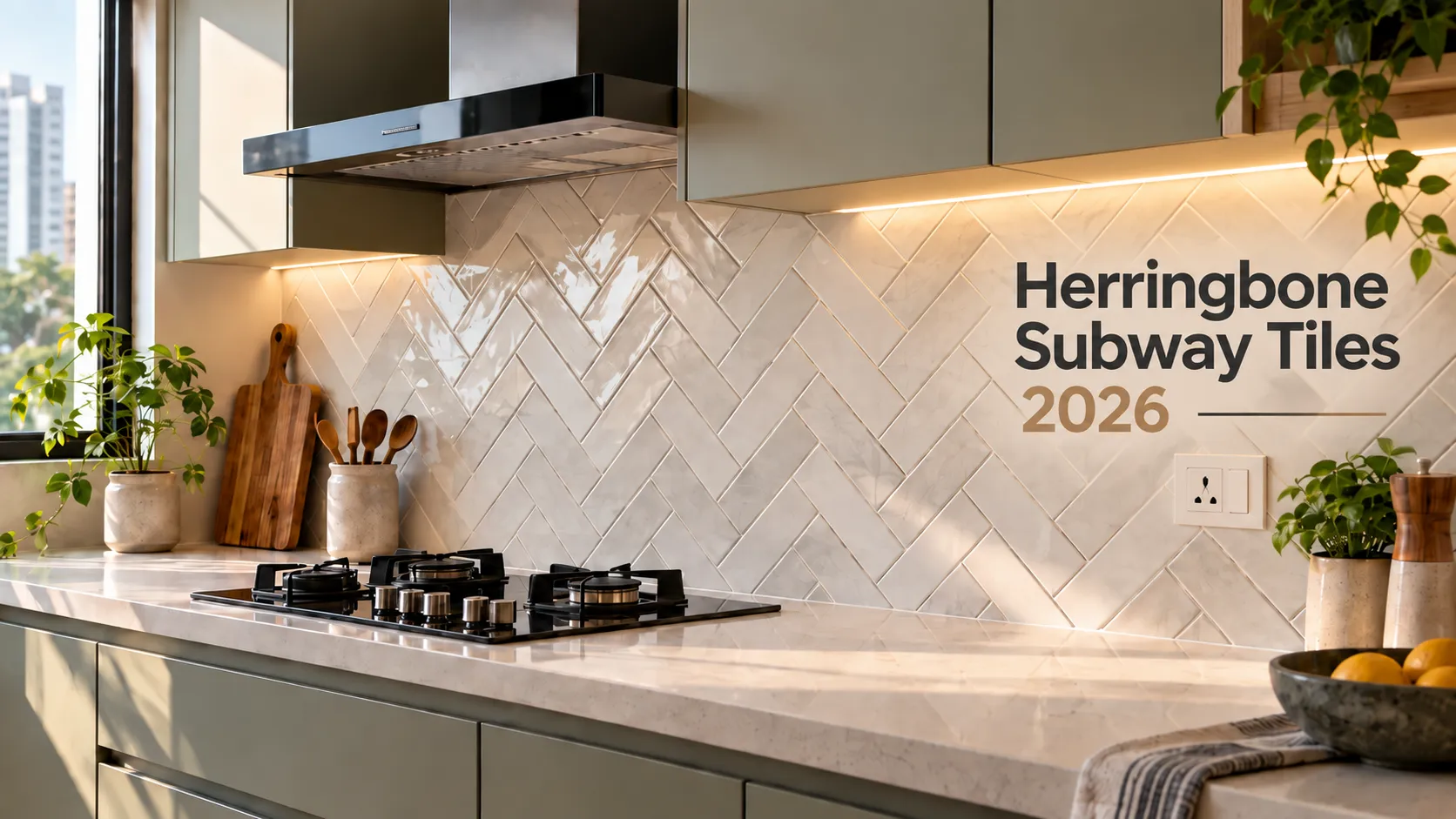
Instead of using the same finish everywhere, select specific tiles for specific jobs. Choose highly cleanable, smooth glazed tiles for your cooking backsplash so you can easily wipe away cooking grease. For the floor, prioritize safety and durability over a high-gloss shine. If you want to use highly textured or 3D tiles, place them on an accent wall away from the active cooking area to avoid difficult cleaning.
The Truth About Anti-Skid Floor Tiles

When shopping for floors, you will often hear showroom salespeople claim that a "matte" finish is automatically anti-skid. This is a dangerous misconception. "Matte" simply describes how the tile looks, not how it actually grips your feet when it is wet.
In an Indian home, kitchen floors also see accidental cooking oil or ghee spills. These substances behave very differently from plain water. Before buying a floor tile, ask the dealer for actual friction test documentation. A truly safe floor tile should have verified traction data for walking conditions. Never rely entirely on the name of the finish to guarantee your family's safety.
Getting the Tile Size Right
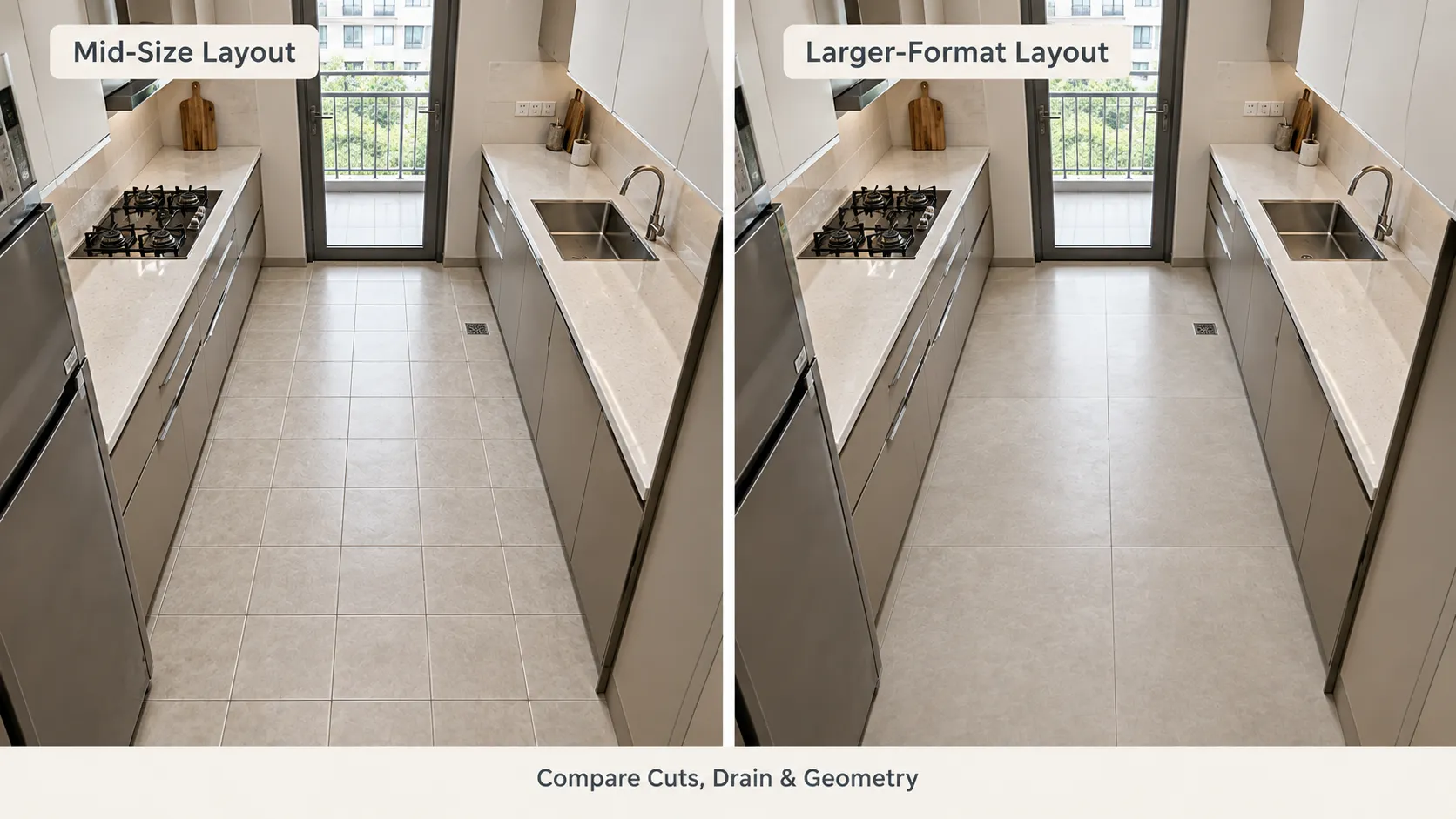
What is the best size for a compact space? While a 600x600 mm tile is a very popular choice, it is not a strict rule. The right size depends entirely on your room layout, the position of your floor drains, and your kitchen cabinets.
Large-format slabs look incredibly modern because they reduce the number of visible grout joints. However, if your kitchen floor has multiple slopes directing water toward a specific drain, large rigid tiles become difficult to install properly without uneven edges. If you want more inspiration on sizing and layouts, exploring a comprehensive kitchen tiles design guide can help you map out the best fit for your specific floor plan. Always consult your mason about the required cuts and slopes before locking in a very large tile format.
Pay Attention to Your Grout

Buyers often spend weeks choosing the perfect tile face but completely ignore the jointing material. In a space where haldi and cooking oils are used daily, your grout choice can make or break your maintenance routine.
Standard cement-based grout can absorb liquids and stain over time. For areas with heavy cooking exposure, consider asking your contractor about reaction-resin grouts. While no grout is completely stain-proof, resin-based options offer much better resistance to chemical and liquid absorption. This simple choice helps keep your kitchen looking fresh for years without aggressive scrubbing.
Smart Sourcing and Final Checks
When you are ready to buy, look beyond just the price per square foot of the tile itself. Factor in the cost of good quality adhesive, grout, and skilled labour. Sourcing your materials from a major manufacturing centre like Morbi, Gujarat, can ensure you get fresh batches with uniform shading. Working with a reliable supplier like Morbi Tile Hub ensures you receive the correct technical documentation for your selected products. By selecting tiles based on their specific zone and verifying anti-skid claims, your new kitchen will remain practical and beautiful for a lifetime.





















Sign in to leave a comment.