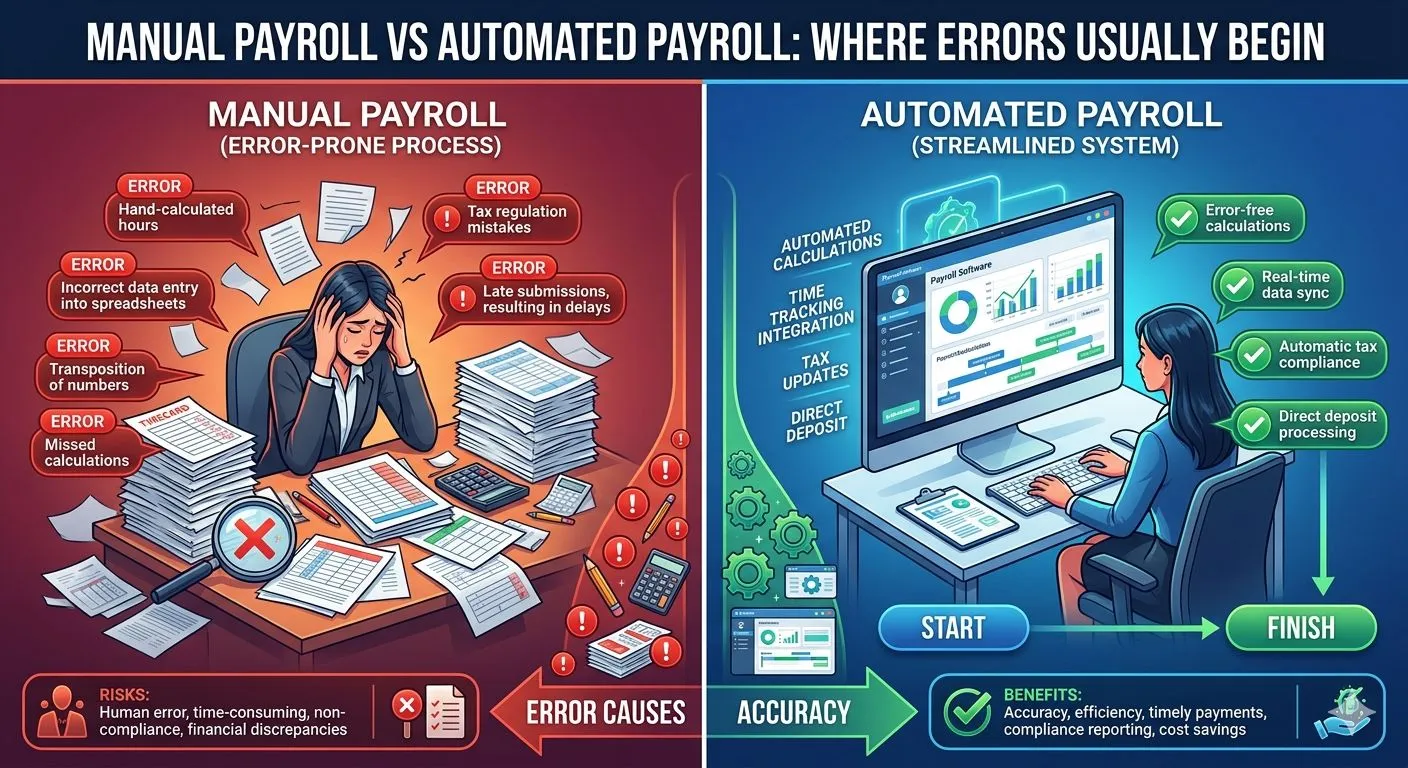

Payroll operations become significantly harder to manage as organizations expand across departments, locations, and compliance jurisdictions. Employee records, salary structures, tax deductions, reimbursements, overtime calculations, and statutory obligations often move across disconnected HR, finance, and accounting systems. In manual payroll environments, even a small input mistake can create duplicate payments, inaccurate deductions, reporting inconsistencies, and employee dissatisfaction. These problems usually become visible only during payroll release or financial close, when correction windows are limited.
Automated payroll processing reduces repetitive validation work and improves payroll consistency across systems. Still, many organizations continue relying on spreadsheets, email approvals, and manual adjustments that weaken payroll accuracy. This article explains where payroll errors typically begin, how manual and automated payroll workflows differ operationally, and why centralized payroll validation improves financial reporting, audit visibility, and payroll reconciliation accuracy across enterprise operations.
Why Payroll Errors Increase as Organizations Scale
Payroll complexity increases as employee records and compliance obligations expand across the organization.
Growth in employee records, salary structures, and compliance rules
Organizations manage multiple salary structures, benefit programs, overtime policies, reimbursements, and tax obligations simultaneously.
Why disconnected payroll inputs create reporting inconsistencies
Attendance systems, HR records, reimbursement approvals, and finance platforms often update independently, creating inconsistent payroll visibility.
Impact of payroll inaccuracies on employee trust and financial reporting
Incorrect salary payments affect employee confidence and distort operating expense reporting.
As payroll volume increases, organizations often depend heavily on manual workflows to process payroll data.
What Manual Payroll Processing Actually Involves
Manual payroll processing depends on spreadsheets, manual calculations, and repeated validation work.
Definition of manual payroll processing in finance and HR operations
Manual payroll processing involves calculating salaries, deductions, reimbursements, and taxes using spreadsheets or disconnected systems.
Reliance on spreadsheets, email approvals, and manual calculations
Payroll teams frequently validate attendance, approvals, and salary changes manually before processing payouts.
Why manual payroll workflows create dependency on human validation
Payroll accuracy depends heavily on reviewers identifying missing or incorrect data before payroll release.
Organizations looking to reduce repetitive payroll work increasingly evaluate the operational impact of Payroll Automation Benefits across HR and finance workflows.
To reduce operational dependency on manual reviews, many enterprises move toward automated payroll processing models.
What Automated Payroll Processing Actually Covers
Automated payroll processing connects payroll calculations with HR, attendance, and finance systems.
Definition of automated payroll processing in enterprise operations
Automated payroll processing uses system-driven workflows to calculate salaries, deductions, taxes, and reimbursements consistently.
Integration between payroll systems, attendance records, and finance platforms
Integrated payroll systems synchronize employee records, leave balances, overtime data, and accounting entries automatically.
Why automation improves payroll consistency across large workforces
Automation reduces repetitive validations and improves payroll visibility across distributed teams.
The operational difference between manual and automated payroll becomes more visible during payroll validation and reconciliation.
Manual Payroll vs Automated Payroll: Core Operational Differences
Manual and automated payroll workflows differ significantly in processing structure and validation accuracy.
Manual data entry versus system-driven payroll calculations
Manual workflows depend on repetitive data entry, while automated systems calculate payroll using predefined logic.
Spreadsheet-based validations versus rule-based processing
Spreadsheets rely on reviewer accuracy, while automated payroll validates payroll rules continuously.
Dependency on individual reviewers versus centralized payroll workflows
Manual payroll depends on individual approvals and spreadsheet ownership across departments.
Difference in audit visibility and payroll traceability
Automated systems maintain transaction history and approval records more consistently.
Most payroll discrepancies begin during manual payroll validation and adjustment workflows.
Where Payroll Errors Usually Begin in Manual Processes
Payroll discrepancies commonly originate from inconsistent data handling and delayed validations.
Incorrect employee master data and salary inputs
Incorrect salary structures, employee records, or tax details create payroll inaccuracies.
Duplicate payroll entries and missed adjustments
Manual payroll updates frequently create duplicate postings or missed deductions.
Attendance and overtime mismatches during payroll calculation
Incorrect attendance data affects overtime calculations and salary payouts.
Incorrect tax deductions and benefit calculations
Manual tax calculations create compliance inconsistencies and reporting risks.
Delayed approval cycles before payroll release
Late approvals increase correction pressure before payroll processing deadlines.
As organizations scale, spreadsheet-driven payroll processing introduces additional operational risk.
Why Spreadsheet-Based Payroll Workflows Create Reporting Risk
Spreadsheet dependency weakens payroll visibility and reconciliation accuracy.
Version-control issues across HR and finance teams
Multiple spreadsheet versions create inconsistent payroll outcomes across departments.
Formula inconsistencies and unsupported payroll adjustments
Formula errors frequently affect payroll calculations and reporting consistency.
Delayed identification of payroll discrepancies
Manual validations slow down discrepancy detection and correction workflows.
Difficulty maintaining audit-ready payroll records
Payroll audit documentation becomes difficult to maintain consistently across spreadsheets.
These operational gaps create recurring payroll discrepancies during financial close cycles.
Common Payroll Errors Finance and HR Teams Encounter
Payroll discrepancies affect both employee payments and financial reporting accuracy.
Duplicate salary payments and reimbursement postings
Duplicate payroll entries create inaccurate salary balances and reimbursement exposure.
Missing employee records during payroll cycles
Incomplete employee data creates delayed or incorrect salary processing.
Incorrect leave and overtime calculations
Payroll inconsistencies frequently originate from incorrect attendance validation.
Tax and statutory deduction inconsistencies
Incorrect deduction calculations create compliance reporting issues.
Currency conversion issues across global payroll operations
Global payroll programs create currency-related reporting inconsistencies.
Incorrect payroll accrual postings during financial close
Incorrect payroll accruals distort operating expense and liability balances.
To reduce these issues, organizations increasingly automate payroll validation and reconciliation processes.
How Automated Payroll Reduces Processing Errors
Automated payroll improves payroll visibility and reduces repetitive verification work.
Validation of payroll inputs before salary calculation
Automated systems validate employee data and approvals before payroll processing begins.
Automated deduction and tax calculation workflows
System-driven calculations improve deduction consistency across payroll cycles.
Continuous synchronization between HR and payroll systems
Integrated systems reduce inconsistencies between employee records and payroll calculations.
Real-time identification of missing or inconsistent payroll data
Continuous validation identifies missing records and discrepancies earlier.
Payroll accuracy directly affects accounting balances, accruals, and financial close visibility.
Relationship Between Payroll Accuracy and Financial Reporting
Payroll errors affect both finance operations and compliance reporting accuracy.
Impact of payroll errors on operating expense reporting
Incorrect payroll balances distort departmental cost reporting.
Risk of inaccurate payroll accruals and liabilities
Payroll inconsistencies affect liability balances and expense accrual visibility.
Relationship between payroll processing and month-end close
Delayed payroll corrections slow down financial close cycles.
Effect of payroll discrepancies on compliance reporting
Incorrect payroll deductions affect tax and statutory reporting accuracy.
Organizations managing complex payroll structures across multiple entities face even greater operational pressure.
Payroll Reconciliation Across Multi-Entity Operations
Enterprise payroll operations introduce additional reconciliation and compliance complexity.
Shared payroll systems across subsidiaries and business units
Multiple business units often process payroll through centralized systems.
Regional compliance differences across payroll structures
Different regions apply different tax rules, payroll policies, and statutory obligations.
Cross-border payroll processing and currency conversion challenges
Global payroll creates currency conversion inconsistencies across entities.
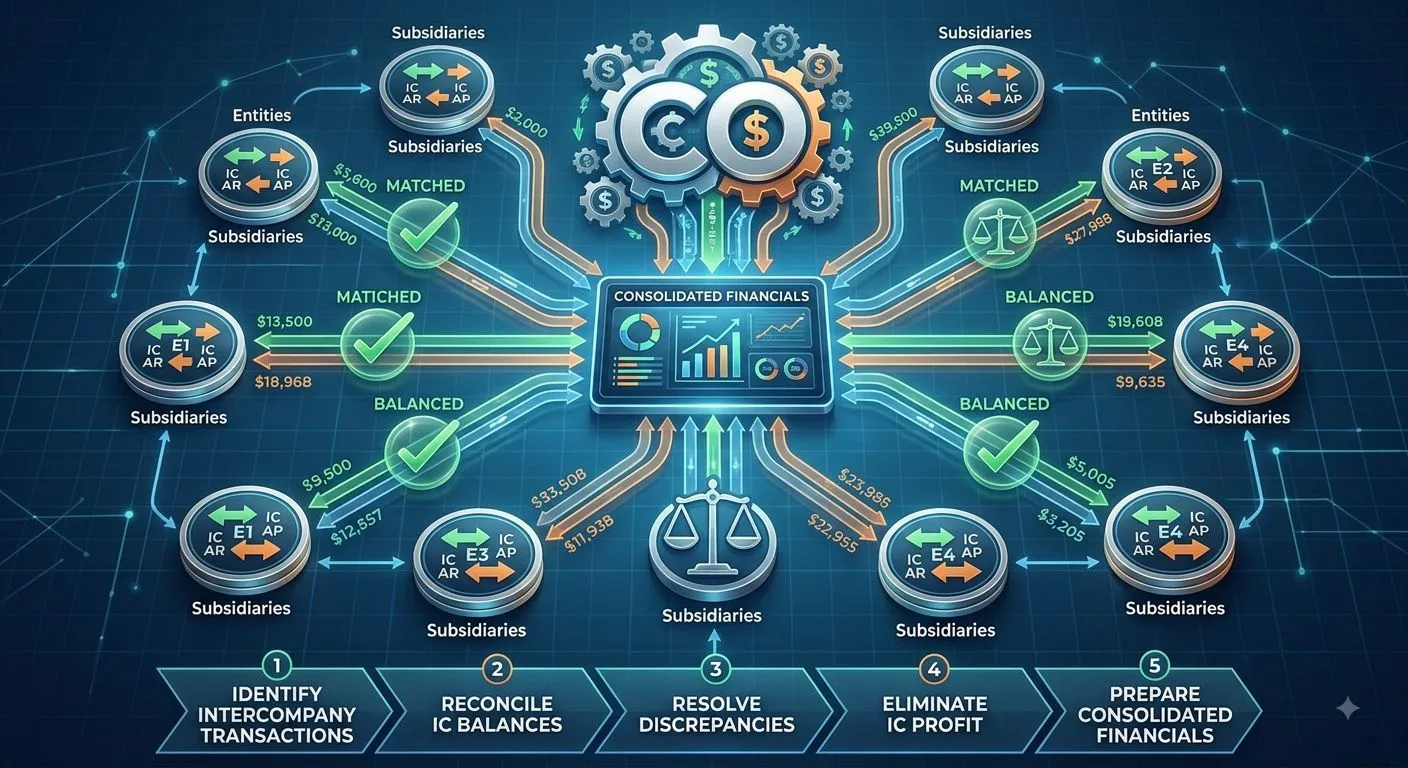
Intercompany payroll allocations across entities
Shared payroll costs often require intercompany allocation and reconciliation.
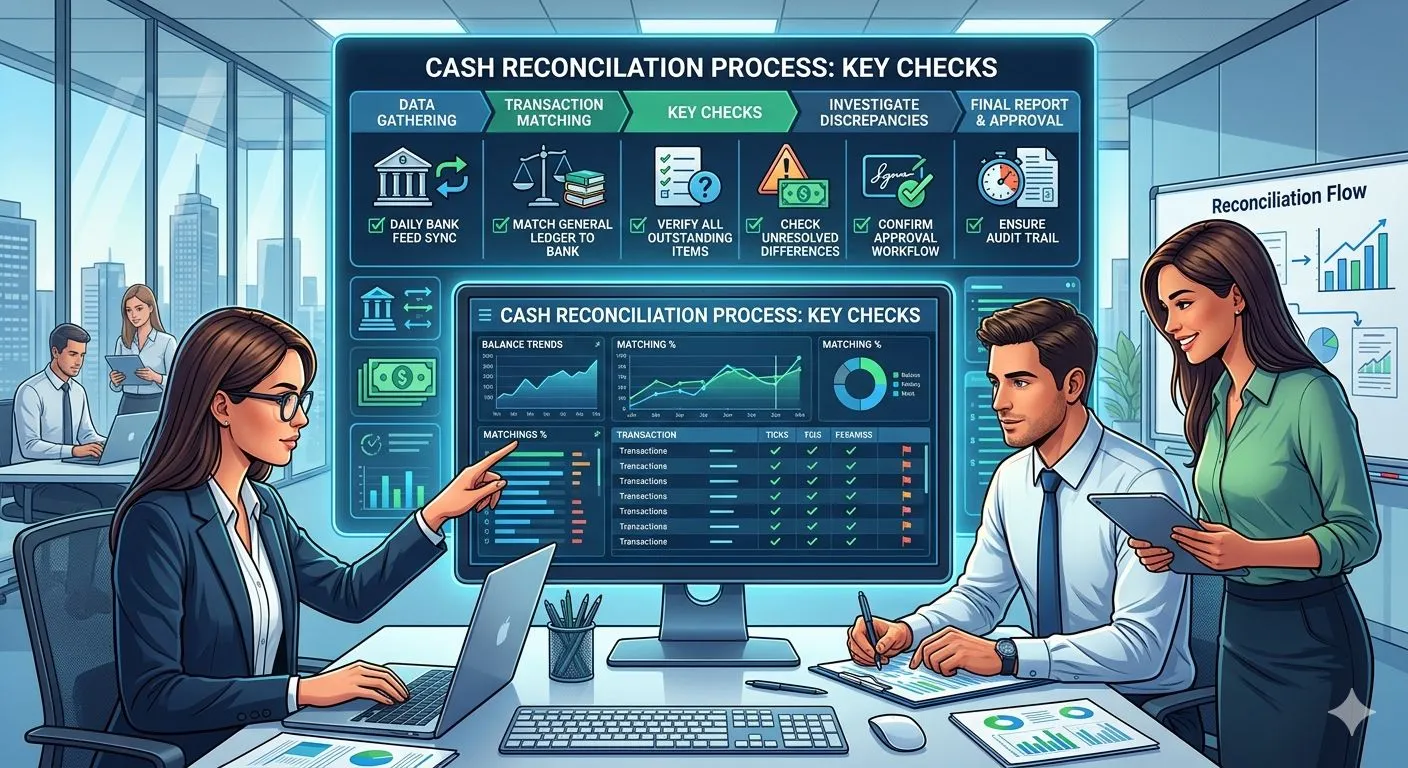
Organizations increasingly centralize payroll reconciliation workflows to improve visibility across payroll balances, approvals, accounting records, and compliance reporting. Many finance teams also adopt an account reconciliation platform to validate payroll balances, identify unresolved discrepancies, and maintain audit-ready payroll records across enterprise operations.































Sign in to leave a comment.