

Bringing a toy breed into your family completely changes how you manage a household. You quickly learn to watch your step, secure tiny gaps in the fence, and buy the smallest kibble available.
However, miniature size does not mean a miniature personality. Toy breeds are incredibly bold, often developing stubborn habits like endless alert barking, darting out of open doors, or lunging at much larger dogs.
When these behaviors become dangerous, owners often look for reliable remote communication tools. At Wiggle Kingdom, our entire behavioral practice revolves exclusively around dogs weighing under 15 pounds. We know that standard equipment is simply not built for miniature pets.
If you are researching Electric collars for small dogs, understanding the profound difference between generic hardware and micro-sized engineering is the absolute key to keeping your tiny companion safe.
📌 Key Safety Takeaways for Toy Breeds
- The Micro-Size Rule: The receiver unit resting on the neck must weigh under 1.5 ounces.
- Hardware Proportion: Standard steel prongs are dangerous for thin skin; demand rounded or silicone nodes.
- Strap Flexibility: Heavy nylon restricts breathing; prioritize a pliable 0.5-inch collar strap.
- Sensory Over Shock: True safety comes from prioritizing gentle vibration and auditory tones, not electrical static.
How Does Toy Breed Anatomy Differ From Large Dogs?
The biggest mistake the pet industry makes is treating a Chihuahua like a shrunken-down German Shepherd. Biologically, their neck structures are entirely different.
Large working breeds possess thick muscle layers, heavy fat deposits, and dense double coats. This natural padding absorbs the weight and pressure of standard training hardware effortlessly.
Conversely, toy breeds have paper-thin dermal tissue and virtually no muscular padding around their throats. Their windpipes are incredibly fragile, supported only by soft rings of cartilage that are highly susceptible to mechanical pressure.
The Hidden Dangers of Standard Equipment
When an owner purchases a cheap, mass-produced collar, they are often buying a large receiver attached to a slightly shorter strap. This creates a severe physical hazard.
A standard receiver is bulky and heavy. When placed on a five-pound dog, gravity constantly pulls the device downward. Every time the dog jumps off a couch or runs across the yard, that heavy unit swings and strikes their fragile windpipe.
Over months of repetitive impacts, the delicate cartilage rings in the throat can flatten out. This leads to chronic respiratory distress and contributes to a dangerous condition known as tracheal collapse.

What Actually Makes a Micro-Sized Collar Safe?
To protect your pet’s physical health, you must look for equipment specifically engineered from the ground up for petite anatomy.
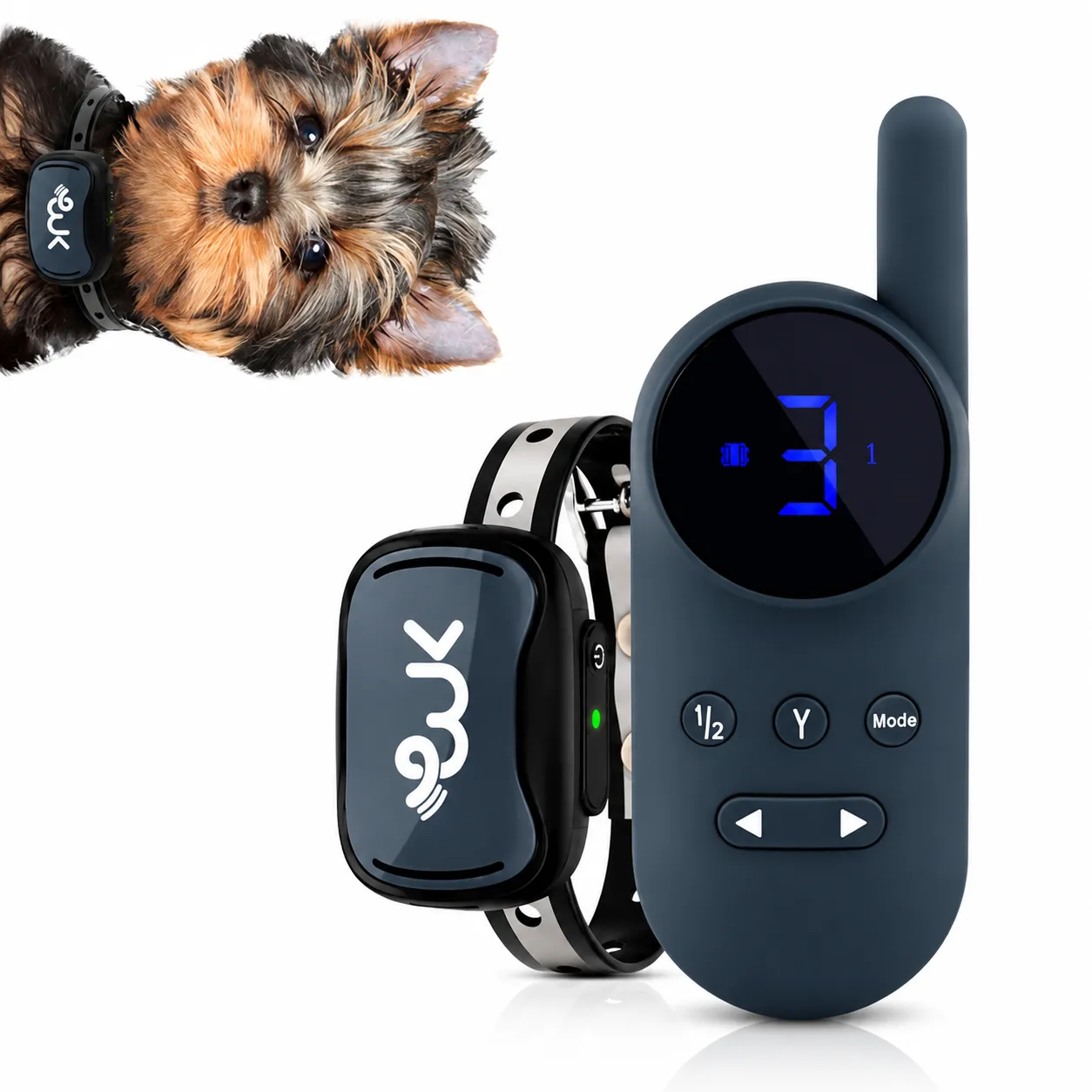
When searching for the Best shock collar for small dogs, weight must be your primary filter. A true micro-sized receiver will weigh no more than 1.5 ounces. It should feel virtually weightless in your hand, ensuring it stays comfortably in place without dragging.
Beyond weight, pay close attention to the contact points. Long, sharp steel prongs will easily puncture thin skin. Micro-collars utilize shortened, closely spaced, and often silicone-covered probes that distribute resting pressure safely.
Shifting Focus from Correction to Communication
Safety is not just about the physical hardware; it is also about the behavioral methodology. The era of using painful electrical pulses to scare a dog into submission is over.
Toy breeds possess incredibly sensitive, highly reactive nervous systems. A painful static correction often causes them to panic, worsening defensive aggression and destroying their trust in you.
Modern micro-collars rely almost entirely on sensory redirection. They utilize high-frequency audible tones and varied levels of gentle haptic vibration. This creates a painless "tap on the shoulder" that safely interrupts their fixation, allowing you to guide them back to positive behavior.
By insisting on micro-sized, vibration-first technology, you ensure that your tiny companion receives clear boundaries without ever sacrificing their physical safety or emotional well-being.



















Sign in to leave a comment.