

Bringing a new puppy into your home is an incredibly joyful experience, right up until the moment those needle-sharp teeth sink into your hands, ankles, and furniture. When daily play sessions leave you nursing painful scratches and torn clothing, the frustration can quickly push your patience to its absolute limit.
Desperate for a fast solution to stop the nipping, exhausted pet parents frequently search for a Shock collar for biting puppy behaviors in hopes of regaining peace in their home.
As a behavioral specialist at Wiggle Kingdom, my response to this idea is firmly rooted in developmental science: using electronic corrections on an infant dog is one of the most counterproductive choices an owner can make. It fundamentally misunderstands puppy biology, shatters early handler trust, and often transforms normal developmental mouthing into lifelong fear-based aggression.
Before introducing any correction hardware, you must understand the biological timeline of your puppy and learn how to navigate the teething phase safely.
Why Puppies Bite: Biology Over Misbehavior
Puppy biting is rarely an act of stubbornness or defiance. Instead, it is driven entirely by natural biological mechanisms. Between 8 and 20 weeks of age, puppies lose their deciduous milk teeth as permanent adult teeth push through their sensitive gums. Biting and gnawing provide physical counter-pressure that temporarily soothes severe oral ache.
Furthermore, puppies do not have hands to grasp objects. They explore textures, boundaries, and their environment almost entirely with their mouths. Within a litter, puppies mouth each other constantly during rough play. If one pup clamps down too hard, the other lets out a sharp yelp and abruptly stops playing. This social feedback loop teaches young dogs how to regulate the strength of their jaws—a process known as bite inhibition.
When an owner applies an electronic static correction to a biting puppy, the young dog lacks the cognitive capability to connect the sudden pain to their mouth pressure. Instead, they only perceive an unexpected, terrifying sensation in the presence of the human holding the remote. This creates hand-shyness and teaches the puppy that human interaction is unpredictable and threatening.
Managing the Biting Phase Safely
Rather than relying on electronic punishment, you can redirect natural puppy biting using consistent behavioral protocols that build trust:
- The Immediate Toy Redirection: Keep soft rubber chew toys or chilled teething rings within arm’s reach in every room of your house. The exact millisecond your puppy’s teeth touch skin or clothing, calmly slip the approved chew toy into their mouth. The second they bite down on the toy instead, shower them with calm praise.
- The "Reverse Time-Out": If your puppy bites during play, deliver a high-pitched "Ouch!", cross your arms over your chest, stand up, and look away completely for 15 to 30 seconds. By removing your physical attention, you teach the puppy that rough biting immediately shuts down all fun and play.
- Enforced Crate Rest: Puppies require between 16 and 18 hours of quality sleep every day. Overtired puppies behave remarkably like overtired toddlers—they become frantic, mouthy, and physically unable to regulate their impulses. A calm, structured nap in a comfortable crate often resolves an aggressive biting spell instantly.
The Six-Month Training Threshold
Remote training technology has a valid, highly effective place in modern dog training, but only once a dog reaches appropriate physical and cognitive maturity. The professional canine training community adheres to a universally accepted baseline: no electronic training collars should ever be used before a dog is at least six months old.
A dog must be mature enough to have a firm grasp of foundational commands—such as sit, down, and recall—before remote sensory tools are ever introduced. At that adolescent stage, remote devices serve as invisible safety lines for off-leash boundary management, never as a punishment tool for infant teething discomfort.
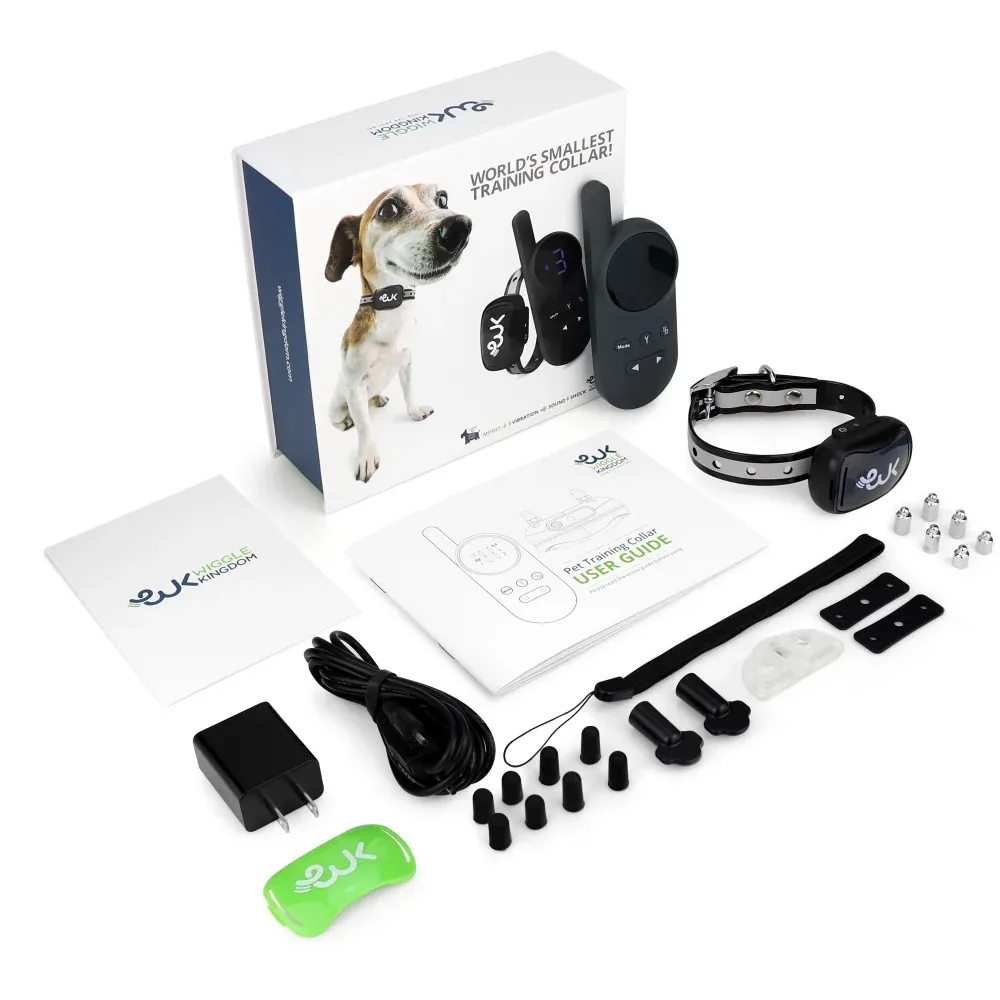
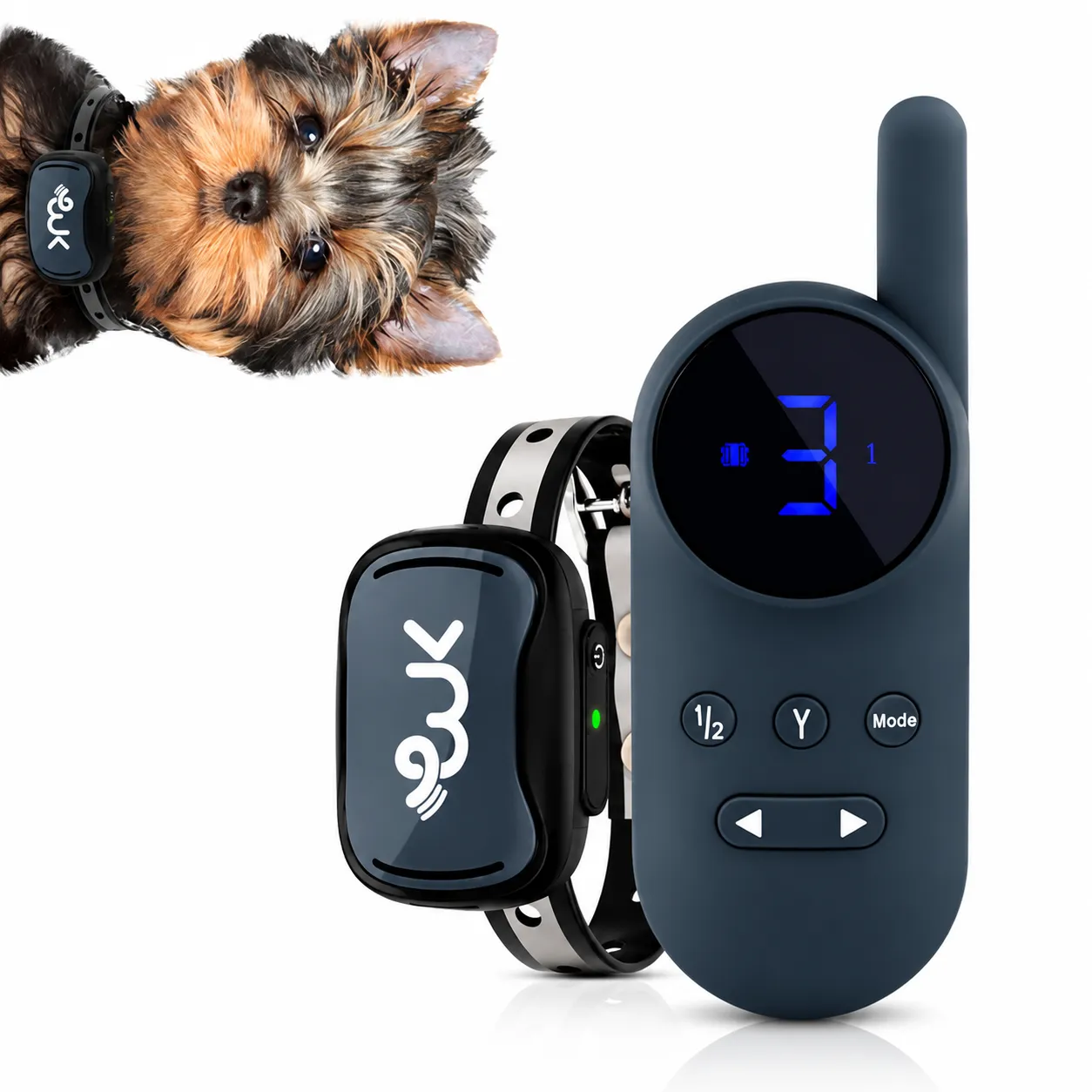
Once your puppy matures past six months and grasps these foundational commands, transitioning to an appropriately scaled Training collar for small dogs can give you reliable off-leash control. High-quality systems for small breeds rely on gentle micro-vibrations and lightweight engineering tailored to small frames.
Setting Your Young Dog Up for Long-Term Success
The first six months of a puppy’s life dictate their entire adult temperament. Rather than searching for electronic shortcuts to silence natural teething behaviors, the best approach is to embrace this developmental phase with patience, structured naps, and consistent toy redirection.
We always advise pet parents to view puppyhood as an irreplaceable investment rather than a problem to be fixed. Our advanced Wiggle Kingdom training tech will always be here waiting for you when your dog is fully grown and ready for off-leash adventures. By investing your time in positive, hands-on reinforcement right now, you guarantee that your dog will grow into a resilient, well-mannered, and deeply loyal companion for a lifetime.
























Sign in to leave a comment.