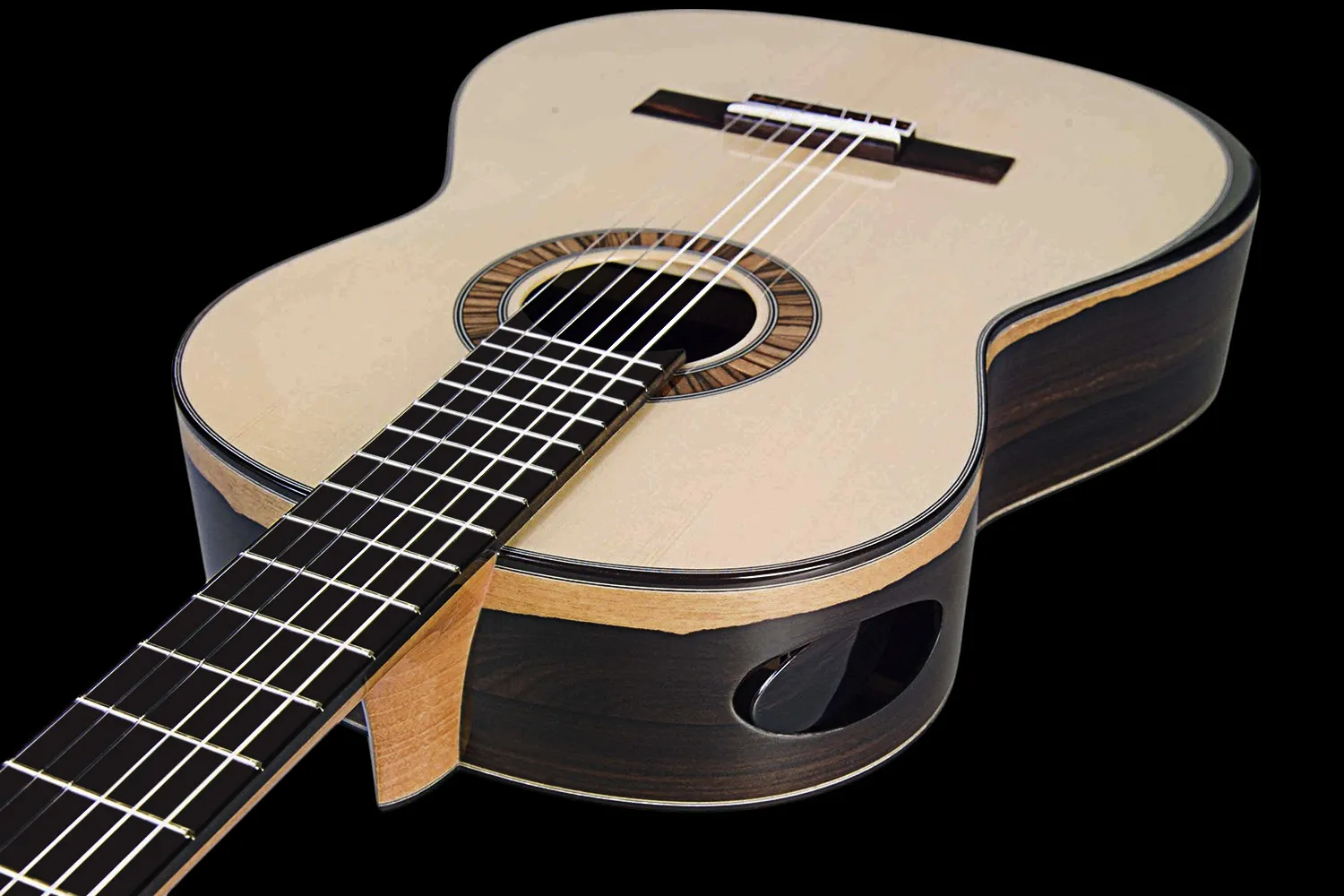

Have you ever picked up your classical guitar and noticed something feels different?
Maybe the strings sit a little higher than before. Maybe a familiar note does not ring the same way. Perhaps there is a small crack, a worn finish, or a bridge that does not look quite right.
And then the thought comes:
"Is it still worth repairing?"
I understand that question. A guitar is not just wood, strings, and glue. Over time, it becomes part of your musical life. The small marks on the finish, the places where your hands naturally rest, and even the changes in its voice become part of its journey.
A careful classical guitar repair in North Carolina is not about making an old instrument look new again. It is about protecting what makes that guitar yours.
The goal is simple: preserve the voice, structure, and character that the instrument has developed over time.
Repair Is About Understanding the Instrument First
A classical guitar responds to many small details working together.
The top wood, bracing, neck angle, bridge placement, and finish all influence how the guitar feels and sounds. That is why a repair is not simply about correcting a visible problem.
A thoughtful repair begins with questions:
- "Why did this happen?"
- "What changed in the guitar’s structure?"
- "How can we restore balance without changing its original personality?"
For example, a buzzing string may not always mean the fret is the problem. It could be related to humidity changes, neck movement, saddle height, or action adjustment.
A crack does not always mean the guitar is beyond saving. A loose bridge does not always mean the instrument has lost its strength.
Each situation tells a different story.
The Bridge Is Small, But Its Role Is Huge
Many players do not think about the bridge until something goes wrong.
But the bridge is one of the most important parts of a classical guitar. It transfers the vibration of the strings into the soundboard, allowing the guitar to produce its tone.
When the bridge begins to lift, separate, or weaken, it can affect:
- string tension and stability
- volume and projection
- tuning consistency
- the overall response of the instrument
A proper guitar bridge repair in North Carolina requires careful attention. The goal is not simply to glue the bridge back into place. The repair must respect the original placement, alignment, and connection between the bridge and the guitar top.
"The bridge carries the strings, but it also carries the voice of the instrument."
That is why small details matter.
A Guitar’s Finish Is More Than Decoration
The finish is often the first thing we notice.
A scratch catches our eye. A worn area reminds us of years of playing. A small crack in the finish can make us wonder if something deeper is happening.
- "Is my guitar damaged?"
- "Will this affect the sound?"
- "Can the original appearance be preserved?"
These are common concerns.
Guitar finish repair is not only about making the surface look cleaner. The finish protects the wood from changes in moisture, temperature, and everyday wear.
A careful approach focuses on matching the repair with the existing instrument. The goal is usually not to erase every sign of age. Those marks often represent the relationship between the musician and the guitar.
A well-loved instrument should still look like itself.
Knowing When Your Guitar Needs Attention
Sometimes the signs are obvious. Sometimes they are subtle.
You may notice:
- the action feels uncomfortable while playing
- the guitar does not stay in tune as it once did
- the tone feels weaker or different
- cracks or separations appear
- the bridge begins lifting from the top
- the finish shows damage beyond normal wear
Many players wait because they worry a repair will change their guitar.
"What if it never sounds the same again?"
That concern is completely understandable.
A skilled repair process focuses on maintaining the instrument’s original character. The best repairs are often the ones you barely notice because the guitar simply feels balanced again.
Preserving the Connection Between Player and Instrument
A classical guitar carries memories.
It may have been the guitar used for your first recital. The instrument that helped you practice through difficult pieces. The companion that sat beside you during quiet evenings when music was the only thing you needed.
Repair protects that connection.
A good classical guitar repair respects the work of the original builder while helping the instrument continue its journey. Whether it involves guitar bridge repair, guitar finish repair in North Carolina, or another structural adjustment, the purpose remains the same: keeping the guitar healthy, responsive, and ready for more music.
Because sometimes a guitar does not need to be replaced.
Sometimes it simply needs someone to understand what it has become.



























Sign in to leave a comment.