

In today’s digital landscape, audiovisual (AV) systems have evolved beyond traditional setups to embrace networked solutions that offer enhanced flexibility, scalability, and control. Networked AV systems utilize cutting-edge technologies like AV over IP to transmit high-quality audio and video signals over standard network infrastructures.
In this article, we will delve into the world of networked AV, explore its benefits, and provide valuable insights on setting up a networked AV system.
What Is Networked AV?
Networked AV refers to the integration of audio and video distribution systems with IP networks. It enables the transmission of AV signals in digital format over standard Ethernet networks, allowing for greater flexibility, scalability, and interoperability. With networked AV, users can easily distribute audio and video content to various endpoints, including displays, projectors, video walls, and even mobile devices, all connected to the same network.
AV over IP vs. Network AV: What’s the Difference?
AV over IP and network AV are often used interchangeably, but they have distinct differences. AV over IP specifically refers to the technology that enables the transmission of AV signals over IP networks. It utilizes encoding and decoding devices, such as the 4KIP200 from AV Access, to convert analog or digital AV signals into IP packets for distribution.
On the other hand, network AV encompasses the broader concept of integrating AV systems with IP networks. It involves the convergence of AV devices, network switches, and control systems to create a comprehensive AV solution that leverages the capabilities of the network infrastructure.
How Does a Networked AV System Work?
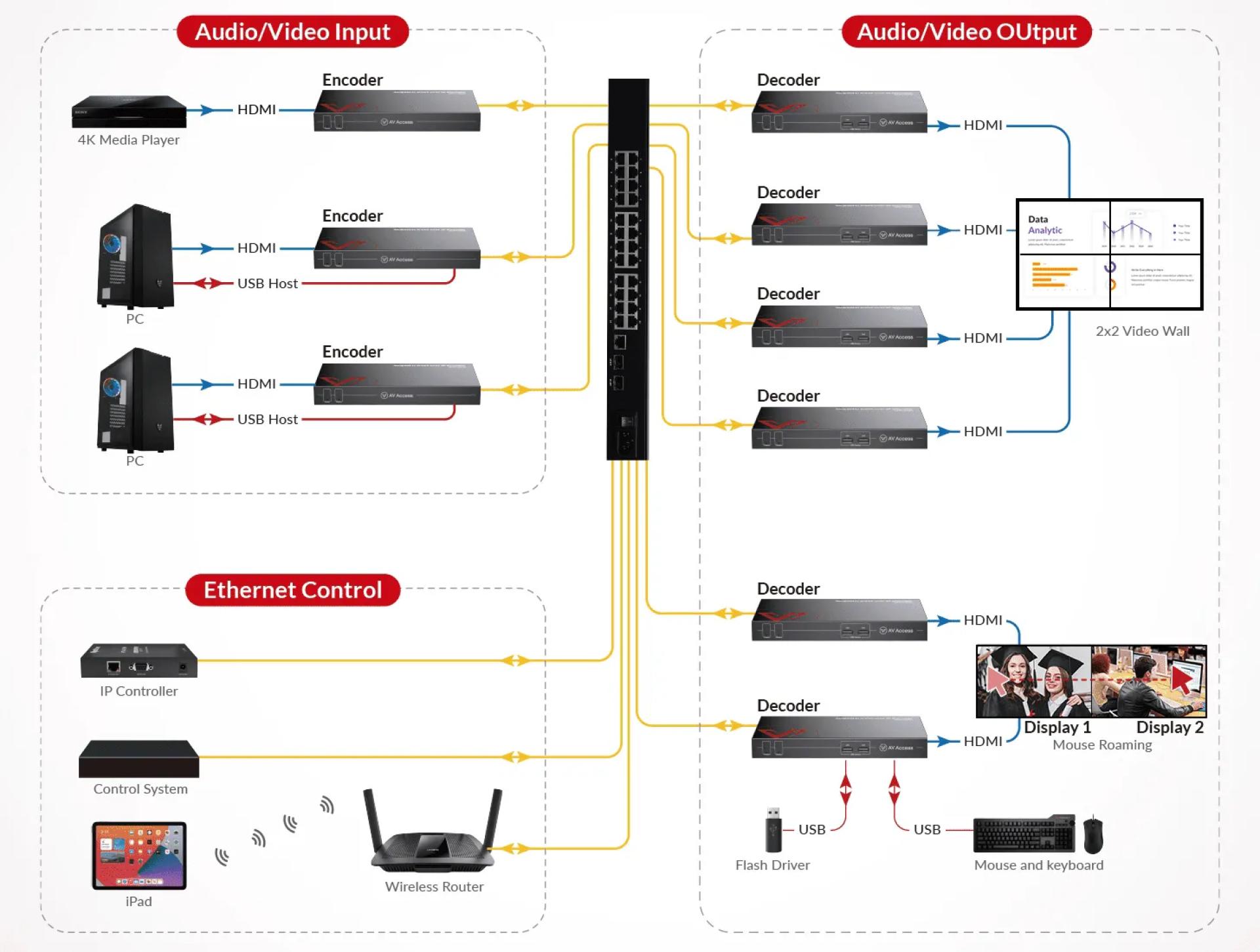
A networked AV system consists of several key components working together to transmit, distribute, and control AV content. Here’s a simplified overview of the process:
- Source Devices: These devices generate the audio and video content, such as cameras, computers, media players, or microphones. The content is typically in analog or digital format.
- AV Encoders: The AV encoders, like the 4KIP200E HDMI encoder from AV Access, encode the AV signals into IP packets, allowing them to be transmitted over the network. These encoders convert the analog or digital AV signals into a compressed digital format compatible with IP transmission.
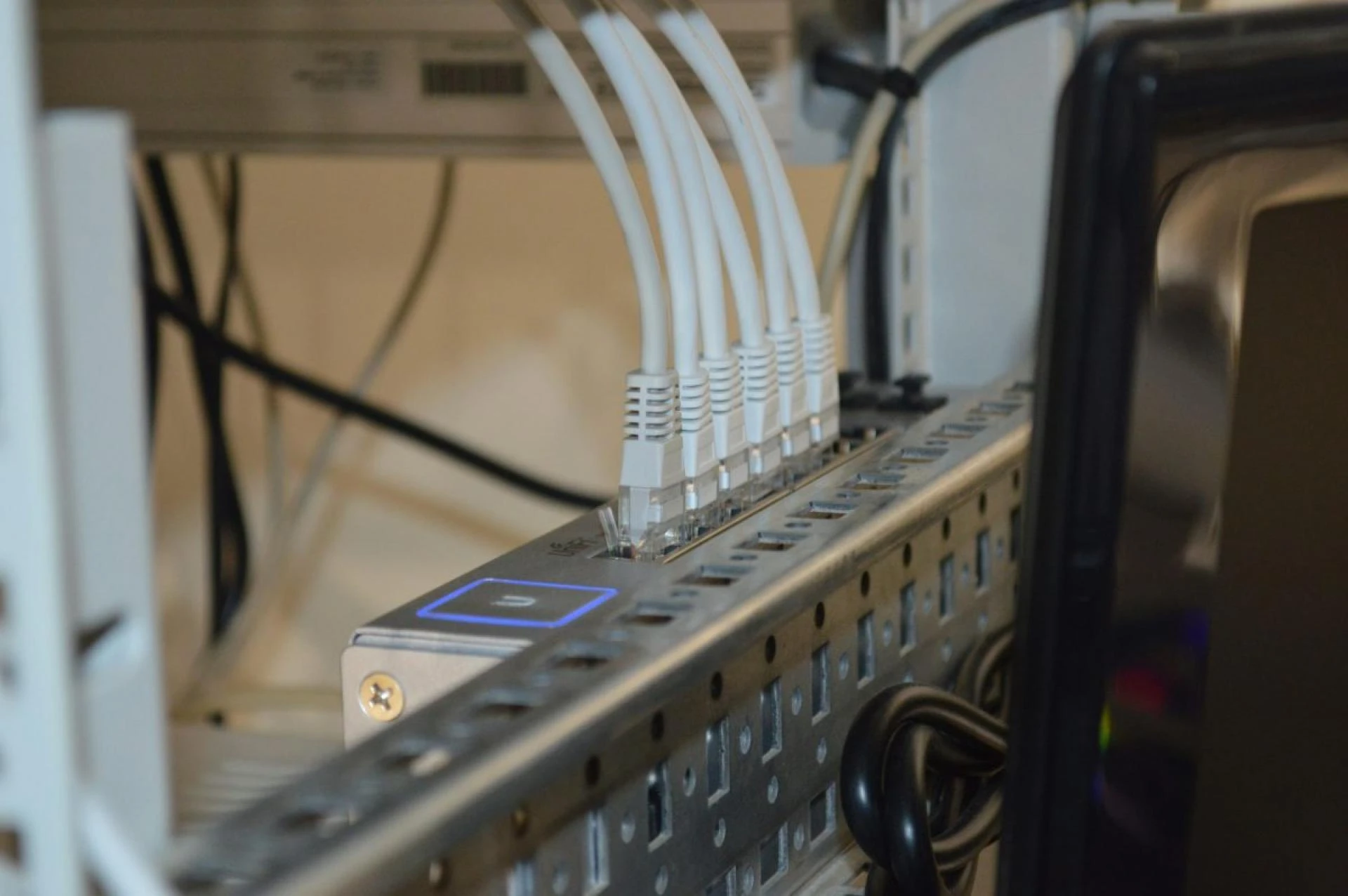
- Network Infrastructure: The network infrastructure, including switches and routers, facilitates the transmission of IP packets between the AV encoders and decoders, as well as other networked devices.
- AV Decoders: The AV decoders receive the IP packets and decode them back into audio and video signals. These signals can then be displayed or played back on various output devices, such as displays, projectors, or audio systems.
- Control Systems: Control systems, such as software-based controllers or hardware control panels, enable users to manage and control the networked AV system. They provide intuitive interfaces for switching sources, adjusting audiovisual settings, and creating video walls.
Benefits of a Networked AV Solution
Implementing a networked AV solution, such as AV Access 4KIP200, offers numerous benefits for both residential and commercial applications:
- Flexibility and Scalability: Networked AV systems can easily adapt to changing requirements and scale to accommodate additional sources, displays, or endpoints. The network infrastructure provides the necessary flexibility to distribute AV content wherever it’s needed.
- Centralized Management: With networked AV, centralized management becomes a reality. Users can control and monitor the entire AV system from a single interface, simplifying operation and troubleshooting.
- Cost and Cable Reduction: Networked AV eliminates the need for dedicated AV cabling, reducing installation costs and cable clutter. It leverages existing network infrastructures, saving both time and resources.
- Enhanced Collaboration: Networked AV systems enable real-time collaboration by allowing multiple users to share content, video conference, and collaborate on the same display or video wall.
- Future-Proof Technology: Networked AV solutions leverage IP networks, which are continually evolving. This future-proof technology ensures compatibility with emerging technologies and allows for seamless integration with other networked devices and systems.
How to Set up a Networked Audiovisual System?
Setting up a networked AV system involves several key steps:
- Assess Your Requirements: Determine your specific audio and video distribution needs, considering the number of sources, displays, and endpoints required.
- Design the System: Create a network topology that accommodates your AV devices, switches, and control systems. Ensure sufficient bandwidth for the desired audio and video quality.
- Choose Compatible AV Devices: Select AV encoders, like the 4KIP200, from AV Access, that are compatible with your audiovisual sources and network infrastructure.
- Configure Network Switches: Set up managed network switches to prioritize AV traffic and ensure optimal performance. Configure VLANs and Quality of Service (QoS) settings for efficient network utilization.
- Install AV Devices: Install the AV encoders and decoders at appropriate locations, connecting them to the network switches and audiovisual sources or displays.
- Configure Control Systems: Set up the control systems, such as software-based controllers or control panels, to manage and control the networked AV system. Configure source switching, audio settings, and other desired functionalities.
- Test and Fine-Tune: Perform thorough testing to ensure proper signal transmission, audiovisual quality, and control system functionality. Fine-tune the system as needed to optimize performance.
- Training and Maintenance: Provide training to users on operating the networked AV system. Establish a maintenance schedule to ensure the system remains up-to-date and performs reliably.
Summary
Networked AV systems offer a modern and versatile approach to audiovisual distribution, leveraging IP networks for seamless integration, scalability, and advanced control capabilities.
With solutions like AV over IP, such as the 4KIP200 from AV Access, users can enjoy the benefits of centralized management, flexibility, and cost reduction. By understanding the basics of networked AV, you can confidently design and set up a system that meets your specific audiovisual requirements and enhances collaboration and multimedia experiences.

Remember, the future of AV lies in the power of networks, and networked AV systems are leading the way towards a more connected and immersive audiovisual experience.
More Resources
You may be also interested in other blogs:
- KVM over IP: Everything You Need to Know Before Installation
- The Ultimate Ethernet Switch Selection Guide for AV Access HDMI over IP Solutions
- Traditional KVM Matrix vs. KVM over IP Solution: What’s the Difference?
- 4KIP200: A Focus for Commercial Integrator as AV over IP Solution
- 8 Benefits of Using a KVM over IP Switch in Your Server Room

























Sign in to leave a comment.