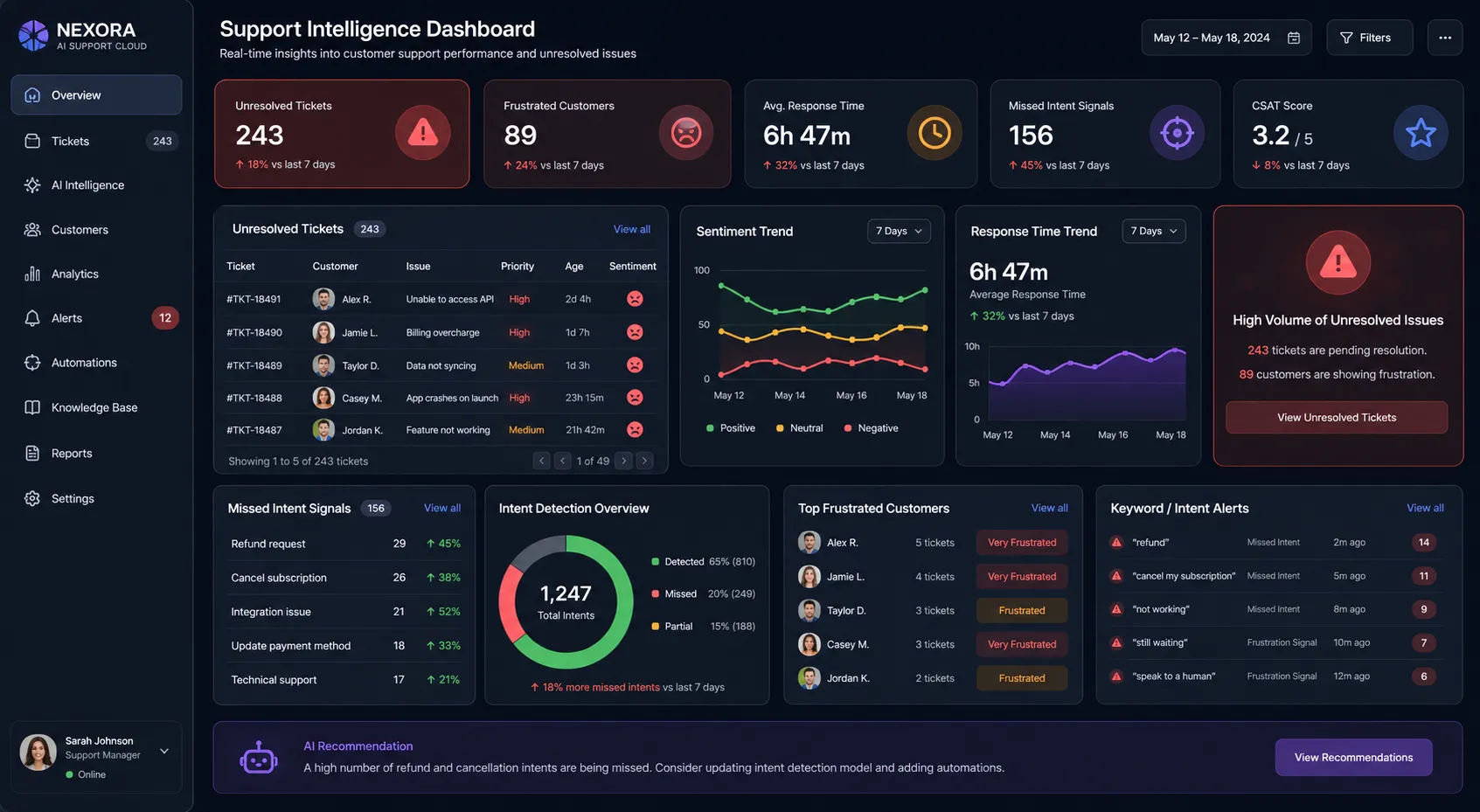

In customer support, what customers say and what they mean are often two very different things. This gap is where inefficiencies quietly build up. When businesses fail to understand customer intent, they don’t just miss an opportunity; they create operational drag that compounds over time.
Support teams may close tickets, resolve queries, and hit response time metrics, but if the underlying need is misunderstood, the interaction becomes a temporary fix rather than a real solution. Over time, this leads to repeat contacts, higher costs, and declining customer trust.
Understanding customer intent is no longer a “nice-to-have.” It is a core operational necessity that directly impacts efficiency, scalability, and customer satisfaction.
What Does Missed Customer Intent Actually Mean?
At its core, missing customer intent means failing to grasp the real reason behind a customer’s interaction.
Common scenarios include:
- A customer asking about pricing but actually comparing alternatives
- A complaint that is really about a broken experience, not a single issue
- A simple query masking frustration from repeated failures
Why this happens:
- Over-reliance on scripts instead of context
- Limited visibility into customer history
- Fragmented communication channels
- Lack of real-time understanding
When support systems treat conversations at face value, they miss deeper signals. And that’s where operational inefficiencies begin.
The Hidden Operational Costs of Missed Intent
Missing customer intent doesn’t just affect experience; it directly increases operational costs in ways that are often underestimated.
1. Increased Ticket Volume
When intent is misunderstood, customers return.
- Repeat queries inflate ticket counts
- Unresolved issues create follow-ups
- Customers switch channels, creating duplicates
This leads to an artificial increase in workload without actual growth in customers.
2. Longer Resolution Times
Support agents spend more time navigating unclear problems.
- More back-and-forth communication
- Additional internal escalations
- Delayed resolutions due to misalignment
Even a small delay per ticket scales into significant operational inefficiency.
3. Higher Support Costs
More time + more tickets = higher costs.
- Increased staffing requirements
- Higher training investments
- Operational strain during peak volumes
Instead of scaling efficiently, teams expand reactively.
The Experience Gap That Drives Cost
There is a direct link between missed customer intent and poor customer experience.
Key outcomes:
- Customers feel unheard
- Interactions become transactional
- Trust gradually erodes
When customers feel misunderstood, they lose confidence in the system. This leads to:
- Lower retention
- Negative word-of-mouth
- Increased churn risk
Operational cost isn’t just internal; it extends to lost revenue opportunities.
Why Traditional Support Models Struggle
Most traditional systems are not designed to capture customer intent effectively.
Key limitations:
1. Linear Workflows
Support flows follow predefined paths, not dynamic understanding.
2. Siloed Data
Customer history is scattered across tools, making context incomplete.
3. Keyword-Based Responses
Systems react to words, not meaning.
4. Reactive Approach
Support responds after issues arise, rather than anticipating intent.
This creates a cycle where teams are always catching up instead of staying ahead.
The Role of Context in Understanding Intent
To truly capture customer intent, context is everything.
What context includes:
- Past interactions
- Behavioral patterns
- Channel history
- Timing and urgency
Example:
A customer asking “Where is my order?” could mean:
- A simple tracking request
- Anxiety about a delay
- A potential cancellation risk
Without context, responses remain surface-level. With context, support becomes proactive and precise.
Breaking the Cycle with Smarter Systems
Modern solutions are shifting from reactive responses to intent-driven support.
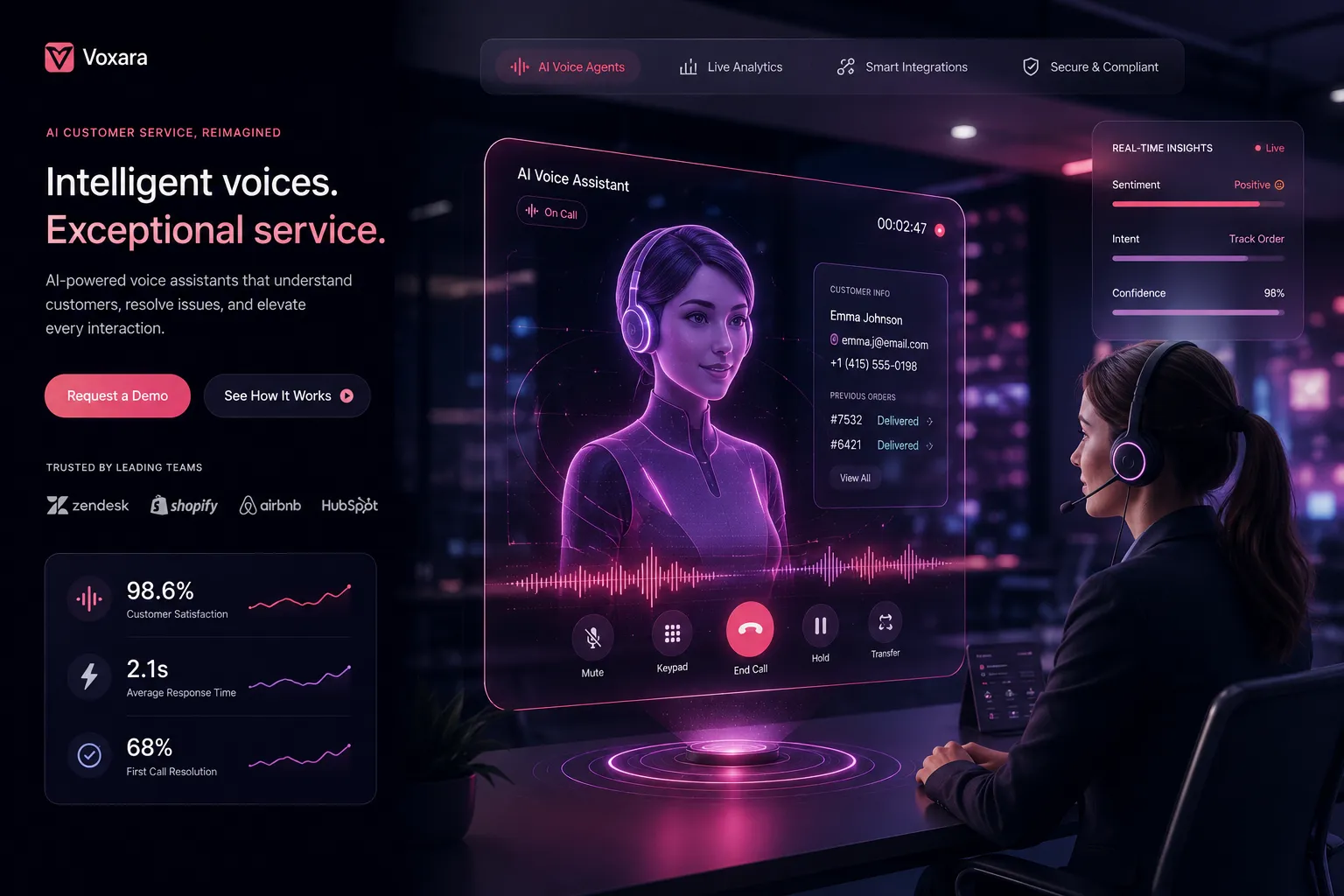
This is where technologies like Voice AI for Customer Support are transforming how businesses interpret conversations in real time.
What changes with intent-aware systems:
- Conversations become contextual, not scripted
- Responses adapt dynamically
- Issues are resolved at the root, not just the surface
Operational benefits:
- Reduced repeat tickets
- Faster resolution times
- Lower cost per interaction
- Improved agent productivity
Understanding customer intent at scale allows teams to operate more efficiently without increasing resources.
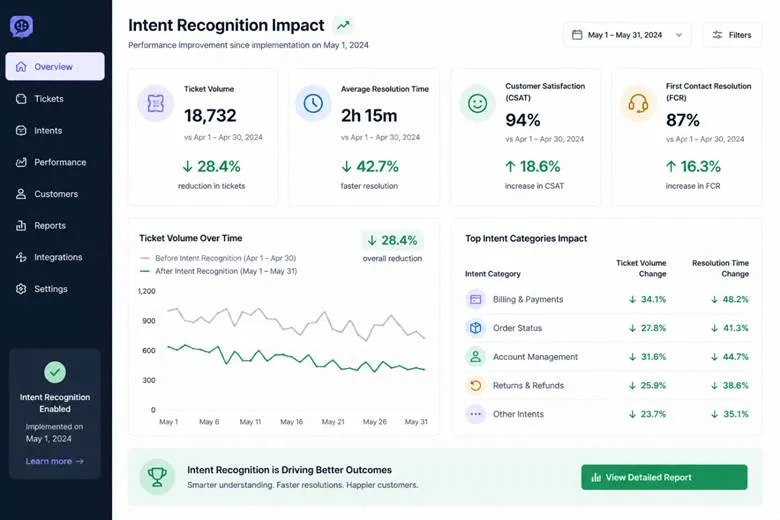
Measuring the Impact of Intent Awareness
To understand the operational value, businesses must track the right metrics.
Key indicators include:
- First Contact Resolution (FCR)
- Average Handling Time (AHT)
- Ticket Reopen Rate
- Customer Satisfaction (CSAT)
When customer intent is correctly identified:
- FCR improves significantly
- AHT decreases
- Reopen rates drop
- CSAT increases
These are not just experience improvements; they are direct cost optimizations.
From Efficiency to Strategic Advantage
Understanding customer intent is no longer just about support; it’s about business strategy.
Organizations that get this right:
- Scale without proportional cost increases
- Deliver consistent customer experiences
- Reduce operational friction across teams
Long-term advantages:
- Better product insights from customer signals
- Improved decision-making
- Stronger customer relationships
Intent-driven systems turn support from a cost center into a value driver.
Conclusion
Missed customer intent is not just a communication gap; it is an operational liability. Every misunderstood interaction adds friction, increases costs, and weakens the overall support system. What seems like a small disconnect at the conversation level often scales into significant inefficiencies across the organization.
Businesses that prioritize understanding intent are not just improving support, they are building smarter, more resilient operations. By aligning responses with real customer needs, they reduce waste, improve satisfaction, and create systems that scale with clarity instead of complexity.
In a landscape where efficiency and experience go hand in hand, understanding customer intent is no longer optional. It is the foundation of sustainable, cost-effective support.
FAQs
1. What is customer intent in support?
Customer intent refers to the underlying reason or goal behind a customer’s interaction, beyond just the words they use.
2. Why is missing customer intent costly?
It leads to repeat interactions, longer resolution times, and increased operational expenses.
3. How can businesses identify customer intent better?
By using contextual data, conversation analysis, and AI-driven systems that interpret meaning, not just keywords.
4. Does understanding intent improve customer satisfaction?
Yes, because customers feel understood and receive more relevant, faster solutions.
5. Can intent recognition reduce support costs?
Absolutely. It lowers ticket volume, improves efficiency, and reduces the need for additional resources.





















Sign in to leave a comment.