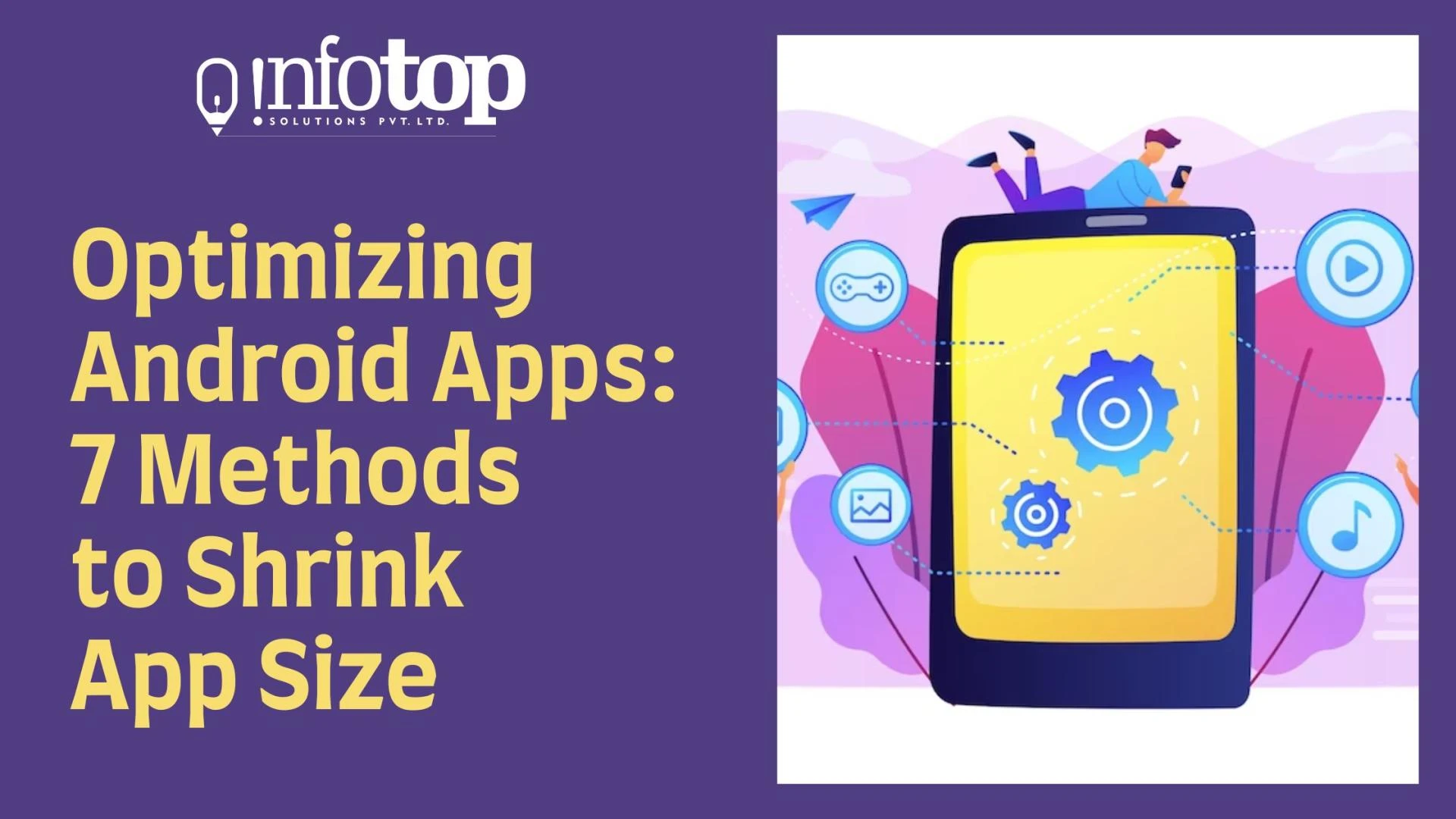

In today's dynamic landscape of Android app development, optimizing the size of your applications has become a crucial endeavor. As users increasingly prioritize efficiency and quick downloads, mastering the techniques to reduce Android app size is paramount for developers aiming to deliver seamless user experiences. This holds particularly true for Android app development company striving to create impactful applications that not only meet functionality expectations but also cater to the contemporary demand for lightweight downloads. In this guide, we will explore proven strategies and best practices that empower Android app development companies to efficiently minimize app sizes without compromising on quality or performance.
Ways to Reduce Android App Size
1. Optimize Images and Resources
To optimize images and resources in your Android app, focus on reducing their file sizes while maintaining quality. Start by choosing the right image format for each use case. For example, consider using vector graphics for icons and simple illustrations as they can be scaled without losing clarity and occupy less space compared to raster images. For photographs and more complex visuals, compress them using modern image compression tools to strike a balance between quality and size.
Next, employ techniques like image minification and compression. You can use tools or libraries that automatically reduce the size of images without noticeable visual degradation. Additionally, consider utilizing WebP as an image format, which can provide higher compression efficiency compared to formats like PNG or JPEG.
For other app resources, such as XML layout files and resource files, eliminate any redundancies and unused items. This involves removing any elements that are no longer in use in your app's layouts, styles, and drawables. This not only trims down the app's size but also helps in keeping the codebase clean and maintainable.
2. Proguard/R8
Proguard and R8 are powerful tools used to optimize and secure your Android app's code. Proguard, in particular, is a code shrinking and obfuscation tool. When you enable Proguard during the build process, it analyzes your app's codebase and removes any unused classes, methods, and fields. This helps significantly reduce the size of your app by eliminating code that isn't actually needed for the app to function properly.
Moreover, Proguard also obfuscates your code, which means it renames classes, methods, and variables to make them harder to understand for anyone trying to reverse-engineer your app. This enhances the security of your code by making it challenging for malicious users to decipher its logic and functionality. R8, on the other hand, is a more modern replacement for Proguard that combines both code shrinking and obfuscation functionalities, making the build process more efficient and seamless. It further enhances app size reduction and code security while offering improved performance during the build phase. In essence, using Proguard or R8 is like cleaning up unnecessary clutter and adding an extra layer of protection to your app's code, leading to a leaner, safer, and more efficient application.
3. Only Include Necessary Libraries
When it comes to trimming down the size of your Android app, a significant approach is to be discerning about the libraries you incorporate. Instead of loading up your app with a slew of libraries, opt for a more judicious selection that caters precisely to your app's functional requirements. Unused libraries can substantially inflate the app's size, leading to longer download times and more storage consumption on users' devices.
To execute this strategy effectively, start by scrutinizing each library's purpose and relevance to your app's core functionality. Avoid a "just in case" mentality, where you integrate a library preemptively for future features that might never come to fruition. Regularly audit your codebase to identify any redundant or obsolete libraries that are no longer serving a purpose. By focusing on essential libraries only, you'll not only reduce the app's size but also enhance its performance and maintainability, leading to a more streamlined and efficient user experience.
Also Read - How Can Outsourcing Android Mobile Application Development Help Your Business?
4. Dynamic Delivery
Dynamic Delivery is an advanced technique for reducing the size of your Android app by delivering only the necessary resources to each user's device. It works by breaking down your app into smaller, modular pieces, allowing users to download and install only the components they need. This not only helps in minimizing the initial download size but also ensures that users get an app that is tailored to their device's specifications.
With Dynamic Delivery, you create an Android App Bundle, which is a publishing format that includes your app's compiled code and resources in a more efficient manner than a traditional APK. When a user installs your app, the Play Store's Dynamic Delivery system examines their device's characteristics, such as screen size, language, and hardware architecture. It then generates a customized APK that contains only the relevant components for that specific device.
For instance, if your app includes high-resolution images, the Dynamic Delivery system will ensure that only the images compatible with the user's screen resolution are delivered. This not only optimizes the user's experience but also reduces the app's size on their device. In essence, Dynamic Delivery is a powerful tool for developers to deliver a tailored app experience while significantly decreasing the overall app size, resulting in faster downloads and happier users.
5. Remove Unused Resources
Removing unused resources involves carefully going through your Android project and identifying any files that are no longer being utilized by your app's code. These resources can include images, layouts, XML files, strings, and more. Over time, as you make changes to your app's design and functionality, certain resources might become obsolete or redundant. These unused resources, if not removed, can contribute significantly to the app's size, leading to a larger download and installation size for users.
To tackle this, start by conducting a thorough audit of your project's resources. Inspect your codebase to identify which resources are being referenced and actively used. Any resource that isn't directly referenced in your code or contributes to the app's functioning can be considered for removal. Once identified, safely delete these resources from your project. This can help trim down the app's overall size, making it more efficient to download and run. However, it's essential to exercise caution and keep backups before making extensive resource deletions, as removing vital resources could impact your app's functionality and appearance. Regularly reviewing and cleaning up unused resources should be part of your app maintenance routine to ensure your app remains lean and responsive over time.
6. Compressed Audio and Video
Compressing audio and video files is a vital strategy in minimizing your Android app's size while maintaining media quality. When integrating multimedia elements into your app, these files can be quite substantial, leading to bloated app sizes that discourage downloads and consume device storage. To tackle this, utilize compression techniques that efficiently shrink the size of audio and video content.
Compression can be achieved through various codecs and formats designed to maintain playback quality while reducing the file size. For audio, codecs like AAC (Advanced Audio Codec) and Opus offer excellent compression ratios without compromising auditory experience. Similarly, for videos, codecs like H.264 and H.265 (HEVC) are popular choices, as they pack high-quality visuals into smaller file sizes. Furthermore, adjusting parameters like bit rate and resolution during the compression process enables fine-tuning the balance between size and quality. By embracing these techniques, you can ensure your app's media-rich components remain engaging without overburdening users' devices.
7. Opt for Web Content
Consider utilizing web content within your app to help reduce its size and improve performance. Instead of embedding large images, videos, or other resource-heavy elements directly into your app's package, you can dynamically fetch these elements from a remote server when needed. This approach is particularly useful for content that doesn't need to be available offline at all times.
By loading content from the web, your app's initial download size can be significantly reduced. Users will only need to download the core components of your app during installation. This can lead to faster downloads and a smoother user experience, especially for users with limited storage space or slower internet connections.
Furthermore, relying on web content allows you to update and modify assets without requiring users to update the entire app. This can be advantageous for scenarios where you need to quickly fix an issue or update content. However, it's important to strike a balance – while web content can minimize app size, ensure that critical functionality isn't dependent on an internet connection, as this could negatively impact user experience in certain situations.
Conclusion -
In the realm of android app development services, mastering the art of optimizing app size stands paramount. The meticulous implementation of these proven methods for shrinking app size can significantly enhance user experience and overall app performance. By optimizing images and resources, utilizing Proguard/R8 for efficient code, being selective with libraries, embracing dynamic delivery, discarding unused resources, compressing media files judiciously, and employing web content when suitable, developers can craft leaner, more agile apps. Through this strategic approach to app size reduction, android app development services can ensure that their creations resonate seamlessly with users while navigating the constraints of varying device capabilities and network conditions.





















Sign in to leave a comment.