

In today’s digital-first world, information moves faster than ever—and so do threats. Terrorist networks, extremist groups, and organized criminal actors increasingly rely on online platforms to communicate, recruit, fund operations, and spread ideology. This is where OSINT (Open Source Intelligence) becomes a powerful and ethical tool for modern security operations.
OSINT for use case counterterrorism and OSINT for use case investigation allow government agencies, law enforcement, and intelligence teams to identify risks early, connect hidden digital footprints, and make informed decisions using publicly available data. Rather than relying solely on classified sources, OSINT helps uncover intelligence that already exists in plain sight.
Understanding OSINT in a Modern Security Context
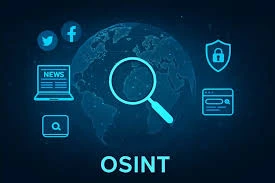
Open Source Intelligence refers to the collection and analysis of information from publicly accessible sources. These include social media platforms, news outlets, forums, websites, public records, video platforms, and even satellite imagery.
Unlike traditional intelligence methods, OSINT is:
- Legal and ethical when conducted properly
- Scalable across regions and languages
- Useful for both proactive threat detection and reactive investigations
For counterterrorism and investigation use cases, OSINT bridges the gap between digital behavior and real-world action.
OSINT for Use Case Counterterrorism
Counterterrorism efforts depend heavily on early detection and situational awareness. Terrorist groups often leave digital traces long before an incident occurs. OSINT enables agencies to identify these signals without infringing on privacy or civil liberties.
Key Applications in Counterterrorism
Monitoring extremist content
OSINT tools help track public posts, videos, and discussions that promote extremist ideology, radicalization narratives, or propaganda.
Identifying online recruitment patterns
Terrorist organizations frequently use open platforms to attract followers. OSINT can detect recruitment messaging, hashtags, and coordinated campaigns.
Network and association analysis
By analyzing public interactions, investigators can map relationships between individuals, accounts, and organizations linked to extremist activity.
Threat trend analysis
OSINT supports long-term analysis of emerging threats, shifts in rhetoric, and regional risk indicators.
Event-based intelligence
Public posts, videos, and live streams often provide early warning signals related to protests, attacks, or coordinated actions.
By combining these insights, OSINT for use case counterterrorism enables intelligence teams to move from reactive response to proactive prevention.
OSINT for Use Case Investigation
Beyond counterterrorism, OSINT plays a critical role in criminal, cyber, and financial investigations. Investigators increasingly rely on open data to validate leads, uncover identities, and establish timelines.
How OSINT Supports Investigations
Digital footprint analysis
Every online action leaves a trace. OSINT helps investigators analyze usernames, email patterns, profile images, and public activity across platforms.
Timeline reconstruction
Public posts, comments, check-ins, and uploaded media can be used to build accurate timelines of events.
Identity resolution
OSINT allows investigators to connect aliases, accounts, and online personas to real individuals using open data correlations.
Evidence enrichment
Open-source data strengthens existing evidence by providing context, corroboration, and behavioral insights.
Cross-platform intelligence
Criminal activity rarely stays on one platform. OSINT tools aggregate data from multiple sources for a unified investigative view.
For agencies handling complex cases, OSINT for use case investigation improves accuracy while reducing dependency on intrusive or resource-heavy methods.
Why OSINT Matters for Government and Law Enforcement
OSINT has become essential not because it replaces traditional intelligence, but because it complements it. When used responsibly, it enhances operational efficiency and decision-making.
Key benefits include:
- Faster intelligence collection
- Reduced investigation costs
- Legal compliance and transparency
- Broader situational awareness
- Improved inter-agency collaboration
With growing volumes of public data, the challenge is no longer access—but analysis. Advanced OSINT platforms help turn raw data into meaningful intelligence.
Ethical and Legal Considerations
Effective OSINT operations must always follow legal and ethical guidelines. Responsible use includes:
- Collecting only publicly available data
- Avoiding unauthorized access or data manipulation
- Maintaining proper documentation and audit trails
- Ensuring analyst training and oversight
Ethical OSINT builds trust while delivering actionable insights.
The Future of OSINT in Counterterrorism and Investigation
As digital ecosystems continue to evolve, OSINT will play an even greater role in intelligence-led operations. Artificial intelligence, multilingual analysis, and automation are making it possible to detect threats faster and with greater accuracy.
For counterterrorism units and investigative teams, OSINT is no longer optional—it is a foundational capability for modern security operations.
Frequently Asked Questions
What is OSINT for use case counterterrorism?
OSINT for use case counterterrorism involves collecting and analyzing publicly available data to identify extremist activity, terrorist networks, recruitment efforts, and emerging threats before they escalate.
How is OSINT used in investigations?
OSINT for use case investigation helps law enforcement analyze digital footprints, validate leads, reconstruct timelines, and gather contextual intelligence from open sources.
Is OSINT legal to use?
Yes, OSINT is legal when it involves only publicly accessible information and follows applicable laws, regulations, and ethical standards.
Can OSINT replace traditional intelligence methods?
No, OSINT complements traditional intelligence methods. It enhances situational awareness and provides additional context but works best alongside classified and human intelligence.
Who uses OSINT for counterterrorism and investigation?
Government agencies, law enforcement, intelligence organizations, cybersecurity teams, and defense institutions commonly use OSINT for these purposes.






























Sign in to leave a comment.