
Software testing seems simple enough, but QA teams know it's hardly ever a smooth ride. Factors like strict release cycles, complex applications, and the expectations for quality introduce complications to every test cycle. Manual testing only complicates the issue; it is repetitive, time-consuming, and it often introduces gaps in coverage, all of which ultimately slow releases and increase the chance that defects will reach the production environment.
Automated testing tools change the game in these circumstances. Automation eliminates the repetitive tasks and provides a higher level of test coverage, providing QA teams with the ability to find problems earlier, be more efficient, and ultimately release with peace of mind. However, automation is only part of the equation; teams also need to manage the results, ensure traceability, and manage the increase in test volume.
In this blog, we will define some of the biggest QA challenges that automation solves and how AIO Tests inside Jira enhances automation to achieve true end-to-end value.
The Top QA Challenges Automation Can Solve
1. Extended Periods of Testing That Extend Release
The Reality: As applications grow, regression testing grows. What used to take hours for regression testing now could take days, leading to longer interruptions with product releases.
Automation's Resolution: Automated suites can exercise regression tests in parallel on devices and browsers, often reducing the time of execution from days to hours, or even minutes when connected to a CI/CD pipeline.
2. Human Error in Repetitive Testing
The Reality: Manual testers can overlook all the steps or may interpret the results differently, and dealing with regression testing in repetitive tasks can magnify human error.
Automation's Resolution: Scripts that are predefined ensure the testing is done the same for every run. With complete logs and screenshots, you have a detailed explanation to the results, taking the person out of the guess work.
3. Uncertain Coverage of Testing for Devices and Environments
The Reality: It is unreasonable that you can conduct testing for multiple OS, browser, and devices, this only delays and compromises the QA processes.
Automation's Resolution: Automated platforms allow you to be able to conduct testing in parallel on dozens of environments for coverage on edge cases and performance conditions.
Automated platforms can also improve on the repetitive semi-consolidating of test scripts that are reusable, scalable, and able to conduct testing in multiple OS, and for load, stress, and API testing at levels well beyond manual testing merit.
4. Regression Challenges in Each Sprint
The Challenge: Often within sprints, teams run large sets of tests, which can create a bottleneck and force teams to skip “non-critical” regression tests.
Automation’s Solution: Automated regression packs can run overnight or on-demand, providing developers feedback almost immediately about whether or not their new code broke any of the previous functionality.
5. Hard to Scale QA as Products Scale
The Challenge: More features equals exponentially more tests but you cannot always scale the manual QA teams.
Automation’s Solution: Test scripts can be reusable and scalable which provides load, stress, API testing at levels that manual efforts cannot keep up with - all while integrating with DevOps workflows.
Why Automation is Only Part of the Solution
Frameworks like Cypress, JUnit, TestNG and Cucumber do the job of executing automated tests quickly and consistently. However, once it is complete the team is often stricken with additional challenges - managing results, coverage tracing and verifying traceability across multiple projects. Without proper test management the result of automation testing can be in disarray with little visibility.
This is where AIO Tests comes in.
How AIO Tests Enhances QA Automation
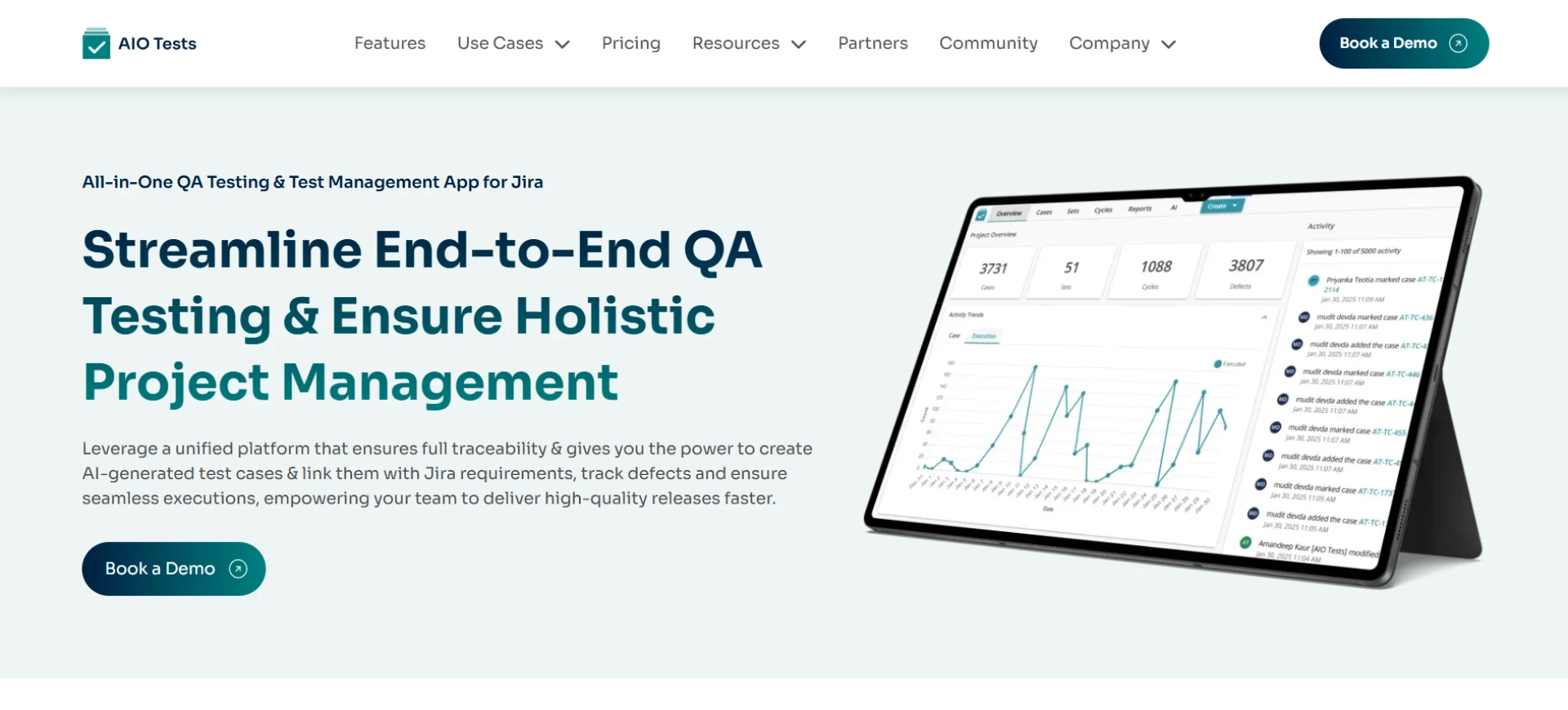
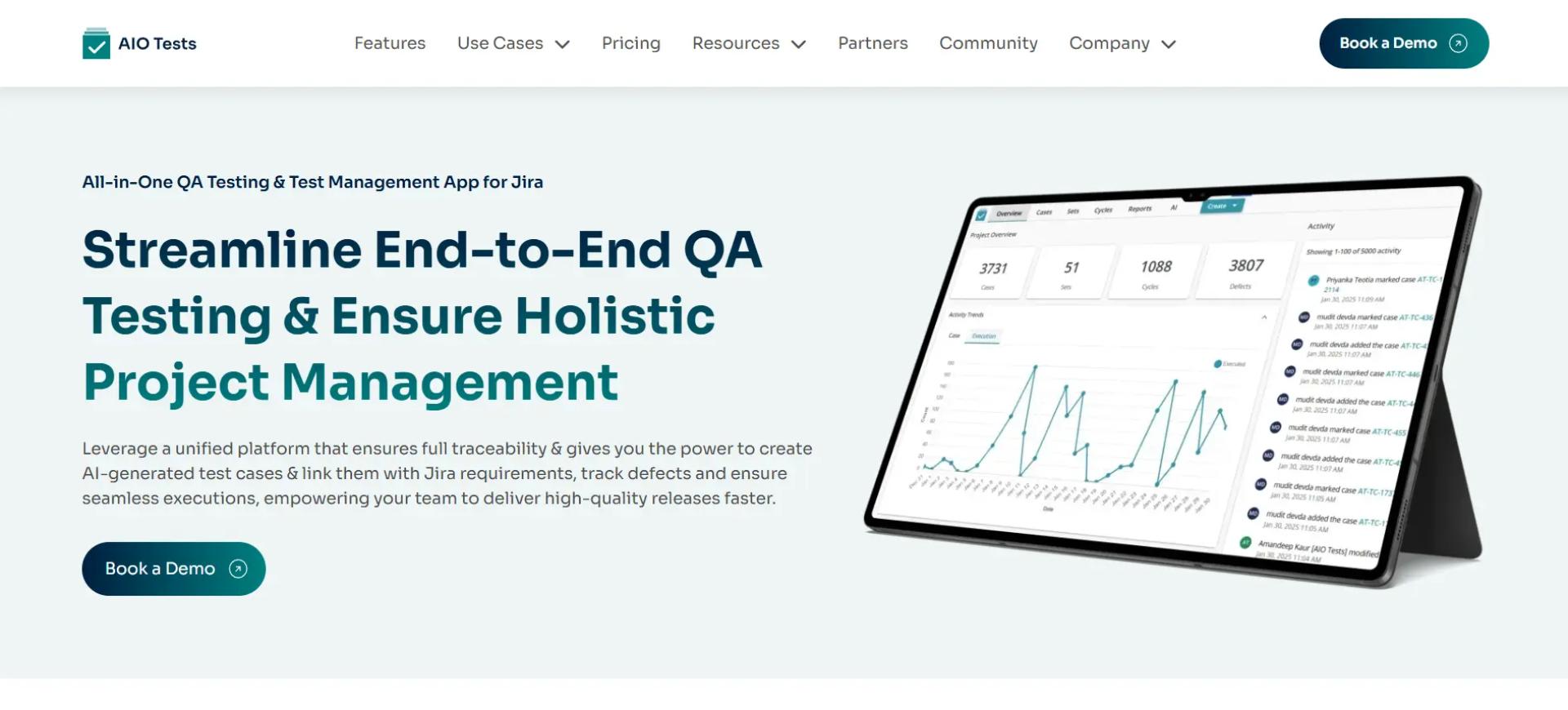
AIO Tests does not replace automation tools; it unifies tools in Jira. AIO Tests serves as a hub that places test planning, execution, and reporting in one location, so teams can have visibility and traceability across the QA process.
AIO Tests Key Features
- Broad Framework Support: Compatible with Cucumber, JUnit, TestNG, NUnit, Robot Framework, Cypress, Playwright, Postman (Newman), Katalon Studio, etc.
- Seamless CI/CD Integration: Capturing results from Jenkins, Azure DevOps, GitHub Actions, Bitbucket, and other pipelines.
- Unified Test Management: Connects Jira requirements, test cases, executions, and defects in one workflow.
- Advanced Reporting: Provides 20+ built-in reports, dashboards, and metrics such as automation coverage, burndown charts, and defect trends.
- AI Features: Accelerates preparation of tests using AI-driven test case creation, editing, automation tagging and bug reporting
Overcoming Common Automation Issues with AIO Tests
Are test results all over the place between tools?
AIO Tests bring results from multiple frameworks all into Jira.
Unsure of your automation coverage?
Visual dashboards show completion, ownership, and upcoming work.
Is CI/CD feedback getting lost in the pipeline?
We bring result tracking back into Jira, so builds stay in context.
Is your regression suite too complex?
Group tests together by folders, cycles, and versions for easy interface management
Is reporting becoming a burden on bandwidth?
Built-in dashboards and scheduled reports communicate updates to stakeholders without manual processes.
Conclusion
It is obvious that manual testing cannot support modern software needs - regression cycles take too long, human errors exist, and coverage is a limiting factor. Automation can help improve efficiency and scale, but can still leave automation outcomes scattered or challenging to track.
The real value comes when automation is supported with a strong test management tool, which is where AIO Tests comes into play. It provides you with that connection, uniting manual and automated testing into a Jira project with full traceability and easy reporting and insights.With AIO Tests, QA teams can spend less time managing tools and more time on meaningful work of delivering quality software faster by implementing automated testing.Schedule a call Now!



























Sign in to leave a comment.